White South African farmers—once praised by Donald Trump and even offered asylum under his presidency—are now facing a devastating blow from the very leader who claimed to champion their cause. As The Times UK reports, Trump has imposed a sudden 30% tariff on South African agricultural exports, a move that could cripple the country’s citrus sector and destabilize rural communities where white farmers remain dominant.
In 2024, Trump signed an executive order granting refugee status to white South African farmers, citing what he called a “white genocide” and “unjust racial discrimination” by South Africa’s black-led government. The claim was widely disputed, with data showing that white South Africans still hold overwhelming economic advantage in terms of income, employment, and land ownership. Yet, Trump’s asylum policy for Afrikaners was symbolic of his broader narrative—one that resonated with far-right groups globally.
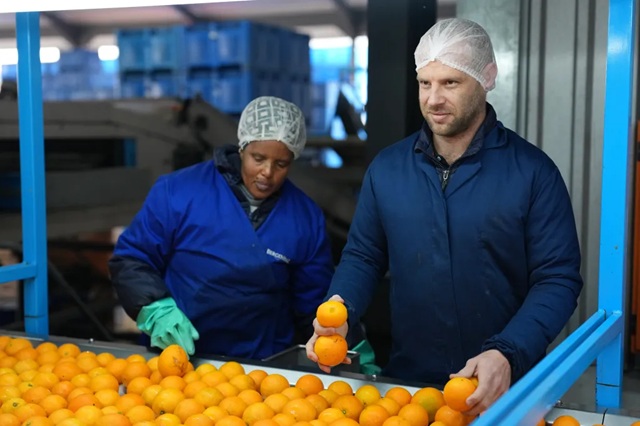
Now, that rhetoric has collided with a stark economic reality. The new tariffs, part of a broader realignment of U.S. trade policy, effectively strip South Africa of its long-standing preferential treatment under the African Growth and Opportunity Act (AGOA). Signed into law in 2000 by President Bill Clinton, AGOA had allowed many African nations—including South Africa—duty-free access to the U.S. market. The citrus industry alone, a backbone of South Africa’s export economy, now finds itself on the brink.
The town of Citrusdal, 100 miles north of Cape Town, has built its livelihood around U.S. citrus demand for over two decades. Local farmer JJ Rosenleft, who manages the Bergendal farm, warned that the new tariffs could result in widespread job losses among the farm’s 2,000 seasonal workers. “If job losses are on the table, then that farmer can most probably fear for his life,” he told The Times UK. “The worker is not going to care what Trump said, he is going to go to the guy who paid his salary every week and demand it.”
The fallout could reach far beyond lost profits. Rosenleft and other local leaders, including ANC mayor Azrail Scheepers, fear that the economic downturn could fuel social unrest, with farmers becoming scapegoats for the wider crisis. “The normal people on the ground are going to blame the farmers,” Scheepers said. “I don’t think they’ll blame me,” he added, half-joking, fully aware of the stakes.
South Africa’s citrus growers have scrambled to get their last shipments out before the tariffs take effect. Crates destined for the U.S. were rushed to ports, while others are being rerouted to the European Union—a difficult transition, given different market regulations and consumer preferences.
Rosenleft remains hopeful that negotiations could reduce the tariff, perhaps shaving off 5 or 10 percent to ease the burden. But he admits that Trump’s initial offer of asylum now feels hollow. “Maybe he does care about white farmers, maybe he doesn’t,” he said. “But this doesn’t make sense.”
Critics argue the tariffs are not just economically damaging, but politically reckless. As farmers lay off workers and funding for local schools, clinics, and community programs dries up, tensions are likely to escalate. For populist firebrands like Julius Malema and his Economic Freedom Fighters (EFF), the situation provides fertile ground for their message: “Our Land and Jobs Now.”
If Trump’s trade war leads to more unemployed black farmworkers and angry communities, the result could ironically validate the fears he once claimed to address—turning the “protector” of Afrikaners into the source of their most immediate crisis.