
Author’s Note: I write this piece in solidarity with all those imprisoned for their ideas and political engagement in Turkey and around the world. Among them is my friend and colleague Mehmet Ali Çalışkan, who was arrested alongside Ekrem İmamoğlu last month. Mehmet Ali is someone deeply dedicated to thinking—a principled, hard-working social researcher known for his calm judgment, intellectual integrity, and commitment to public dialogue. His detention is a painful reminder that authoritarian regimes do not only target prominent political figures—they seek to silence the quiet, sustained labor that nurtures critical thought and collective possibility.
On March 23, a Turkish court ordered the arrest of Istanbul Mayor Ekrem İmamoğlu on corruption charges. He was detained alongside 100 others, including district mayors, municipal officials, journalists, and businesspeople affiliated with the city government. İmamoğlu and his team face accusations of collaborating with the pro-Kurdish DEM Party, which currently holds 57 seats in parliament, in support of the Kurdistan Workers’ Party (PKK)—a militant Kurdish organization designated as a terrorist group by both Turkey and the United States. The accusation is fraught with irony, given that the government is itself reportedly holding talks with Abdullah Öcalan, the imprisoned leader of the PKK.
İmamoğlu’s arrest came amid a broader crackdown following the 2024 local elections. The government of Recep Tayyip Erdoğan has long used a strategy of post-election capture to consolidate its power, allowing opposition parties to compete at the ballot box only to later use state power to undo the results. The most prominent tool in this strategy has been the dismissal of elected mayors via criminal investigations and their replacement with state-appointed trustees. Since 2016, the government has removed over 150 mayors, mainly from the pro-Kurdish DEM Party in Kurdish-majority areas.
The campaign against İmamoğlu has not been limited to legal charges or party politics. A day before his arrest, his alma mater, Istanbul University—the oldest institution of higher education in Turkey—revoked his diploma, a maneuver that was widely seen as an attempt to render him ineligible for office under a law that prevents people without a university degree from running for president. This was not an isolated incident: over the past decade, universities in Turkey have been systematically transformed into instruments of political enforcement. Critical scholars have been purged, campuses militarized, and student dissent criminalized. This went alongside the dismantling of Turkey’s democracy, which was not achieved by military force but through court rulings, executive orders, police investigations, media control, and the silencing of dissent in schools, universities, and workplaces.
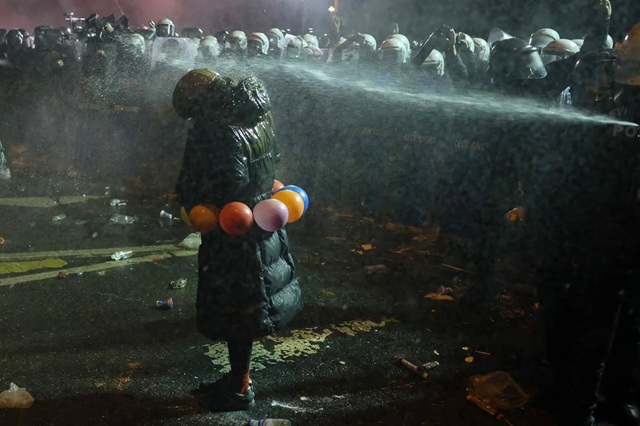
The significance of this moment for Turkey cannot be overstated. İmamoğlu’s arrest feels like yet another breaking point—perhaps the point of no return—that will determine whether Turkey will recover its democracy or slide further toward a Russian-style autocracy. The crackdown sparked an immediate surge of civic resistance in the streets, galvanizing Turkey’s largest protests in over a decade. More than 1,500 people were detained and over 200 were arrested, including journalists. Demonstrations erupted not only in liberal strongholds but also in cities long aligned with the ruling party, signaling a broader crisis of legitimacy for the government. The CHP brought hundreds of thousands of people into the streets for a mass rally—one of the largest in recent memory. It was a powerful demonstration of public outrage and a clear signal of the opposition’s ability to mobilize beyond elections.
The campaign against İmamoğlu has not been limited to legal charges or party politics. A day before his arrest, his alma mater, Istanbul University—the oldest institution of higher education in Turkey—revoked his diploma, a maneuver that was widely seen as an attempt to render him ineligible for office under a law that prevents people without a university degree from running for president. This was not an isolated incident: over the past decade, universities in Turkey have been systematically transformed into instruments of political enforcement. Critical scholars have been purged, campuses militarized, and student dissent criminalized. This went alongside the dismantling of Turkey’s democracy, which was not achieved by military force but through court rulings, executive orders, police investigations, media control, and the silencing of dissent in schools, universities, and workplaces.
The significance of this moment for Turkey cannot be overstated. İmamoğlu’s arrest feels like yet another breaking point—perhaps the point of no return—that will determine whether Turkey will recover its democracy or slide further toward a Russian-style autocracy. The crackdown sparked an immediate surge of civic resistance in the streets, galvanizing Turkey’s largest protests in over a decade. More than 1,500 people were detained and over 200 were arrested, including journalists. Demonstrations erupted not only in liberal strongholds but also in cities long aligned with the ruling party, signaling a broader crisis of legitimacy for the government. The CHP brought hundreds of thousands of people into the streets for a mass rally—one of the largest in recent memory. It was a powerful demonstration of public outrage and a clear signal of the opposition’s ability to mobilize beyond elections.
At Istanbul University, students gathered to denounce the revocation of İmamoğlu’s diploma. Breaking through police barricades, they took to the streets—an act of defiance that quickly reverberated across campuses nationwide. At Middle East Technical University in Ankara protests were met with a violent police response. Yet students continued to mobilize daily, framing their struggle as part of a longer history of discontent and a demand for democracy and justice.
The best indication of the scale of discontent against Erdoğan came on March 23. The CHP had been scheduled to formally nominate İmamoğlu as its candidate through a party primary—but in response to the diploma incident and his arrest, the party transformed what would have been an internal process into a public act of defiance. Instead of limiting the vote to registered members (numbering just over 1.5 million) the CHP opened the primary to all citizens, inviting solidarity votes from across the political spectrum. Nearly 15 million people participated in this voluntary, symbolic election—an extraordinary show of civic resistance with no legal standing but immense democratic weight. To put this into context: In 2023, Erdoğan secured re-election in a run-off with just under 28 million votes. In a country in which the electoral process is increasingly constrained, the symbolic primary was not just a vote for a candidate—it was a vote for democracy itself.
Erdoğan considers Imamoğlu a threat for several reasons. Imamoğlu’s political ascent began in 2019 when he twice defeated Erdoğan’s handpicked candidate for Istanbul mayor, overturning decades of conservative rule. He achieved this under deeply unfair conditions, with 90% of the media under government control and elections heavily tilted in favor of the ruling party. His victory was made possible by a broad alliance of six opposition parties, unified around the goal of restoring democracy. Although that alliance fell apart after their loss in the 2023 presidential election—securing Erdoğan a third presidential term—İmamoğlu nonetheless won the mayorship again with an even wider margin.
Furthermore, Istanbul sits at the center of Turkey’s political and economic life—and at the heart of Erdoğan’s rise to power. In 1994 he was elected as Istanbul’s mayor under the pro-Islamist Welfare Party. He later co-founded the Justice and Development Party (AKP), which held power in Istanbul for nearly two decades, using municipal resources to build political loyalty, expand his party’s base, and consolidate national influence.