The U.S. Air Force has launched an ambitious search for a new kind of anti-air missile—one that costs less than $500,000 per unit and can be produced at a rate of more than 1,000 per year. The initiative, known as the Counter-Air Missile Program (CAMP), represents the latest step in the service’s drive to field affordable, mass-produced weapons without sacrificing performance. The Air Force Life Cycle Management Center’s Armament Directorate announced the plan in a recent contracting notice, describing it as part of the broader “Affordable Mass Munitions” portfolio.
According to the notice, CAMP will initially focus on a ground-launched missile that could evolve into a low-cost air-to-air weapon. The Air Force expects the system to be modular, open in architecture, and easily scalable, allowing for rapid upgrades and integration of new components. The program draws directly from existing frameworks developed under efforts to design inexpensive cruise missiles for land and sea targets. “The highest priority of this effort is the development and demonstration of an affordable, open system, modular, and highly producible ground-launched capability,” the document stated.
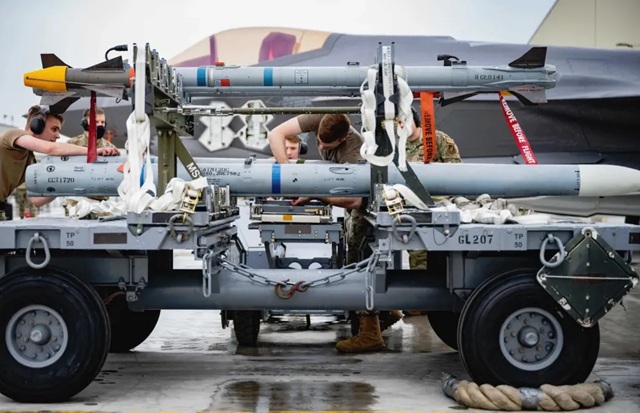
Under current guidelines, “low-cost” means less than $500,000 per missile, with an annual production target of between 1,000 and 3,500 units. By comparison, the AIM-9X Sidewinder costs about $500,000 per missile, while the AIM-120 AMRAAM approaches $1 million. The Air Force hopes the CAMP weapon will provide a cheaper but still capable complement to these workhorses, helping the service replenish its munitions stockpiles more quickly.
The War Zone (TWZ) notes that CAMP could take lessons from recent projects like the Enterprise Test Vehicle (ETV), a Defense Innovation Unit initiative launched with Zone 5 Technologies, Anduril, Dynetics, and Integrated Solutions for Systems. Those designs—part drone, part cruise missile—demonstrated that modular construction and digital design tools could drastically cut costs and production times. The Air Force says the same approach could help the new anti-air missile mature faster while expanding the range of potential suppliers, including nontraditional defense manufacturers.
CAMP’s open-system approach aligns with the Air Force’s “Modular Weapon M-Series” strategy, which balances performance, affordability, and adaptability. This modularity could make it easier to field multiple variants from a single design—such as air-launched and surface-launched models—using shared components to keep expenses low. The service also emphasized its intention to retain key technical data rights, giving it more freedom to solicit competitive bids and ensure long-term sustainability.
A weapon that can match or even approach AIM-120 capabilities at half the price would be a major breakthrough. It would also allow for larger stockpiles and greater flexibility in combat, especially as the U.S. military seeks to bolster its defenses against both traditional air threats and swarms of cheaper drones and cruise missiles. The Air Force has already relied heavily on low-cost interceptors, such as the Coyote Block 2 and the FALCO variant of the APKWS II rocket, to handle smaller aerial targets. CAMP could extend that philosophy into the mid-range air combat domain, where affordability and volume have become as crucial as precision.
The Armament Directorate has also hinted that CAMP may connect to other emerging programs, including the Extended Range Attack Munition (ERAM), a low-cost cruise missile effort supplying Ukraine. These linked initiatives, according to TWZ, point to a larger U.S. strategy—developing families of inexpensive, modular weapons capable of being built quickly and in massive quantities.
While CAMP remains in its early stages, it reflects the Air Force’s growing recognition that “exquisite” weapons alone will not be enough in a future high-intensity conflict. As former Vice Chief of Staff Gen. James Slife explained, the balance between “high volume, low-cost munitions” and advanced precision weapons could make the difference in a modern war. With that philosophy in mind, CAMP is not just another missile project—it’s part of a fundamental rethink of how the U.S. builds, buys, and fights.