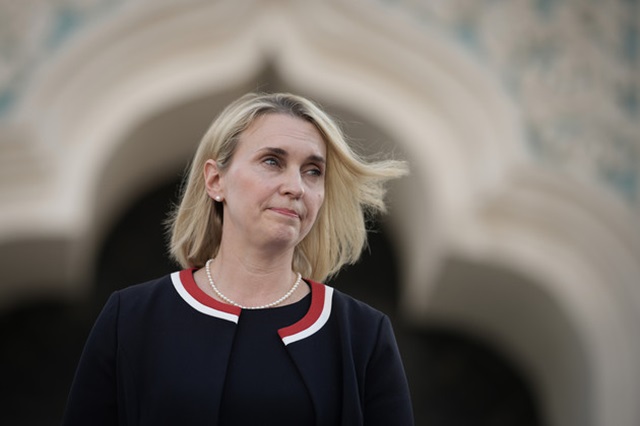
Bridget Brink, the U.S. ambassador to Ukraine, is stepping down from her post following escalating policy disagreements with the Trump administration, Financial Times reports. Her departure comes at a critical time for U.S.-Ukraine relations, as President Donald Trump reshapes the country’s approach to the war with Russia and tensions with Kyiv deepen.
Brink, a seasoned career diplomat first appointed to an ambassadorship by Trump during his first term — serving in Slovakia — was later chosen by President Joe Biden to take up the role in Ukraine. According to people familiar with the situation, Brink had increasingly found herself at odds with the new administration over its evolving strategy in the region.
Trump has sought to pivot U.S. foreign policy on Ukraine, pushing for a swift end to the war and favoring direct engagement with Russian President Vladimir Putin. The approach marks a stark departure from Biden’s policy, which involved billions in aid to Kyiv and a hardline sanctions regime against Moscow. Brink’s reluctance to fully align with the Trump administration’s new direction reportedly led to pressure from senior officials and ultimately factored into her decision to step down.
Compounding the strain, Brink’s relationship with Ukrainian President Volodymyr Zelenskyy has deteriorated in recent months. Though sources say this was not the primary reason for her resignation, a public rift emerged last week after a Russian missile strike killed 20 people in Zelenskyy’s hometown of Kryvyi Rih, including nine children.
Brink’s initial response to the attack — posted on social platform X — expressed horror at the loss of life but notably omitted any mention of Russian culpability. Zelenskyy criticized the statement in a Telegram post, calling the embassy’s reaction “surprisingly weak” and questioning its reluctance to name Russia as the perpetrator.
Brink later clarified her stance, stating explicitly that it was a Russian cluster missile attack, and paid tribute to the victims. However, the incident highlighted a growing unease between Kyiv and Washington, particularly as U.S. messaging under Trump becomes more neutral or even skeptical of Ukraine’s position.
An analysis by the Financial Times of Brink’s social media activity shows a marked shift since Trump took office on January 20. In the 75 days leading up to the inauguration, she made 53 posts critical of Russia and its actions in Ukraine. In the 75 days since, only five such posts appeared — none of which directly blamed Russia.
Western diplomats in Kyiv described Brink as a “strong character” and “serious diplomat” who had been an early and vocal advocate for Ukraine following Russia’s full-scale invasion in 2022. However, officials noted that her recent messaging had become noticeably more critical of Ukraine’s internal challenges, particularly its ongoing battle with corruption — a tone some interpreted as aligning more closely with the Trump administration.
Within Ukrainian political circles, some viewed Brink’s criticisms as overly harsh, while others expressed concern that U.S. support for Kyiv could be softening under the current administration.
The U.S. State Department confirmed Brink’s departure, calling her three-year tenure “a long time in a war zone,” but declined to comment further. Brink herself has not issued a public statement regarding her resignation.
Her departure underscores the shifting dynamics in Washington’s foreign policy as Trump seeks to normalize relations with Russia and reassess America’s role in the Ukraine conflict. It also leaves open questions about how U.S. diplomacy in the region will proceed at a time when unity among allies is seen as vital.