More than four years after Russia’s large-scale invasion of Ukraine, civilians on both sides are paying an increasingly heavy price as the war shifts further towards long-range strikes and attacks deep behind the front. Although both Russia and Ukraine deny targeting civilians, the number of people killed and wounded outside active combat demonstrates how increasingly difficult it has become for civilians to escape the violence.
The year 2025 was already the deadliest for Ukraine’s civilian population since the first year of the conflict, when large numbers were killed during its opening months. In 2026, that trend has continued. “Lamentablemente, prevemos que este año sea aún más mortífero que el anterior”, an analyst from the independent Russian organisation Conflict Intelligence Team (CIT) said, requesting anonymity for security reasons.
The CIT counted 2,650 civilian deaths in Ukraine during 2025, including 297 in occupied areas and 2,353 in the rest of the country. On the Russian side, the death toll reached 275. The figures are based principally on official records from regional governors, supplemented by reports from independent media. The research group divides the casualties into three categories — Ukraine, occupied Ukraine and Russia — while excluding attacks on military installations.
The figures for 2026 are already approaching last year’s total. The United Nations Human Rights Monitoring Mission in Ukraine (HRMMU) recorded 1,396 civilian deaths and 7,978 injuries during the first six months of the year, 37% higher than in the same period of 2025 and 114% higher than in 2024. The CIT, meanwhile, recorded 2,183 deaths across Ukrainian territory through July, a month that proved particularly deadly. By comparison, the HRMMU recorded 8,423 deaths during the first year of the war.
Russia is not included in the United Nations mission’s figures. According to the CIT, 327 civilians have been killed there so far this year. Taken together, the two countries recorded 2,510 civilian deaths during the first seven months of 2026, already approaching the 2,925 deaths recorded across both countries during the whole of 2025. July was the deadliest month of the year, with 632 people killed.
The changing nature of the war is central to the rising toll. According to the HRMMU, long-range weapons, including powerful missiles with area effects and drones, are the principal cause of the increase in civilian deaths in Ukraine. These weapons can strike urban areas far from the front line. At the same time, close to the fighting, deaths caused by short-range drones reached their highest level of the entire war in June.
The battlefield itself has remained largely stalled, creating greater reliance on attacks conducted at a distance. “El frente está estancado, con combates que no parecen tener ninguna posibilidad de éxito. Por eso, ambas partes están dedicando ahora más esfuerzos a este tipo de guerra: la guerra a larga distancia. Se dice que es como una guerra de ciudades, como la de Irak”, the CIT analyst said.
Between January and June, the number of civilians killed and injured by missiles and drones increased by 60% compared with the same period in 2025, according to the HRMMU. Yet the strategic purpose behind the intensified aerial campaign remains uncertain. “No sabemos qué esperan, porque, desde una perspectiva histórica, estos ataques aéreos por sí solos no conducen a la victoria. También lo vemos en la guerra entre Irán y Estados Unidos. Pero esperan que, por alguna razón, eso les dé ventaja”, the CIT analyst said.
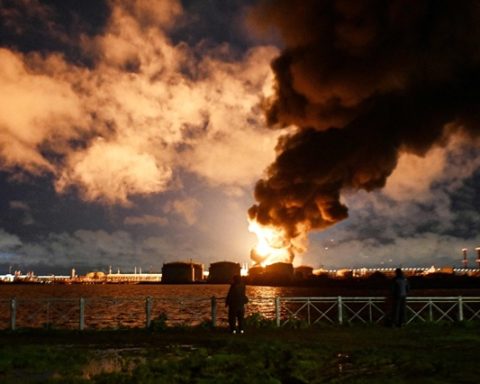
Russia has intensified attacks on Kyiv in recent weeks, while Ukraine has expanded its own attacks against targets inside Russia, particularly since last month against facilities belonging to Wildberries, known as the Russian Amazon. More than a dozen warehouses have already been damaged.
The weapons being used also vary according to distance from the front. In urban areas far from the battlefield, long-range missiles and drones have become increasingly important. Near the front lines, Russian forces rely predominantly on short-range drones, according to the HRMMU. The organisation has documented at least 237 attacks against cars and buses near the front, forcing residents in those areas to drastically restrict their movements.
The proliferation of drones has created a particularly dangerous environment for civilians. Despite their integrated cameras, which allow operators to observe potential targets in real time through what is known as first-person view, FPV drones have become one of the principal causes of civilian casualties in Ukraine, according to the HRMMU.
Ukraine’s growing offensive capacity has also altered the pattern of attacks. “Hasta ahora, Ucrania había atacado casi todos los objetivos militares, principalmente porque el número de armas [que tenía] no era tan grande, por lo que han sido más precisos a la hora de elegir los objetivos. Ahora tienen más opciones y pueden atacar más objetivos”, the CIT analyst said.
The strategy, according to the analyst, is also aimed at increasing the economic cost of the war for Russia. “Su estrategia [de Kiev], tal y como la vemos, consiste en mantener el estancamiento en la línea del frente, o quizá simplemente hacer retroceder al enemigo. Lo están haciendo ahora en algunas zonas, pero no en el Donbás. Por otro lado, buscan encarecer la guerra con los ataques contra la economía rusa y las refinerías”, the analyst said. He added that the pressure might be intended to reach Russian elites, oligarchs and wealthy people who are losing money, potentially encouraging them to press for an agreement.
At the end of June, Ukrainian President Volodímir Zelenski announced through his Telegram channel the approval of a 40-day campaign to intensify drone attacks inside Russian territory, with the aim of “influir en el Estado agresor y fomentar el fin de la guerra”.
For Ukraine, however, the immediate challenge remains defensive. Kyiv is seeking more interceptors from its allies while trying to protect its population from Russian air attacks. According to Ukrainian authorities, allies supplied one third of the interceptors this year that they had delivered during the same period in 2025 for the US Patriot air-defence systems.
Olha Polishchuk, director of research for Eastern Europe at ACLED, said Kyiv was well protected by air-defence systems but faced a different situation with ballistic missiles and Zircon missiles, which require Patriot interceptor missiles that Ukraine currently lacks.
On 5 August, Ukraine failed to intercept any of the 24 ballistic missiles or four Zircon cruise missiles launched by Russia in an attack on the capital region, although its Air Force reported that it had destroyed almost 90% of the 115 drones involved. The country subsequently stopped reporting the number of interceptions and ballistic missiles launched against its territory, according to Bloomberg.
The consequences are likely to remain severe. “Ucrania va a sufrir mucho en los próximos meses debido a las pérdidas civiles y a algunos ataques estratégicos rusos que tendrán éxito”, writes Professor O’Brien. At the same time, he argues that “el ejército ruso sigue fracasando estrepitosamente este verano, y eso no va a cambiar”.
The CIT analyst likewise does not expect significant movement on the front in the coming months. The group has observed increased production of ballistic missiles, which are being used against power stations and other systems. The analyst believes that Putin understands he will not be able to seize the Donbás this year and that his strategy for victory may instead be to freeze Ukraine during the coming winter.
As the front remains stalled, the war is therefore increasingly being fought over distance: through missiles launched across hundreds of kilometres, drones operating near the battlefield and attacks aimed at infrastructure and economic targets. For civilians, however, the distinction between the front and the rear is becoming increasingly difficult to maintain. International humanitarian law requires parties to distinguish between combatants and non-combatants, and deliberately targeting civilians constitutes a war crime. The rising civilian toll in both countries shows the human consequences of a conflict in which the battlefield may remain geographically concentrated, while the violence increasingly reaches far beyond it.