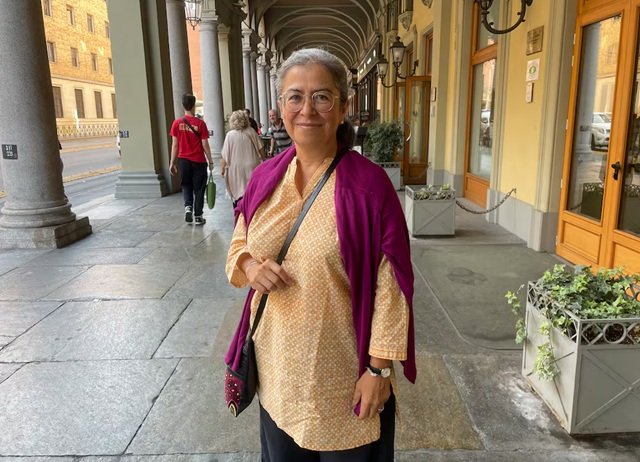
Sofía Monsalve, the Colombian political scientist appointed in May as the United Nations special rapporteur on the right to food, has warned that famine is increasingly being normalised as governments and armed actors use hunger as a weapon of war, while global food systems remain vulnerable to conflict, corporate concentration and inequality.
In an interview with Spanish newspaper El País in Turin, during the international sustainable food network Slow Food’s Terra Madre gathering, Monsalve called for a fundamental restructuring of the way food is produced, distributed and governed. Her proposals centre on more equitable land distribution, agroecology, localised food production and greater democracy in decision-making.
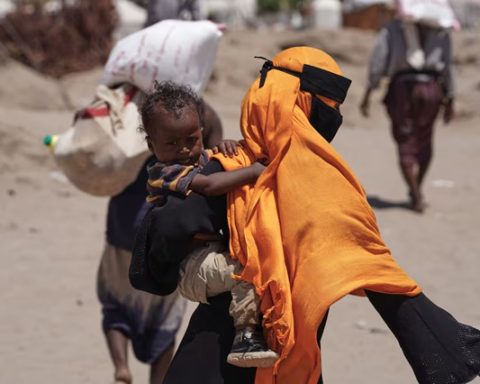
Monsalve, 63, said she was particularly concerned that international norms protecting civilians and humanitarian assistance were being weakened. “We are normalising famine,” she told El País, arguing that the dehumanisation of entire populations, including through claims that everyone in a territory is a terrorist, makes it easier to justify depriving them of food.
“The idea that we are all human beings and that hunger cannot be used as a weapon of war has been abandoned,” she said.
She cited Gaza as a clear example, accusing Israel, the United States and Germany of failing to ensure compliance with precautionary measures ordered by the International Court of Justice. In March 2024, the court said humanitarian aid had to enter Gaza without restrictions, Monsalve noted, adding that serious limitations remained.
She also pointed to Sudan, where United Nations investigations have indicated that the United Arab Emirates bears significant responsibility in a conflict in which famine is again being used as a weapon of war. Monsalve called for accountability, describing the prevailing impunity as deeply troubling.
The rapporteur linked the worsening hunger crisis to changes in the international political and economic order. Drawing on the work of Alex de Waal, director of the World Peace Foundation, she said the weakening of the international system that had previously supported development assistance and the goal of eradicating hunger had coincided with intensifying rivalry between economic powers.
Although global hunger increased after 2017 and surged during the Covid-19 pandemic, recent declines have not restored levels recorded in 2016, according to the account published by El País. Monsalve said geopolitical tensions and disruptions to international trade had exposed the vulnerability of a food system built around global supply chains.
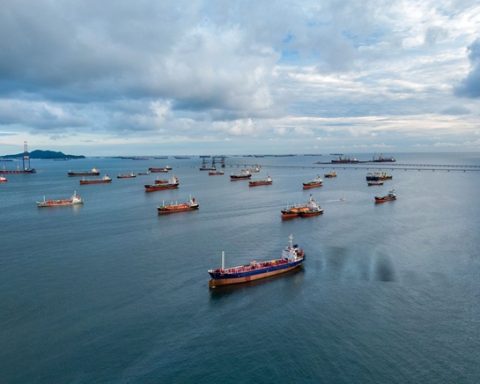
She criticised the neoliberal model that encouraged countries to reduce domestic food production capacity and avoid building reserves on the assumption that international markets would reliably supply their needs. Conflicts affecting grain exports from Ukraine and the movement of fertilisers through the Strait of Hormuz demonstrate how disruptions to individual supply routes can have far-reaching consequences, she said.
Monsalve noted that the UN Food and Agriculture Organization was beginning to discuss diversifying supply sources and crops, as well as maintaining food reserves, practices already adopted by countries including China and India. She advocated a balance between public institutions, commercial businesses and social and solidarity-based organisations, rather than transferring the entire food system to state control.
She also challenged the claim that large agribusiness corporations are indispensable to feeding the world. According to Monsalve, these companies often benefit from substantial subsidies, pay relatively little tax and employ monopolistic practices while imposing environmental costs that they do not repair. Their products, she added, can contribute to serious public health problems, while large monoculture plantations can force communities from their land.
The growing consumption of ultra-processed food in Africa and Latin America was another concern. Monsalve told El País that aggressive advertising, particularly through social media, was changing the eating habits of young people and widening the divide between access to high-quality organic food and cheaper, less nutritious products.
Her proposed reforms include more equitable land ownership, which she said could improve biodiversity as well as social justice. She also called for a transition towards agricultural practices less dependent on pesticides, chemical fertilisers and fossil fuels, arguing that changes in energy production should be accompanied by new approaches to maintaining soil fertility.
Monsalve said digital technologies could help make food systems more democratically accountable, provided governments were willing to use tools already employed by multinational companies to track supplies and maximise profits. “I have the freedom to call things by their name,” she told El País, adding that she intended to exercise that independence despite financial constraints facing the United Nations and what she described as attempts to intimidate independent rapporteurs.