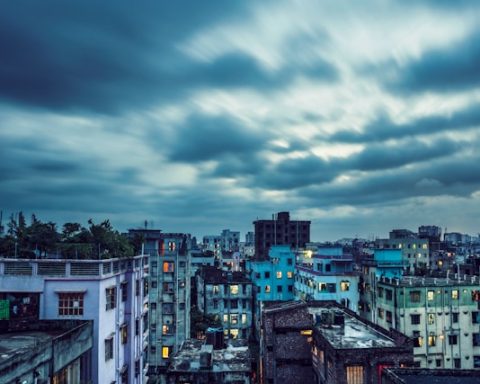
Recently, a great deal of discussion has erupted on social media and in mainstream news outlets in Bangladesh over the demolition of an old structure in the city of Mymensingh. At the heart of the debate is a historic building located on Harikishore Roy Road in Mymensingh city, which was claimed—first on social media and then in various news reports—to be the ancestral home of legendary filmmaker Satyajit Ray. The news of the building’s demolition spread widely, giving rise to emotional reactions, anecdotal claims, and administrative decisions. This episode reflects a painful yet significant aspect of our engagement with history: unchecked historical claims, emotional narratives, conflicting arguments, and the spread of misinformation. It has triggered both national and international responses. This article attempts to analyze the historical background, the roots of the confusion, the government’s stance, and the broader implications for cultural education.
Historical Reality
Historical records indicate that the ancestral home of Satyajit Ray is actually located at Masua Jamidar Bari (Zamindar’s House) in Katiadi upazila of Kishoreganj district, which was the estate of Harikishore Ray Chowdhury. His original residence was in Mymensingh district. Despite his influence as a zamindar, Harikishore Ray was not at peace, as he had no children. He later adopted Kamdaranjan, the son of his elder brother Kalinath Deb (aka Shyamsundar Deb) and Joytara Debi, to preserve his estate. The adopted son’s name was changed to Upendrakishore Ray, aligning with his own.
Harikishore Ray eventually had a biological son named Narendrakishore Ray. Upendrakishore, being a bright student, was enrolled at Mymensingh District School, where Harikishore held considerable influence. Today, a road still bears Harikishore Ray’s name, a trace of that legacy. Although much of the estate is now lost, parts of its decaying structure still stand in Masua village, known locally as “Babur Bari” (The Babu’s House).
In 1883, at the age of 21, Upendrakishore Ray completed his Bachelor of Arts degree and married Bidhumukhi, the only daughter of Dwarkanath and India’s first female graduate and doctor, Kadambini Ganguly. Their second child, Sukumar Ray, was born in 1887 and inherited his father’s artistic and literary talents. Around 1913, Sukumar Ray married Suprabha, daughter of renowned social worker Kali Narayan Gupta of Dhaka. In 1921, their child, Satyajit Ray, was born—later to become a legendary filmmaker. He only visited Dhaka once in his lifetime.
According to Prasadranjan Ray, a former Additional Chief Secretary of the West Bengal government and a descendant of the Ray family, in his 2014 essay “Mymensingh and Upendrakishore” published in Kali O Kolom, “Upendrakishore Ray visited the ancestral land a few times—once after the 1898 earthquake and plague epidemic, once in 1905–06 during family property division, once in 1911, and possibly after Sukumar’s marriage.” He added, “From 1926 onwards, the connection with both the Gorpur (Garpar) residence and the Masua zamindari faded, although some of Harikishore’s descendants continued visiting Masua.” However, the descendants of Upendrakishore and Sukumar Ray ceased to maintain any ties with the property. Today, the Masua Zamindar House is under the Department of Archaeology, although its conservation is lacking.
Disputed Claims
According to Mymensingh’s heritage researcher Swapan Dhar, the Bangladesh Shishu Academy building in Mymensingh is not the ancestral home of Satyajit Ray. The structure was, in fact, a temporary residence of philanthropist and zamindar Ranada Prasad Saha—founder of Kumudini Hospital, Bharateswari Homes, and Kumudini College. Built in the late 19th or early 20th century, the building was once used as the Old DC Power Station from the 1920s until 1965 under the Saha family’s control. After Ranada Prasad Saha was killed during the Liberation War in 1971, the government acquired the property as “abandoned property” in 1972. In 1987, the building was leased to Bangladesh Shishu Academy. Due to structural concerns and prolonged use, it was declared abandoned in 2007.
Origin of the Controversy
In late 2024, local authorities decided to demolish a long-abandoned building in Charpara, Mymensingh, previously used by Shishu Academy (1987–2007). Before demolition, a local writer and history enthusiast claimed on social media that it was the ancestral home of Upendrakishore Ray Chowdhury and, therefore, of historical value. The claim went viral, and some news outlets published headlines like “Satyajit Ray’s grandfather’s home is being demolished”—without verifying the facts. This sparked social media outrage, protests demanding heritage preservation, and criticism of the government. This situation reveals a troubling trend in Bangladesh: a reluctance to fact-check, and a rush to judgment based on folklore and emotion.
In reality, the original house that Harikishore Ray distributed between his biological and adopted sons was located in the third lane of Harikishore Ray Road, not where the disputed building stands today. Upendrakishore later moved permanently to Kolkata, and the house was eventually sold by Narendrakishore.
The Factual Position
The disputed Shishu Academy building stands near the first lane of Harikishore Roy Road and was originally built by zamindar Shashikanta Acharya Chowdhury, who allowed Ranada Prasad Saha to use it. The property was in use until 1971, after which it became government property. In 1979, it was leased to the Shishu Academy.
In contrast, the actual house associated with Upendrakishore Ray is located on the third lane of Harikishore Roy Road, historically known as Purnalakshmi Bhaban.
Government Position
Recognizing the issue’s sensitivity and the domestic and international reaction, Mymensingh district authorities, the Ministry of Foreign Affairs, and the Ministry of Cultural Affairs clarified the matter. A Foreign Ministry spokesperson stated:
“After reviewing land records, archives, and property documents, it has been confirmed that the disputed building in Mymensingh has no connection to Satyajit Ray or his ancestors. The property was originally built by zamindar Shashikanta Acharya Chowdhury and was later registered under government ownership. The widespread media and social media reports linking this building to Ray’s family were incorrect and misleading.”
Conclusion
The building in Mymensingh is not the ancestral home of Satyajit Ray’s family. This has been conclusively established through official government records and administrative review. However, the controversy highlights a broader lesson: verifying history requires documentation, research, and accountability—not just faith or folklore. The government, too, must ensure transparency and timely information sharing to build public trust, especially in cases involving contested historical narratives.