by Our Correspondent in New Delhi
The United States has announced a landmark decision to remove longstanding regulatory barriers that have obstructed civil nuclear cooperation with India’s leading nuclear institutions. This move marks a significant step forward in the operationalization of the Indo-US civilian nuclear deal, a pact that has remained largely dormant since its inception in 2008. US National Security Advisor Jake Sullivan made the announcement during his visit to New Delhi, signaling a new chapter in the strategic partnership between the two democracies.
The Indo-US civilian nuclear agreement, originally brokered by then-Prime Minister Manmohan Singh and US President George W. Bush, was heralded as a transformative development. It offered India, a non-signatory to the Nuclear Non-Proliferation Treaty (NPT), access to nuclear technology and materials for peaceful purposes. However, the deal faced numerous implementation hurdles, including restrictive US export controls and India’s complex regulatory landscape.
Among the major obstacles has been the placement of key Indian institutions—such as the Bhabha Atomic Research Centre (BARC), Indira Gandhi Atomic Research Centre (IGCAR), and Indian Rare Earths Limited (IREL)—on the US Entity List. Managed by the Bureau of Industry and Security (BIS) within the US Department of Commerce, the list imposes strict export controls on foreign entities deemed to pose a risk to US national security or foreign policy objectives. For over a decade, these restrictions hindered the intended collaboration between Indian nuclear entities and American companies.
Jake Sullivan’s announcement indicates a decisive shift in US policy under the Biden administration. He emphasized that the necessary steps to remove these restrictions are in the final stages and are expected to be formalized soon. Speaking at IIT Delhi, Sullivan said, “The United States is now finalizing the necessary steps to remove long-standing regulations that have prevented civil nuclear cooperation… This will create opportunities for entities on restricted lists to collaborate deeply with the United States, its private sector, and its scientific community.”
This development is part of a broader effort to resolve past frictions and unlock the full potential of the 2008 agreement. Sullivan acknowledged the foundational work of former leaders, including President George W. Bush and Prime Minister Manmohan Singh, while highlighting the Biden administration’s commitment to advancing this vision.
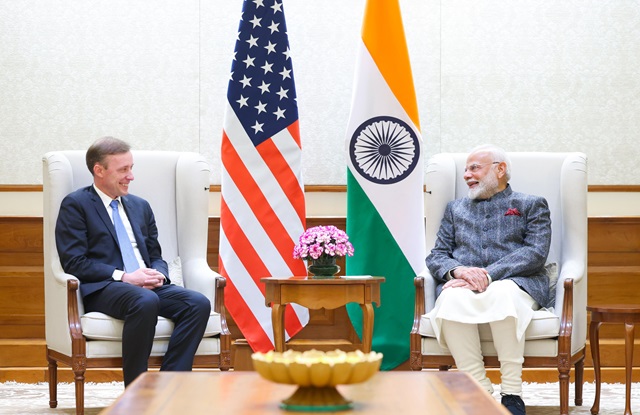
The announcement coincided with Sullivan’s meetings with Indian Prime Minister Narendra Modi, NSA Ajit Doval, and External Affairs Minister S. Jaishankar. Modi described the Indo-US Comprehensive Global Strategic Partnership as having “scaled new heights” and expressed optimism about deepening cooperation for the benefit of both nations.
The timing of this move is significant. For years, the Indo-US nuclear deal has been emblematic of the complex and evolving relationship between the two nations. While the agreement was a major diplomatic breakthrough, it encountered challenges ranging from concerns over nuclear liability laws to broader trade and policy disputes. Sullivan’s visit and the accompanying policy announcements seek to address these longstanding issues and reaffirm the partnership’s resilience.
Beyond civil nuclear cooperation, the United States is also working to enhance collaboration with India in areas like space technology, artificial intelligence, and critical supply chains. Sullivan revealed that President Biden has recently updated missile export control policies under the Missile Technology Control Regime (MTCR), paving the way for greater commercial space cooperation. This is expected to bolster India’s capabilities in advanced rocketry and other high-tech domains.
The Biden administration’s moves also reflect a recognition of India’s growing importance in the global geopolitical landscape. Sullivan spoke of the challenges posed by China’s “predatory industrial strategies” and the need for resilient supply chains. He pointed to the example of Apple, which is shifting significant portions of its production to India, underscoring the country’s potential as a reliable manufacturing hub.
Sullivan also addressed concerns over the security of dual-use technologies—those with both civilian and military applications—urging vigilance to prevent their diversion to adversarial nations. While his remarks included indirect references to India’s acquisition of Russia’s S-400 air defense system, they also underscored the broader need for strategic alignment between the US and India.
The announcement reflects years of sustained dialogue and trust-building between the two nations. Sullivan credited NSA Ajit Doval for playing a key role in establishing the Initiative on Critical and Emerging Technologies (iCET), a framework aimed at fostering cooperation in areas like semiconductors, quantum computing, and cybersecurity. This initiative is seen as a cornerstone of the broader Indo-US strategic partnership.
Prime Minister Modi, in a statement from his office, reaffirmed his commitment to strengthening ties with the US. Reflecting on his meetings with President Biden, including during the Quad Leaders’ Summit in September 2024, Modi acknowledged Biden’s contributions to deepening the bilateral relationship. He expressed hope that these efforts would leave “an enduring legacy” and benefit not only the people of India and the US but also contribute to global stability and prosperity.