


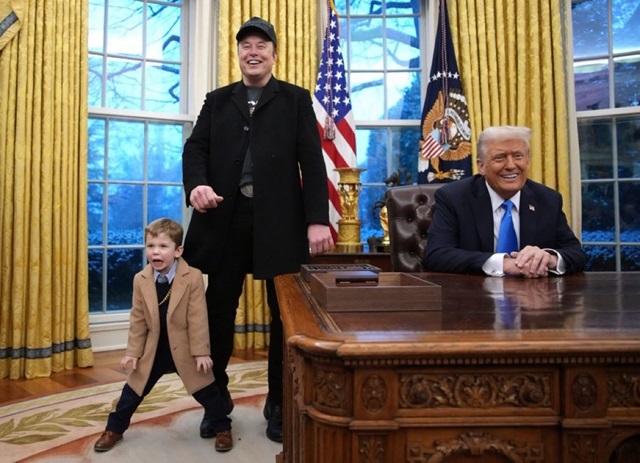
Elon Musk’s increasing influence within the US government has raised concerns about the potential advantages it could bring to his businesses while possibly disadvantaging his competitors. Musk’s six companies already benefit from around $20bn in government contracts and various subsidies. These contracts, Musk maintains, were earned on merit and have provided value for money. However, his close ties to President Donald Trump, bolstered by a $250mn donation to Trump’s 2024 re-election campaign, have sparked debate about the potential conflicts of interest and political leverage Musk might wield.
One key development is Musk’s leadership of the “Department of Government Efficiency” (Doge), where he is spearheading a cost-cutting drive across US government departments, including those that have previously investigated or fined his companies, Tesla and SpaceX. According to Financial Times, this political involvement could create favorable conditions for Musk’s businesses, particularly with a potential reshaping of government policies benefiting his enterprises.
Here’s how Musk’s businesses stand to benefit:
X (Formerly Twitter)
Musk’s acquisition of X, the social media platform, for $44bn in 2022 was widely criticized, with Musk admitting he had overpaid. However, his new proximity to government seems to have coincided with a turnaround in the platform’s fortunes, as advertisers, including Amazon, return. Through Doge, Musk has launched a full-on attack on federal bureaucracy, calling out what he deems federal waste. This has been communicated via X, where Musk continues to use the platform to express political views. Despite the platform’s previous financial woes, including the threat of bankruptcy, X’s finances have improved significantly. Musk’s government ties could also shield the company from European regulatory actions, as the White House has indicated its support for NATO could hinge on Europe softening its tech regulations.
Tesla
Tesla, the core of Musk’s empire, has benefited greatly from government subsidies, totaling over $2.8bn in state and federal incentives over the years. However, the aggressive reversal of government policies under Trump could hurt Tesla. Trump has already canceled former President Joe Biden’s target for half of new US vehicle sales to be battery-powered by 2030. Additionally, Trump has proposed eliminating the $7,500 federal EV tax credit and cutting emissions credit programs, both of which directly benefit Tesla. Musk, however, downplayed the potential impact, asserting that the shift to electric vehicles is inevitable and that removing subsidies would hurt less profitable competitors more than Tesla. However, this comes at a critical time, as Tesla’s sales have begun to soften, particularly in Europe, where Musk’s far-right political views have caused some backlash.
SpaceX
Musk’s $350bn space company, SpaceX, has become the US government’s go-to contractor for space projects. Trump has expressed admiration for Musk and SpaceX, calling Musk a “super genius” and celebrating the company’s technical achievements. Musk’s close ties to Trump, including the appointment of tech billionaire Jared Isaacman, a Musk ally, as NASA administrator, could further strengthen SpaceX’s dominance over competitors like Boeing and Jeff Bezos’s Blue Origin. Furthermore, SpaceX stands to gain if Trump successfully commissions a new missile defense program requiring space-based interceptors—something SpaceX is uniquely equipped to provide.
Starlink
SpaceX’s satellite internet network, Starlink, has faced regulatory pushback in some regions, including the US and the EU, over issues like disinformation. While the platform’s geopolitical role has grown in importance—particularly during the Ukraine conflict—Musk’s relationship with Trump has complicated things. Starlink recently faced criticism from Canada, which pulled out of a broadband contract, partly due to Trump’s threat to impose tariffs. The service was also temporarily banned in Brazil following Musk’s political interventions in the country. As Musk’s sway in the US government grows, these issues could become more politically charged.
xAI
Musk’s artificial intelligence company, xAI, could benefit from Trump’s favorable stance on AI. The Trump administration quickly rescinded Biden’s regulatory orders on AI, and the appointment of Musk ally David Sacks as Trump’s AI tsar could accelerate xAI’s growth. However, Musk’s rivalry with OpenAI, which he co-founded, adds a layer of tension. Musk’s attempts to restructure OpenAI and his criticism of the White House’s AI policies could fuel tensions within the industry.
Neuralink and The Boring Company
Musk’s brain implant venture, Neuralink, and his tunneling company, The Boring Company, may also benefit indirectly from his ties to Trump. Neuralink, while still under heavy FDA scrutiny, could see its regulatory landscape shift, though it faces challenges with escalating trade tensions. The Boring Company, known for its tunneling projects in California and Las Vegas, is grappling with local opposition, but could gain a boost from Trump’s pro-business stance. The company’s CEO has already been seconded to lead Musk’s Doge efforts, suggesting Musk’s political involvement could influence future infrastructure projects.
Musk’s influence on the US government has sparked a broader conversation about the intersection of politics, business, and corporate power. As his companies continue to leverage government contracts and policies, it remains to be seen how Musk’s proximity to Trump will shape the future of his empire and the broader technological landscape.









