
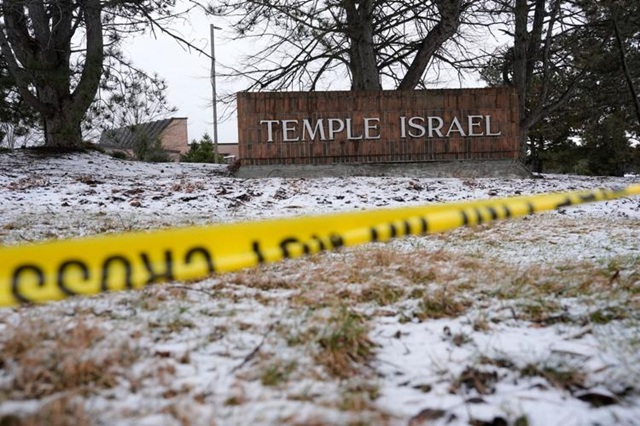
Two violent incidents in the United States, occurring within hours of each other, have drawn intense attention from security agencies and policy analysts. In Michigan, a pickup truck rammed into Temple Israel synagogue while nearly 140 children were inside for a preschool programme. Security guards shot the suspect, identified as Ayman Mohamad Ghazali, a Lebanese-born naturalised U.S. citizen. Authorities are treating the incident as a targeted attack against the Jewish community.
Only hours later, in Virginia, a gunman opened fire inside a classroom at Old Dominion University, killing one person and injuring two others before being subdued by students. The Federal Bureau of Investigation has opened a terrorism investigation into the shooting.
While investigations are still unfolding, the broader significance of these incidents lies in what they reveal about contemporary patterns of radicalisation and retaliatory violence. Increasingly, violent actors are driven not by organised terrorist networks but by personal grievances shaped by global political narratives. Conflicts occurring thousands of kilometres away can be internalised by individuals who then view local targets as legitimate symbols of distant enemies.
This phenomenon reflects a growing trend in modern security dynamics: the globalisation of grievance.
The Michigan synagogue attack illustrates how symbolic targets are selected to maximise psychological impact. A place of worship associated with the Jewish community, particularly one hosting children, represents both religious identity and vulnerability. Attacks on such institutions are designed not only to cause harm but to generate fear within an entire community.
Similarly, attacks on educational institutions carry powerful symbolism. Universities and schools represent knowledge, civic development, and the future generation of society. Violence in these spaces magnifies public anxiety and media attention.
Such targeting patterns are not accidental. They form part of what security analysts describe as symbolic warfare, where the attacker seeks emotional and political impact far beyond the immediate victims.
Equally concerning is the possibility that these acts are influenced by retaliatory narratives linked to ongoing conflicts in the Middle East. In recent years, images of civilian casualties, particularly involving children, have circulated widely across social media platforms. These images often become powerful emotional triggers, particularly when framed through ideological or religious narratives.
In such environments, individuals may begin to view violence not as criminal behaviour but as a form of moral retaliation.
The modern radicalisation pathway often follows a familiar sequence. First, an individual becomes emotionally invested in a distant conflict. Second, online content reinforces narratives of victimhood and injustice. Finally, local targets become symbolic substitutes for distant adversaries.
What emerges is a form of self-directed retaliatory extremism, where individuals act independently but are motivated by global ideological narratives.
This shift presents significant challenges for security agencies. Traditional counter-terrorism strategies were designed primarily to detect organised networks, financial flows, and structured conspiracies. Lone actors radicalised online often leave far fewer detectable signals. Their operational planning can be rapid, improvised, and difficult to anticipate.
The danger also lies in the potential for copycat or inspirational attacks. Modern media ecosystems amplify incidents almost instantly. Violent acts can quickly become part of a broader ideological narrative circulated by extremist voices online.
The result is a dangerous feedback loop: violence generates attention, attention fuels narratives, and narratives inspire further violence. While these incidents occurred in the United States, the implications are global. Countries with diverse societies and religious communities must remain alert to the possibility that distant geopolitical conflicts can resonate domestically.
Sri Lanka offers a particularly relevant case study. The country has already experienced how global extremist narratives can influence local actors. The Easter Sunday attacks in 2019 demonstrated how international ideological movements can penetrate local environments through online radicalisation and transnational networks.
Although Sri Lanka’s security environment has stabilised significantly since then, the underlying dynamics of radicalisation have not disappeared. Social media continues to serve as a powerful amplifier of global conflicts. Graphic images, emotionally charged commentary, and polarising narratives circulate widely across communities.
In such an environment, local tensions can be aggravated by events occurring far beyond Sri Lanka’s borders. This does not mean Sri Lanka faces an immediate replication of such incidents. However, it does underline the importance of vigilance. Preventing radicalisation today requires not only intelligence gathering and law enforcement capabilities but also strong community engagement and responsible public discourse.
Equally important is the role of narrative management. Extremist ideologies thrive on perceptions of injustice and polarisation. Governments, religious leaders, and civil society organisations must work together to prevent global conflicts from being reframed as local communal grievances.
Security in the twenty-first century is increasingly shaped by information flows as much as by physical threats.
The Michigan and Virginia incidents serve as reminders that, in an interconnected world, violence is rarely isolated. Local acts of aggression can be influenced by distant wars, online propaganda, and emotional narratives circulating across digital platforms.
Understanding this evolving threat landscape is essential. Modern counter-terrorism must move beyond purely reactive responses and focus on early detection of radicalisation pathways, strategic communication, and community resilience.
The challenge facing governments worldwide, including Sri Lanka, is not only preventing attacks but also addressing the deeper psychological and ideological drivers that transform distant conflicts into local acts of violence.