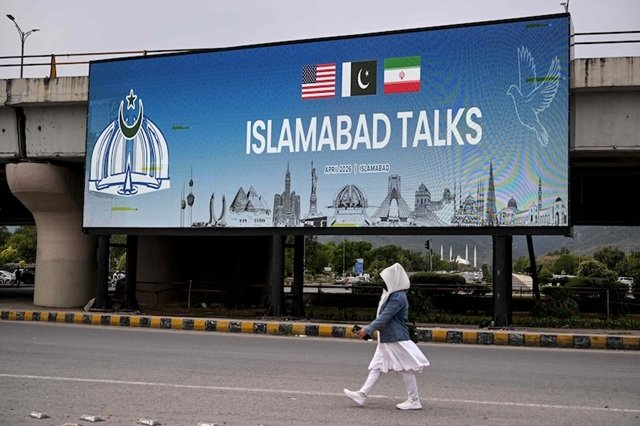
There is a theory in media studies called Agenda-Setting. It suggests that the media doesn’t just tell you what to think; it tells you what to think about. For the better part of two decades, the international press told the world to think about Pakistan as a “problem” to be managed. This week, as I watch the motorcades of the world’s most powerful envoys snake through the barricades of the Red Zone, I am witnessing a paradigm shift. The world is no longer thinking about Pakistan as a problem. It is thinking about Pakistan as the only solution it has left.
But as I sit in my room, I find myself playing the Devil’s Advocate. Is this truly a “Victory of Peace,” or is Pakistan simply the last player left in a room where everyone else is too exhausted to fight?
Part One: The Architecture of the Back-Channel
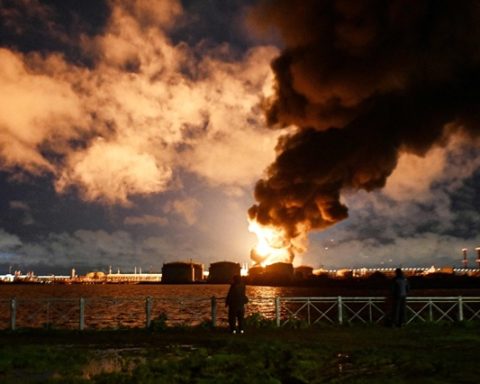
The timeline of this crisis reads like a thriller, but for us in Islamabad, it is a lived reality. It began quietly in 2025 with the failed Oman talks. By February 2026, the unthinkable happened: the Strait of Hormuz closed. One-fifth of the world’s energy supply vanished overnight. This wasn’t just a military crisis; it was what the IEA called “the biggest energy crisis in history.”
When Qatar declined the role of mediator, the vacuum was immense. Pakistan did not just step into that vacuum; we occupied it.
Critics might argue that Pakistan is merely a “postman” carrying a 15-point American ceasefire proposal to Tehran. However, the Islamabad Process, a term our officials have strategically coined suggests otherwise. This isn’t just about delivery; it’s about Air Cover for Peace. When Pakistani JF-17s escorted the Iranian delegation across the Persian Gulf for the April 11 talks, it wasn’t just a military gesture. It was a semiotic one. Pakistan was physically and symbolically shielding the possibility of a deal.
Part Two: The Devil’s Advocate – The Price of Neutrality
I want to be honest about the friction. As a media student, I am trained to look at the “Deficit Frame.” While we celebrate the “Islamabad Process,” the streets of our city tell a different story. To host the world, we have paid a price.
The Economic Burden: Petrol prices are up 14%, and rolling blackouts have returned.
The Sovereign Risk: By putting ourselves between a volatile Trump administration and a hardened Tehran, we are walking a tightrope. If the talks fail and they have frayed repeatedly between April 13 and 20. Pakistan risks being the scapegoat for a global recession.
The skeptics ask: Why Pakistan? The answer is a brutal logic of geography and institutional memory. We share a 900km border with Iran, but we maintain a decades-old military hardware and training relationship with the U.S. We are the only actor that can speak “Pentagon” and “Tehran” in the same breath. We are not neutral because we are indifferent; we are neutral because we are indispensable.
Part Three: The Media Student in the “Room”
Sociologist Erving Goffman argued that Framing determines meaning. For twenty years, Pakistan was framed through “threat” and “instability.” What is happening now is a Structural Shift. By authoring a process joining the ranks of the Minsk, Oslo, and Dayton processes. Pakistan is reclaiming its agency.
The Islamabad Process is not just about a ceasefire; it is a battle over Representation. When COAS Field Marshal Asim Munir flies to Tehran for “house calls” or when Trump publicly states he extended a truce “at Pakistan’s request,” the old frame of “dependency” shatters. For the first time, Pakistan is being framed as a Net Stabilizer.
Part Four: The Stakes of the Saturday Summit
As I write this on April 24, the math is ticking. Iran has 90 million barrels of oil sitting in supertankers that cannot move. The U.S. blockade is a ticking bomb.
Tomorrow, Saturday, the Serena Hotel becomes the center of the world again. Steve Witkoff and Jared Kushner are boarding flights; Abbas Araghchi is already here. The gaps remain massive:
- The Nuclear Question: Total enrichment halt vs. “Never.”
- The Strait: US “Free Navigation” vs. Iranian “Sovereignty.”
- The Assets: Phased relief vs. $6 billion upfront.
These are not “inches”; they are miles. Yet, both sides keep coming back to Islamabad.
A Thesis in Real-Time
Last week I framed a thought: “The Islamabad Frame: How Pakistan’s Mediation Role Challenged Dominant Western Representations.” My supervisor joked that I picked the right week to be a media student.
But it’s more than an analysis. It is a message. Mark-e-Haq 2.0, this victory of peace is a lesson that strategic clarity can triumph even in the most turbulent situations. Pakistan is no longer standing on the fringes of history, waiting for a mention in a Western op-ed. We are the ones setting the table.
In Islamabad, we aren’t just watching history; we are contributing to the writing of it.