


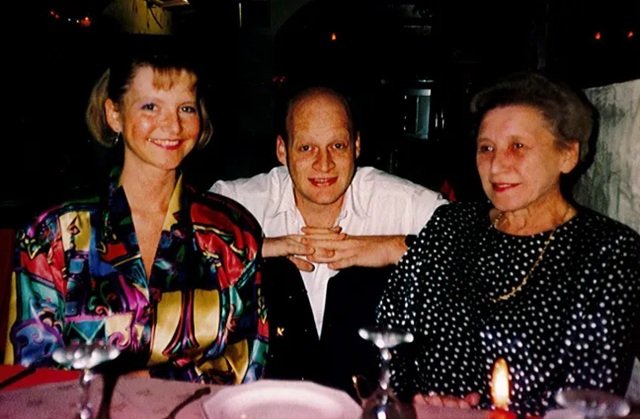
Sue Firth died in 1997, believing her case would never be solved. Nearly three decades later, her own words helped convict the man who raped her in a Sheffield car park in 1985, marking a rare legal moment in which a deceased victim’s testimony was admitted in court and formed a central part of a guilty verdict. The case, reported by Times UK, has been described as a legal breakthrough that could reshape how historic sexual assault cases are prosecuted in England and Wales.
Firth was 27 when she was attacked shortly after leaving a nightclub in central Sheffield on the night of September 6, 1985. She had walked to her car when a man approached from behind, placed a knife to her throat, and forced her into the vehicle. He raped her before fleeing. In shock, she drove home and immediately told her husband, a police officer. Within hours she reported the assault to police, underwent a medical examination, and gave a detailed signed statement describing the attack and her assailant’s behaviour.
That statement, preserved in police archives for decades, would later become the foundation of a conviction. But at the time, despite an immediate investigation, no suspect was identified and the case eventually went cold. For Firth, the trauma of the assault marked the beginning of a long and devastating decline. Her health deteriorated, her marriage broke down, and she was forced to leave work early due to worsening physical and mental health.
By 1997, aged just 39, Firth had died. Her family say her death was deeply connected to the long-term impact of the assault. She suffered from type 1 diabetes complications, an eating disorder and severe depression. Her brother, Martin Sills, later told court he believed the rape had fundamentally damaged her health and contributed to her early death. “The attack killed her,” he said, adding that she should have been able to live a full life.
The breakthrough came years later when South Yorkshire Police reopened the case as part of a cold-case review programme. A specialist unit re-examined evidence using modern forensic techniques and succeeded in extracting a full DNA profile from preserved samples. That profile was initially unmatched, but in 2021 a routine DNA collection following a public order offence flagged a match with David Hill, a former nightclub bouncer who had worked at the venue near where the attack occurred.
Hill, now in his seventies, was arrested and charged. While DNA evidence placed him at the scene, prosecutors still had to prove the crucial element: that the sexual encounter was non-consensual. This is where Firth’s decades-old statement became central to the case. Because she had died long before the trial, prosecutors sought permission to admit her police statement as hearsay evidence.
In March, Hill was convicted of rape and sentenced to 15 years in prison after a jury at Sheffield Crown Court returned a unanimous verdict. The court heard that Firth’s statement, made immediately after the attack, carried significant credibility due to its detail, consistency, and timing. Prosecutors argued that her account reflected genuine trauma and was reinforced by witness statements from friends and family who described her as honest and reliable. The court also considered the fact that she had continued to recount the assault years later during counselling sessions, strengthening its evidential weight.
The admission of her statement is believed to be a legal first in England and Wales in this context, potentially setting a precedent for how historical rape cases involving deceased victims may be prosecuted. Legal experts involved in the case, cited by Times UK, said it demonstrated how evolving legal interpretation and forensic science can work together to deliver justice long after the original crime.
For Firth’s family, the conviction is both a relief and a painful reminder of what was lost. Her brother said he was proud of her courage in reporting the assault immediately and giving such a detailed account despite the trauma she was experiencing. He described the years that followed as a slow decline marked by hospital stays, depression and repeated medical crises, as her physical and mental health steadily collapsed.
He also recalled the broader family devastation that followed, including the death of their mother after years of watching her daughter’s health deteriorate. Firth spent long periods in hospital in the final years of her life, often in the same ward and bed, her condition fluctuating before her organs eventually failed. Her brother said he was not present when she died, leaving him with a lasting sense of loss and unresolved grief.
The case remained dormant for decades until renewed forensic work reopened the investigation. Detectives said they were determined to find answers for a victim whose case had been effectively abandoned due to technological limits at the time. The cold-case unit traced witnesses, recovered archived material, and confirmed the authenticity of the surviving typed version of Firth’s statement after the original handwritten copy had been lost.
Prosecutors said the case ultimately hinged on combining modern DNA evidence with historical testimony that had been carefully preserved. They argued that without Firth’s statement, the DNA match alone would not have been sufficient to secure a conviction. The jury was persuaded that the account she gave on the night of the attack was consistent, credible, and supported by circumstantial evidence.
The detective leading the cold-case review described the investigation as a long effort to restore a voice that had been silenced by time. He said the team’s goal had been to ensure that even though the victim had died, her evidence could still be heard and tested fairly in court. Legal officials involved in the prosecution said the verdict showed that justice can still be achieved even in cases that appear unsolvable for decades.
David Hill has since appealed against the length of his sentence, but the conviction itself stands as a significant moment in UK legal history. It has raised discussions among legal experts about the role of hearsay evidence, the preservation of victim testimony, and the expanding potential of cold-case investigations.
For Firth’s family, however, the legal milestone carries a more personal meaning. Her brother said he hopes the case encourages other survivors of sexual violence to come forward, even if justice may take years or decades. “It’s not your fault,” he said, reflecting on what he believes his sister would have wanted others to hear. “You didn’t do anything wrong. Come forward and get justice.”
What began as a violent attack in 1985 has now become a landmark in 2026 courtroom history—one where a victim who never lived to see justice was still able to help secure it, her voice preserved in ink, and finally, heard in law.










