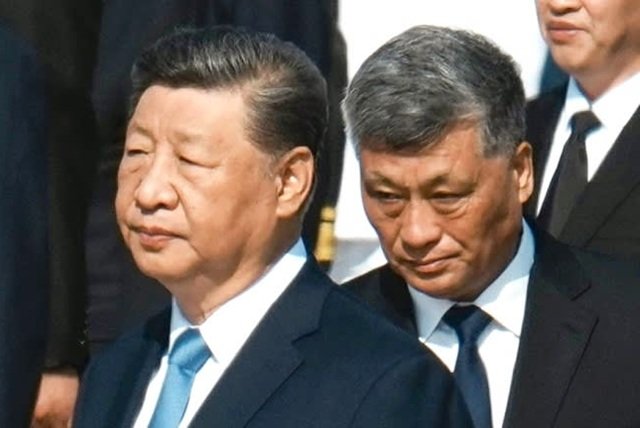
Chinese President Xi Jinping has moved decisively to remove one of the most senior figures within his own political circle as his administration seeks to draw a line under a corruption scandal that has reached the highest levels of the Chinese Communist Party. The expulsion of Politburo member Ma Xingrui from the party, followed by the decision to hand him over to the judiciary for trial, represents one of the most consequential developments in Xi’s long-running anti-corruption campaign and comes only months before Shenzhen hosts the Asia-Pacific Economic Cooperation (APEC) summit.
As reported by Nikkei Asia, the timing of the purge is especially significant. Shenzhen is not only China’s leading high-technology hub and the city at the centre of the allegations involving Ma, but also a place with deep personal and political ties to the Xi family. With world leaders expected to gather there in November for the APEC summit, the administration appears determined to resolve a scandal that threatens to cast a shadow over one of China’s most internationally visible events.
Xi launched his anti-corruption campaign shortly after assuming the post of general secretary of the Chinese Communist Party in November 2012. Over the years, the campaign has become a defining feature of his leadership, targeting numerous senior officials and influential political figures. In Ma’s case, however, the campaign has reached unusually close to Xi’s own inner circle. Despite being widely regarded as one of Xi’s trusted allies and a loyal supporter, Ma was placed under investigation in April on suspicion of serious discipline and law violations. The party’s Central Committee announced on 14 July that the 66-year-old had been expelled from the party and would face judicial proceedings, with state-run Xinhua News Agency reporting the decision.
The speed of the process surprised many observers. Only three months elapsed between the public announcement of the investigation and the decision to expel Ma from the party. The swift action has underscored the seriousness with which the allegations are being treated, particularly given Ma’s standing within China’s political hierarchy.
Ma’s political decline had begun months earlier. Last July, he was unexpectedly removed from his position as party secretary of the Xinjiang Uyghur Autonomous Region, one of the country’s most strategically important regions. Although his dismissal initially attracted considerable speculation, informed sources later indicated that the reasons lay not in Xinjiang itself but in a major corruption scandal centred on Shenzhen. Ma attended the fourth plenum of the party’s 20th Central Committee in Beijing in October but subsequently disappeared from public view, further fuelling uncertainty about his future.
His rise to prominence had been equally remarkable. After earning a doctorate in mechanics from the Harbin Institute of Technology, Ma built an academic career before becoming vice president of the university. He later moved into industry as general manager of the state-owned China Aerospace Science and Technology Corp., one of China’s leading rocket and missile manufacturers. Despite spending much of his career in higher education and aerospace, Ma transitioned into politics, becoming deputy party secretary of Guangdong in 2013 before being appointed party secretary of Shenzhen in 2015. He continued to advance rapidly, eventually becoming party secretary of Xinjiang in 2021 and joining the Politburo at the party’s 20th national congress in October 2022.
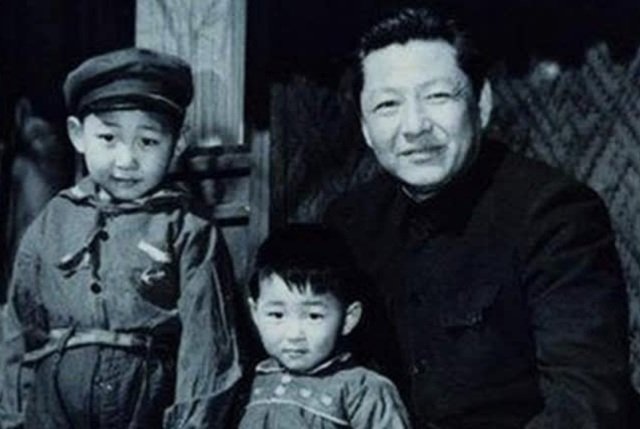
His ascent reflected not only political success but also the trust he had earned from Xi and the Xi family. Shenzhen occupies a unique place in that relationship. Once a small fishing village bordering Hong Kong, the city became the flagship of China’s reform and opening-up policies initiated under former supreme leader Deng Xiaoping following the Cultural Revolution. Xi Jinping’s late father, Xi Zhongxun, served as Guangdong’s first secretary and played a leading role in developing Shenzhen’s special economic zone. After retiring in 1993, Xi Zhongxun lived in the city with Qi Xin, Xi Jinping’s mother, while other members of the family also established business ties there. Today, Shenzhen is regarded as a Xi family stronghold, making the appointment of its top party official a matter of exceptional political trust.
For Ma, everything appeared to be progressing smoothly as he rose within Xi’s inner circle. He also shared a personal connection with Xi’s wife, Peng Liyuan, who grew up in Yuncheng County in Shandong province, the ancestral hometown of Ma. That trajectory changed dramatically after China’s property market entered a severe downturn during the early 2020s.
The collapse of the country’s real estate boom placed enormous pressure on major developers headquartered in Shenzhen, including China Evergrande Group and China Vanke. Evergrande defaulted on its debt in 2021 before ultimately collapsing and entering liquidation. As the financial crisis spread through the property sector, investigations increasingly exposed allegations of misconduct extending beyond corporate boardrooms.
According to the party’s official statement announcing Ma’s expulsion, he assisted family members in purchasing homes at below-market prices, allowed relatives to exploit the influence of his position to obtain substantial benefits, and illegally accepted large amounts of money and valuables either personally or in collusion with relatives and close associates. Ma’s wife has long been the subject of rumours alleging a central role in influence peddling, while the names of other relatives gained widespread attention on Chinese social media after the announcement. Caixin, the Chinese investigative media outlet, also reported the names of Ma’s brothers alongside a politically connected businessman from northeastern China.
As details continue to emerge, the links between the scandal and the financial troubles surrounding Evergrande and Vanke have become increasingly prominent. China’s property sector remains mired in a prolonged slump, with declining sales, falling transaction prices and subdued consumer spending driven by what has been described as a negative wealth effect. Against that backdrop, the allegations involving one of the country’s most senior political figures represent a significant challenge for the administration.
The sequence of events has also attracted attention. Evergrande founder Hui Ka Yan, also known as Xu Jiayin, appeared before a Shenzhen court on 13 and 14 April, reportedly pleading guilty to multiple charges, including bribery, and expressing remorse. His court appearance followed the 3 April announcement that Ma had been placed under investigation. Evergrande itself was formally delisted from the Hong Kong Stock Exchange in August 2025, only weeks after Ma had been removed from his Xinjiang post.
Ma has become the first Politburo member to be punished over a scandal linked to property-sector debt, placing the case in a category of its own within Xi’s anti-corruption campaign. The Politburo comprises more than 20 of China’s most senior party officials, including the seven-member Politburo Standing Committee that serves as the country’s highest decision-making body under Xi’s leadership.
As Nikkei Asia’s analysis notes, the administration now faces the challenge of containing a scandal that has exposed the darker side of a city central to both China’s economic ambitions and the Xi family’s political legacy. With the APEC summit in Shenzhen only months away, the swift action against Ma reflects an effort to close one of the most politically sensitive corruption cases of Xi’s tenure. Whether the case marks the end of the affair or the beginning of broader scrutiny surrounding China’s property sector and its political connections remains an open question, particularly if further scandals involving senior party figures come to light.