Thousands of people demonstrated across Italy, Portugal, Belgium and Albania over the weekend, protesting against rising living costs, education expenses and government policies, as confrontations with police turned violent in several cities. In Berlin, about 300 school pupils also gathered to demand better educational opportunities. The demonstrations formed part of a wider wave of unrest, with grievances ranging from the affordability of higher education to demands for political change.
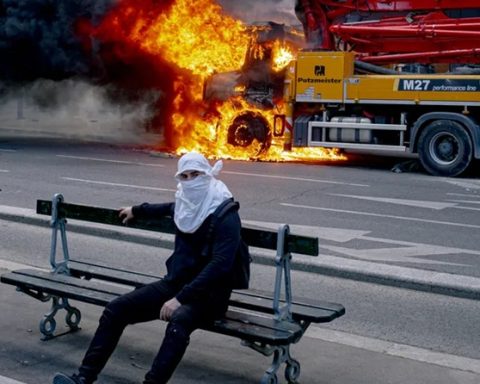
In Italy, police used tear gas in Milan and water cannon in Bologna to disperse demonstrators protesting against rising living costs. In Belgium, clashes were reported in Brussels and Liège, while confrontations also occurred in Tirana and other Albanian cities. Albanian police fired rubber bullets into a crowd of several hundred demonstrators in the capital, and hundreds of people were arrested. The protests in Albania were taking place for a fifth consecutive day, with demands that had initially focused on education increasingly directed at the government of Prime Minister Edi Rama.
In Albania, demonstrations began on Tuesday in Tirana and other cities, initially prompted by poor university conditions and high tuition fees. The movement subsequently expanded to include calls for the government to resign. Protests against Rama’s administration have recurred since late May, when plans for a luxury hotel project in a coastal nature reserve triggered opposition. The latest demonstrations therefore reflect both immediate concerns over education and a broader campaign against government policy.
Belgium has also experienced several weeks of demonstrations over higher university fees and proposed reforms that protesters fear could make access to higher education more difficult. In Brussels, police arrested about ten people after a gathering attended by several hundred demonstrators. Calls for the protest had circulated through online platforms, with participants opposing rising education costs and reforms they said could restrict access to universities.
In Liège, in eastern Belgium, police deployed water cannon to disperse smaller groups of demonstrators. The city had already witnessed confrontations between protesters and security forces ten days earlier. The continuing demonstrations have focused on education costs and proposed spending measures, placing students’ concerns at the centre of a wider debate over access to public services and the affordability of education.
Italy’s protests brought similar tensions into the streets of major cities. In Milan, officers wearing protective equipment attempted to push masked demonstrators out of the Galleria Vittorio Emanuele II, a prominent shopping arcade. Shops lowered their shutters as the situation deteriorated, while tourists fled the city centre. Police also used tear gas against demonstrators in the city, while water cannon were deployed in Bologna.
Prime Minister Giorgia Meloni, who faces an election next year, condemned the violence. In a post on X, she wrote: “Demonstrating is a right. Turning our cities into battlefields is not.” Her statement came after thousands of school pupils and university students had demonstrated against her government on Friday. In several cities, students established tent camps to protest against the high costs of accommodation and education, linking immediate financial pressures to wider dissatisfaction with government policies.
In Portugal, the demonstration in Lisbon followed several days of growing unrest. Police had cleared an activist encampment in Porto on Monday, before the country’s largest trade union, the CGTP, called for a demonstration in the capital. Protesters complained that low wages were failing to keep pace with rapidly rising prices, leaving many people struggling to meet basic living expenses.
The Portuguese protests placed household purchasing power at the centre of the mobilisation. Participants argued that the gap between earnings and the cost of living had become increasingly difficult to manage. The CGTP’s involvement brought an established labour organisation into a period of unrest that had also included direct action by activists in Porto.
In Germany, meanwhile, about 300 school pupils gathered at Kleistpark in Berlin’s Schöneberg district on Saturday afternoon, according to police figures reported by rbb24. They called for better educational opportunities, although the demonstration also addressed other issues, including economic and pension policy. Police said the gathering passed peacefully.
Across the four countries, the immediate causes of the demonstrations differed, from tuition fees and access to universities in Belgium and Albania to wages and living costs in Portugal and Italy. In Albania, protesters had gone further by demanding the resignation of the government. Yet the weekend’s events shared a common feature: economic pressures and concerns over public policy were drawing people into the streets, while several demonstrations were accompanied by confrontations with law enforcement.