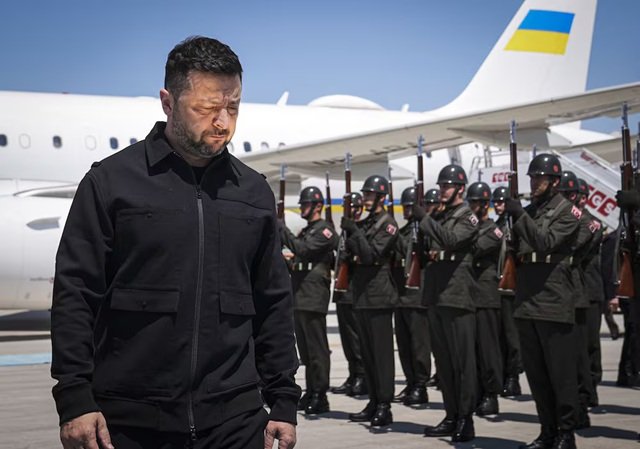
Ukrainian President Volodymyr Zelensky has used a major NATO defence industry forum in Ankara to renew Kyiv’s push for membership in the alliance, arguing that Ukraine’s experience fighting Russia has transformed the country into a key contributor to modern European security.
Speaking before political leaders and defence industry representatives gathered alongside the NATO summit in the Turkish capital, Zelensky said Ukraine should not remain outside the alliance given the military capabilities it has developed during more than four years of war.
“Ukraine belongs to NATO,” Zelensky said, arguing that the alliance must adapt to the realities of contemporary warfare and that Ukraine’s military experience, defence industry and battlefield knowledge could strengthen NATO’s ability to respond to future threats.
“Would it really be right to leave out of NATO a country, a people with that level of defensive capability?” he asked. Zelensky said the alliance could meet the challenges of modern warfare by incorporating Ukraine’s expertise and the lessons learned from its fight against Russia.
Ukraine was invited to join NATO at the alliance’s 2008 summit, a decision that triggered strong opposition from Moscow. Russia has long criticised NATO’s expansion towards its borders, arguing against the inclusion of new members, while NATO has maintained that countries have the sovereign right to choose their own security arrangements.
Despite the invitation nearly two decades ago, Ukraine’s path towards membership has remained uncertain. Before Russia launched its full-scale invasion in 2022, NATO allies considered Ukrainian membership a distant possibility. Since the start of the war, Kyiv has carried out military reforms aimed at bringing its armed forces closer to alliance standards, but political and practical obstacles continue to delay accession.
At the 2024 NATO summit in Washington, held during the final year of US President Joe Biden’s administration, allies stated that Ukraine’s future was in NATO and described its path towards membership as “irreversible.” However, those references were removed from the declaration at the first NATO summit of Donald Trump’s second presidency, held in The Hague, where discussions focused heavily on increasing defence spending among allies.
At the Ankara summit, NATO members again expressed support for Ukraine and recognised its role in confronting Russia, which the alliance considers its main security challenge. However, the language has focused primarily on Ukraine’s contribution to transatlantic security rather than providing a clear timetable for membership.
For Kyiv, the argument has increasingly shifted from seeking protection to presenting Ukraine as a security provider. Ukrainian officials have highlighted the country’s rapidly developed defence sector, particularly its drone production capabilities, which have expanded significantly during the war.
Zelensky’s comments came as NATO members examined how to strengthen military capabilities and increase cooperation with the defence industry. The Ukrainian government has argued that its experience on the battlefield provides lessons that can benefit allies facing new forms of warfare.
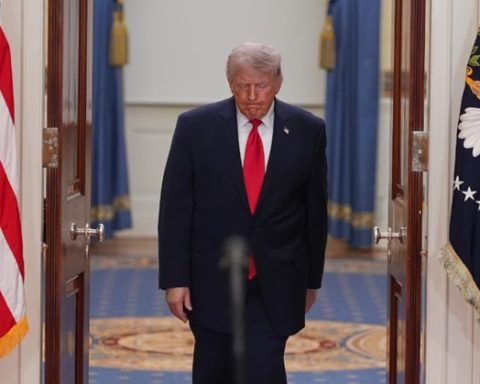
US President Donald Trump also addressed Ukraine’s military support during the summit, describing a different approach from his predecessor. Trump said that while Biden had provided Ukraine with military equipment worth hundreds of billions of dollars, his administration was selling weapons through European partners, who then transfer the equipment to Kyiv.
“When Biden was here, he gave them equipment worth hundreds of billions of dollars. I now sell it to them,” Trump said, adding that the weapons were being sold to the European Union, which pays for and transfers them to Ukraine.
Trump said the war remained a devastating conflict but argued that its impact was felt more strongly by Europe because of its geographic proximity.
“It’s crazy. But it doesn’t affect us. You know, it’s far away. It affects Europe more,” he said before meeting Turkish President Recep Tayyip Erdogan.
At the same time, Trump said he was working to help achieve a peace agreement between Ukraine and Russia. He said he had recently spoken with Russian President Vladimir Putin and later with Zelensky, claiming that both leaders wanted to reach an agreement.
Trump also pointed to Erdogan’s involvement in mediation efforts between the two sides. The US president is scheduled to meet Zelensky on the sidelines of the NATO summit in Ankara, where discussions are expected to focus on the war, military support and possible diplomatic efforts.
The meeting comes as NATO continues to balance support for Ukraine with broader debates about the alliance’s future priorities, defence spending and security commitments. While Ukraine continues to seek formal membership, its leaders are increasingly presenting the country’s wartime experience and defence capabilities as a contribution that could reshape Europe’s security landscape.
For now, Ukraine remains outside NATO’s formal structure, but Zelensky’s message in Ankara was focused on a central argument: that the country’s years of combat experience have made it not only a nation seeking security guarantees, but also a potential provider of security for the wider alliance.