Twenty-Five Years After the Day That Changed Aviation
On 11 September 2001, the world of humanity lost trust in one another.
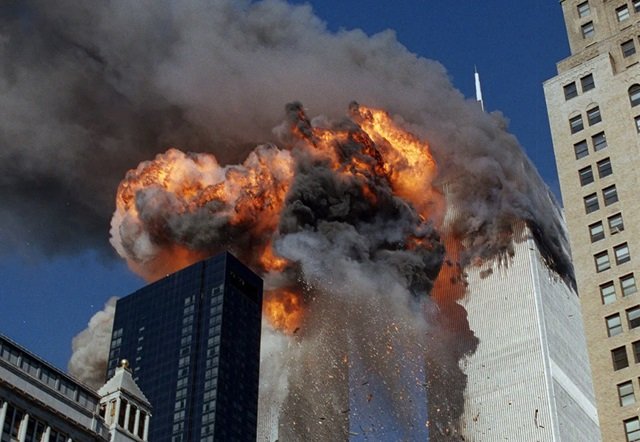
On 11 September 2026, the international community marks the twenty-fifth anniversary of the terrorist attacks that changed, perhaps irrevocably, the manner in which the world perceives civil aviation. A quarter of a century has passed since four commercial aircraft were hijacked and deliberately employed as instruments of destruction, bringing about a catastrophe whose human consequences were immeasurable and whose repercussions extended into the political, economic, technological and legal orders of the international community. For aviation, however, the significance of 9/11 extends beyond the tragedy itself. The attacks constituted a jurisprudential watershed because they demonstrated that the aircraft, hitherto conceived principally as an instrument of transportation and international communication, could be transformed by a third party into a weapon capable of inflicting catastrophic damage upon persons and property far removed from the ordinary operation of the aircraft.
This transformation exposed a vulnerability in the international legal and regulatory architecture of civil aviation which had not previously been contemplated with sufficient intensity. It became apparent that aviation security could no longer be treated as a matter existing at the periphery of aviation safety, that carrier liability could not be examined independently of the responsibilities of States and airports, and that insurance could not be regarded merely as a private commercial instrument when the very continuity of international air transport was threatened by the withdrawal of insurance capacity. The twenty-fifth anniversary therefore provides an appropriate occasion not merely for remembrance, but for a reassessment of the legal, regulatory and economic lessons which 9/11 bequeathed to international civil aviation.
The Chicago Convention of 1944 was founded upon the proposition that international civil aviation should be developed in a manner conducive to friendship and understanding among nations and that the safe, orderly and efficient conduct of international air transport required an internationally coordinated legal and institutional framework. For much of the twentieth century, the dominant regulatory paradigm was concerned principally with the safety of the aircraft as a technological object and with the competence of the human beings entrusted with its operation. Airworthiness, licensing, navigation, air traffic management and operational standards consequently occupied a central position in the regulatory architecture. Security was present, particularly through the international conventions dealing with unlawful interference and through Annex 17 to the Chicago Convention, but the aircraft itself remained conceptually a vehicle rather than a weapon.
The events of 11 September 2001 destroyed the simplicity of that assumption. The aircraft did not malfunction; rather, the aircraft was deliberately commandeered and its technological characteristics were appropriated for a purpose diametrically opposed to that for which civil aviation had been created. The significance of this development for law lies in the fact that the immediate cause of the catastrophe was neither mechanical failure nor ordinary human error but the intentional conduct of a third party whose objective was to exploit the aviation system itself.
This distinction is fundamental to any analysis of liability. In an ordinary aviation accident, the law may inquire whether the carrier maintained the aircraft properly, whether the crew exercised appropriate care, whether air traffic control functioned adequately, whether applicable safety standards were observed and whether the carrier or another actor was negligent. In a terrorist attack, however, these questions may not provide a complete explanation of causation. An aircraft may be airworthy, its crew appropriately trained and its operator fully compliant with applicable operational requirements, yet the aircraft may nevertheless be transformed into an instrument of destruction because a security system somewhere within the wider aviation environment has been defeated. The legal problem therefore becomes one of identifying the appropriate allocation of responsibility among the carrier, the airport, the State, security agencies, intelligence services and other participants in the aviation system. The significance of 9/11 was consequently not simply that it created a new category of aviation security threat, but that it required international aviation law to move towards a more sophisticated conception of distributed responsibility.
The Aviation System in Crisis
The immediate human consequences of 9/11 were followed by a crisis within the aviation industry itself. The closure of United States airspace, the grounding and diversion of aircraft, the collapse of passenger confidence and the consequent contraction of demand produced an economic shock which travelled rapidly through the interconnected international air transport network. Airlines confronted falling revenues at precisely the moment when they were required to assume substantially greater security expenditures. Airports faced new regulatory requirements and operational constraints, while States were compelled to devote additional resources to aviation security. The crisis therefore demonstrated the systemic character of international aviation. The industry could not be understood simply as a collection of individual airlines competing within a marketplace. It was a highly interdependent network in which the disruption of one major component could generate consequences throughout the entire system.
It is within this broader context that the arguments developed in Aviation in Crisis acquire particular significance. The treatment of the post-9/11 environment demonstrates that the crisis could not be confined to security alone. It encompassed commercial viability, insurance, regulation and the continuing ability of international aviation to perform its essential economic and social function. The deeper lesson is that civil aviation possesses characteristics of a public infrastructure even when many of its components are privately owned. Airlines may be commercial enterprises, airports may operate on commercial principles and insurance may be provided by private markets, but the aggregate system performs a function upon which international commerce, tourism, diplomacy, humanitarian assistance and global connectivity depend. When the system is threatened by a catastrophic event, therefore, the consequences cannot necessarily be left to the ordinary operation of private markets.
The insurance crisis which followed 9/11 demonstrated this proposition with unusual clarity. On 17 September 2001, aviation insurers gave notice that third-party war-risk liability coverage would be cancelled effective 24 September. The decision was understandable from the perspective of insurers confronted with an unprecedented exposure, but it created a regulatory dilemma of extraordinary proportions. An airline could not realistically continue normal international operations without adequate insurance protection, yet the very risk against which the insurance was required had suddenly become extraordinarily difficult to quantify. The problem was consequently not merely one of increased premiums. It was a problem concerning the fundamental actuarial basis upon which insurance operates. Insurance requires an assessment of probability, an estimation of potential loss and the distribution of exposure across a sufficiently broad pool. The deliberate use of commercial aircraft as weapons introduced a category of catastrophic third-party exposure which could potentially overwhelm conventional calculations of aviation risk.
The significance of this development was captured in the post-9/11 analysis of aviation insurance as an unquantifiable exposure. The destruction of an aircraft and the death of its occupants were already risks contemplated by aviation insurance. The possibility, however, that an aircraft could be deliberately used to destroy buildings, infrastructure and persons on the ground presented a substantially different dimension of third-party liability. The insurer was no longer merely calculating the probability of an aviation accident; it was confronting a scenario in which a relatively small number of aircraft could cause extraordinarily extensive losses simultaneously. The actuarial problem consequently became inseparable from the legal problem, because the magnitude of potential liability could determine whether insurance remained commercially available at all.
ICAO and Resolution A33-20
The international response to the insurance crisis demonstrated the importance of ICAO as an institution capable of addressing problems extending beyond the technical regulation of aircraft operations. Dr Assad Kotaite, then President of the ICAO Council, called upon States to take measures to prevent the aviation system from coming to a standstill and to provide support to airlines and other aviation participants while the insurance market adjusted to the new circumstances. This was followed by the consideration of the insurance problem by the 33rd Session of the ICAO Assembly, held in Montreal from 25 September to 5 October 2001, at a time when the consequences of the attacks were still unfolding.
The Assembly adopted Resolution A33-20, which recognized the serious adverse consequences of the withdrawal and restriction of war-risk insurance upon the international air transport system. The Resolution requested the ICAO Council to examine the implications of the insurance crisis and to establish a Special Group to consider the consequences of the events and the possibility of developing appropriate mechanisms for dealing with the problem. The importance of the Resolution lies in the fact that it recognized an insurance-market disruption as an issue capable of affecting the functioning of international civil aviation itself. Insurance had thereby moved from the domain of private contractual relations into the sphere of international aviation policy.
This development was entirely consistent with the wider objectives of the Chicago Convention. Article 44 of the Convention entrusts ICAO with the task of fostering the planning and development of international air transport so as to meet the needs of the peoples of the world for safe, regular, efficient and economical air transport. The insurance crisis directly threatened the economic and operational continuity of that system. If airlines could not obtain insurance, they could not operate normally; if they could not operate, the international air transport system would be impaired. The connection between insurance and the ICAO mandate was therefore not artificial. It was a logical consequence of the realization that the economic foundations of aviation are themselves part of the infrastructure upon which safe and regular international air transport depends.
The deliberations that followed Resolution A33-20 are particularly instructive because they raised the possibility that governments might have to assume a role traditionally associated with private insurance. States considered government guarantees, indemnities and other mechanisms through which the gap between the insurance capacity available from the market and the level of protection required by airlines could be addressed. The concept of a State-backed or internationally coordinated mechanism emerged from the recognition that terrorism could generate losses of a magnitude which exceeded the capacity of private insurance markets to absorb them.
This does not mean that the State should replace the private insurance market. Rather, the post-9/11 experience suggests the need for a complementary relationship between private and public risk-bearing. Private insurance should remain the first mechanism through which aviation risks are assessed and distributed, but when the magnitude or unpredictability of an extraordinary risk exceeds private capacity, the State may have to become an insurer of last resort or facilitate a collective mechanism capable of maintaining the continuity of aviation. This principle is not peculiar to aviation. Modern societies have repeatedly recognized that certain catastrophic risks possess such systemic characteristics that leaving them entirely to private markets could produce consequences far greater than the original event.
The State as Guardian of Aviation Security
The insurance crisis also illuminates the more fundamental question of responsibility for aviation security. The airline occupies a highly visible position because it transports the passenger and operates the aircraft, but it does not possess the full range of powers necessary to prevent terrorism. Intelligence gathering, criminal investigation, border control, policing, national security and the regulation of airport security are functions in which the State necessarily plays a central role. To impose upon the carrier an absolute responsibility for every terrorist act committed through the use of an aircraft would therefore disregard the institutional structure of modern aviation security.
This does not mean that airlines should be relieved of responsibility. An airline must comply with applicable security requirements, train its personnel, cooperate with authorities and exercise appropriate diligence in relation to passengers, baggage, cargo and aircraft. Where an airline fails to discharge a duty which falls properly within its sphere of control, legal responsibility must follow. The difficulty arises when responsibility is imposed without regard to the distinction between what a carrier can control and what belongs principally to the sovereign security functions of the State.
The post-9/11 evolution of ICAO’s aviation-security regime reflects a movement towards recognizing this distinction. Security oversight became increasingly institutionalized, and States were required to demonstrate their capacity to implement and supervise internationally agreed security Standards. ICAO’s global aviation-security strategy emphasized the collective responsibility of States and developed mandatory security oversight mechanisms designed to evaluate national regulatory systems. Security consequently became not merely a matter of operational practice but an object of international regulatory accountability.
This development is of considerable jurisprudential importance. If aviation security is a shared responsibility, then liability must also be examined within a framework of shared responsibility. The law should ask not simply whether an aircraft was operated safely, but whether the relevant actor possessed the knowledge, authority and capacity to prevent the particular harm which occurred. Responsibility should follow the sphere of control. Such a principle provides a more rational basis for allocating liability than the mere fact that an aircraft happened to be involved in the event.
Carrier Liability and the Shadow of 9/11
The Montreal Convention of 1999 provides the principal contemporary framework for the international liability of air carriers towards passengers, baggage and cargo. Its provisions represent a carefully negotiated balance between the interests of passengers and carriers and establish a modern system for compensation arising from international carriage by air. Yet the events of 9/11 revealed that the most difficult questions of liability could lie outside the conventional relationship between carrier and passenger.
The terrorist attacks raised the question of third-party liability on an extraordinary scale. When an aircraft is deliberately transformed into a weapon and causes destruction on the ground, the victims may have no contractual relationship with the carrier whatsoever. The traditional carrier-passenger relationship therefore provides an incomplete legal framework for the consequences of such an event. The question becomes whether the carrier should bear responsibility merely because its aircraft was employed by terrorists, or whether liability should depend upon a demonstrable failure of duty.
The latter approach is more compatible with fundamental principles of legal responsibility. A carrier should not become the automatic insurer of every act committed by a third party merely because that third party has chosen an aircraft as the instrument of terrorism. At the same time, the extraordinary nature of terrorism should not provide an automatic defence where a carrier or another responsible actor has failed to discharge a legally recognized security obligation. The law must therefore maintain a delicate equilibrium between the protection of victims and the principle that liability should bear a rational relationship to responsibility.
The continuing development of international law concerning third-party damage reflects this unresolved problem. ICAO subsequently worked towards modernizing the international legal framework dealing with third-party damage caused by aircraft, including damage resulting from acts of unlawful interference. The significance of this work lies in its recognition that the traditional international liability regime required reconsideration in the light of the new risk environment exposed by events such as 9/11.
Terrorism, Sovereignty and Collective Risk
One of the more profound lessons of the post-9/11 insurance debate is that terrorism against civil aviation may properly be regarded as an attack not merely against an airline but against the State and the international community. The terrorist does not ordinarily select an aircraft because of a dispute with the commercial carrier as such. The aircraft is selected because it symbolizes mobility, economic integration, national power and international connectivity. The attack therefore transcends the private relationship between passenger and carrier.
This observation has important consequences for the allocation of financial responsibility. If terrorism constitutes an attack upon the State and its society, it becomes difficult to justify a legal architecture in which the private airline is expected to absorb the entire financial consequences of the attack. The carrier is a participant in the public transportation system, but it is not the sovereign guardian of national security. It cannot exercise the intelligence, policing and military capabilities available to the State.
The appropriate legal philosophy is therefore one of collective risk allocation. The private sector should bear risks within its reasonable sphere of responsibility, while the State should bear or support risks which arise from the failure of national security mechanisms or from catastrophic events beyond the reasonable capacity of private entities to prevent or insure. Such an approach does not eliminate accountability. Rather, it makes accountability more rational by linking responsibility with the capacity to act.
Twenty-Five Years of Evolution
The quarter-century since 9/11 demonstrates how profoundly aviation regulation has evolved. The international community responded through enhanced security standards, strengthened oversight, increased cooperation among States and the development of new legal instruments addressing unlawful interference. Security became more intrusive and technologically sophisticated, while the relationship between aviation, intelligence and national security became substantially closer. The airport itself was transformed from a relatively open gateway into a highly regulated security environment.
Yet the most important change may be conceptual rather than technological. Before 9/11, aviation regulation tended to treat safety, security, liability and insurance as distinct fields. After 9/11, the international community was compelled to recognize that these disciplines are interconnected. A security failure may produce an accident or deliberate attack; the attack may generate liability; the liability may produce insurance claims; the insurance market may withdraw coverage; and the withdrawal of insurance may threaten the continued operation of the aviation system. A problem which begins as a matter of security can therefore become a matter of international economic regulation within a matter of days.
This interconnectedness suggests that aviation law should increasingly be regarded as a form of systemic risk management. Airworthiness regulation manages technological risk; air traffic management manages navigational risk; safety management systems address operational risk; aviation security addresses unlawful interference; liability law allocates the consequences of harm; and insurance provides financial resilience. The systems are different, but their ultimate objective is the same: to preserve the integrity and continuity of international civil aviation.
The events of 11 September therefore offer a lesson which extends well beyond terrorism. They teach that regulation must be capable of responding to risks which cross institutional boundaries. The next systemic threat may not resemble 9/11. It could arise from cyberattacks, artificial intelligence, autonomous aircraft, sophisticated drone systems, geopolitical conflict, climate-related disruption or another form of technological exploitation. What matters is not whether the law can predict the precise form of the next threat, but whether it possesses sufficient flexibility to allocate responsibility and maintain resilience when an unforeseen threat emerges.
The Enduring Legal Lesson
The central legal lesson of 9/11 is therefore that aviation law must move beyond the simple allocation of blame and towards the broader management of systemic risk. The objective of international aviation law should not merely be to identify who was responsible after catastrophe has occurred. It should be to create a regulatory environment in which responsibility is clearly distributed before catastrophe occurs and in which an effective compensation mechanism exists when prevention fails.
Such a framework requires recognition that States, airports, carriers, security authorities, insurers and international institutions perform complementary functions. The State must establish and supervise an effective security regime; airports must implement appropriate security measures; carriers must comply with applicable requirements and exercise reasonable diligence; international institutions must develop coherent standards; insurers must provide coverage for risks capable of commercial assessment; and governments must be prepared to intervene when catastrophic risks exceed private capacity.
The underlying principle should be one of proportionality. Responsibility should correspond to the actor’s capacity to control and prevent risk, while compensation should be structured so that innocent victims are not deprived of meaningful redress merely because the event was extraordinary. The two principles are not incompatible. Indeed, they are complementary. A legal system that protects victims while maintaining rational principles of responsibility is stronger than one which seeks to achieve compensation by imposing unlimited liability upon an actor incapable of preventing the harm.
Twenty-five years after 9/11, the most enduring contribution of the event to aviation law may therefore be the realization that the aircraft cannot be regulated in isolation from the social, economic and security systems surrounding it. The attacks demonstrated that the aircraft could be transformed from an instrument of peaceful transportation into a weapon, but they also demonstrated that the legal consequences of such transformation could travel across boundaries separating aviation security, carrier liability, State responsibility and insurance.
The response embodied in ICAO Resolution A33-20 was significant precisely because it recognized this interconnectedness. The Resolution acknowledged that the withdrawal of insurance could threaten the continuity of international aviation and therefore required a collective institutional response. The subsequent consideration of governmental guarantees, indemnities and other mechanisms demonstrated that catastrophic aviation risks could not always be accommodated within the ordinary boundaries of private insurance. The State could be required to assume a role of last resort when the magnitude of the risk threatened the stability of the system itself.
The twenty-five-year perspective also allows us to appreciate that the post-9/11 transformation was not simply an expansion of airport security. It was a transformation in the philosophy of aviation regulation. Security became an international responsibility; States became subject to stronger oversight; airlines became more deeply integrated into the security architecture; third-party liability became a matter requiring renewed international consideration; and insurance became recognized as an essential component of aviation resilience.
The deeper lesson is that international civil aviation constitutes a system of interdependent responsibilities. Its safety depends upon technology, its security upon States and institutions, its commercial continuity upon markets, its resilience upon insurance and its legitimacy upon law. The failure of one component can endanger the whole. The task of international aviation law is therefore not merely to regulate individual actors but to preserve the integrity of the system in which those actors operate.
My Take
My take, twenty-five years after 9/11, is that the greatest legal lesson of that terrible day is not simply that aviation security must be strengthened. The risk must be allocated based on responsibility, capacity, and control. The airline operates the aircraft, but it does not possess sovereign intelligence powers, police authority or the exclusive capacity to prevent terrorism. The airport controls a physical environment, but it operates within a security architecture established by the State. Insurers can price risks which are capable of actuarial assessment, but they cannot reasonably be expected to absorb unlimited and unquantifiable catastrophic exposure. ICAO can establish international Standards and facilitate cooperation, but it cannot substitute itself for national security institutions. Each actor therefore has a sphere of responsibility, and a rational system of aviation law must recognize those spheres rather than collapsing them into one undifferentiated concept of liability.
I believe that the post-9/11 insurance crisis provides the clearest illustration of this principle. When insurers withdrew or restricted war-risk coverage, the international aviation system discovered that airlines could no longer operate with certainty without financial protection that private markets could not provide. The intervention of States was therefore not an aberration but an acknowledgement of a fundamental economic reality: some risks are so catastrophic that their consequences must be shared by society as a whole. Resolution A33-20 was important because it brought this reality into the international aviation regulatory discourse and recognized that insurance was not merely a private contractual matter but an element of the continued viability of international air transport.
I would also argue that the twenty-fifth anniversary should encourage ICAO to look beyond the particular circumstances of 2001 and examine whether the international system possesses adequate mechanisms for the next catastrophic risk. The future threat may not be another 9/11 in its precise form. It may arise through cyber manipulation, autonomous systems, artificial intelligence, remotely operated aircraft, sophisticated attacks upon aviation infrastructure or a combination of several emerging technologies. The essential question is therefore not whether we can predict the next attack, but whether our legal system is sufficiently resilient to respond when the unpredictable occurs.
The ultimate lesson is consequently one of resilience. Aviation law should not be constructed only around the assumption that every risk can be prevented. No regulatory system can guarantee that. Rather, it should be constructed around the proposition that when prevention fails, responsibility can be determined fairly, victims can be compensated adequately and the aviation system itself can survive the shock. Twenty-five years after 9/11, that is the challenge which remains before international aviation law.
The aircraft was once regarded principally as a machine which carried people across borders. On 11 September 2001, the world discovered that it could also be transformed into a weapon. The legal lesson of the twenty-five years since then is that the answer cannot lie in security alone. It must lie in the construction of an integrated system in which security, safety, liability, insurance and State responsibility reinforce one another. The ultimate purpose of that system is not merely to keep aircraft in the sky. It is to preserve the public confidence upon which international civil aviation, as one of humanity’s greatest instruments of connectivity, ultimately depends.