As war approaches Moscow, with Ukraine retaliating through drone attacks and Britain training 42,050 Ukrainian soldiers since the invasion, there is growing concern that British soldiers and their training camps may be increasingly involved in Ukrainian military preparations.
In recent days, more Western NATO countries have backed Kyiv, permitting the use of their weaponry for Ukraine’s retaliatory efforts. Previously, they had rejected calls for Ukraine to target Russian sites, fearing it could provoke a wider conflict involving NATO.
Within days, Russian forces have advanced in eastern Ukraine, appearing to prepare for an “upcoming battle” for a key city in the region. Analysts worry that losing this city could expose the wider Donetsk area to Russian control.
While the Ukrainian incursion into the Kursk region in August successfully captured part of mainland Russia, Kyiv’s forces are now locked in fierce battles against advancing troops in the Donetsk region, hundreds of miles to the south.
There had been hopes that the Kursk incursion would draw Russian forces away from Donetsk and slow their advance. Unfortunately, this has not happened. With winter approaching and apparent ammunition shortages, Ukrainian forces are fighting hard to prevent significant Russian gains.
Russian Security Council Chief and former defense minister Sergei Shoigu has reportedly stated that Moscow’s forces seized a “sliver of territory” in the region. Though unconfirmed, the claim suggests that Russian forces have taken control of four villages near the key city of Pokrovsk.
What Happens if the Russians Take Pokrovsk?
As of 11 September 2024, the front line is less than 8 km (4.9 miles) from Pokrovsk, an important rail and road junction. Serhivy Dobreyuk, the military administrator of the area, told BBC News, “The Russians target us not just with ballistic missiles and multiple rocket launchers, but they also now strike with guided bombs and artillery, as the city is within range of these weapons.” This is no surprise, given the strategic importance of the city.
If Russia captures Pokrovsk, military strategists suggest it won’t be a decisive defeat for Ukraine, but it will complicate their defense efforts. Will it demoralize the Ukrainians? History suggests otherwise. The Ukrainians are a resilient people, as proven time and again. When I was in Kyiv 62 years ago, I heard, with pride, stories about the Zaporozhe “Cossacks” and their pivotal role in Ukraine’s history. That spirit endures in Ukraine’s modern manpower.
However, Ukrainian soldiers are raising concerns about the wear and tear on German-made PzH 2000 self-propelled howitzers, as well as a critical shortage of spare parts. While relying on NATO may not be the ideal long-term strategy for Ukraine, does it have any other reliable options as a landlocked nation?
What Will Happen Next?
Regardless of the outcome in Ukraine or Russia, the world will never be the same. Russian military success—the complete defeat of Ukrainian forces and domination of the country—would not likely end sanctions against Russia or diminish Ukrainian morale.
The current sanctions have been far more effective than those imposed after the 2014 annexation of Crimea. While some sanctions may be lifted eventually, others, particularly those targeting companies and individuals, could persist indefinitely.
A Russian failure in Ukraine, on the other hand, could lead to escalation and potentially a world-changing conflict, or it might result in significant political changes within Russia itself. Either outcome would dramatically alter the global landscape.
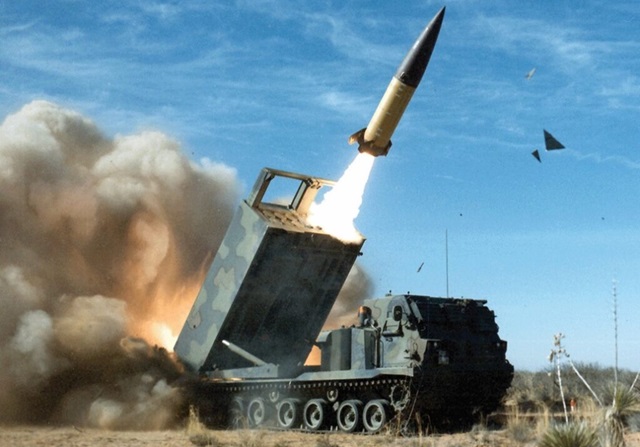
As reported by Reuters, on 11 September 2024, the Kremlin warned that Russia would respond “appropriately” if the United States allows Ukraine to strike deep inside Russian territory with long-range ATACMS missiles—a decision Moscow believes has already been made.