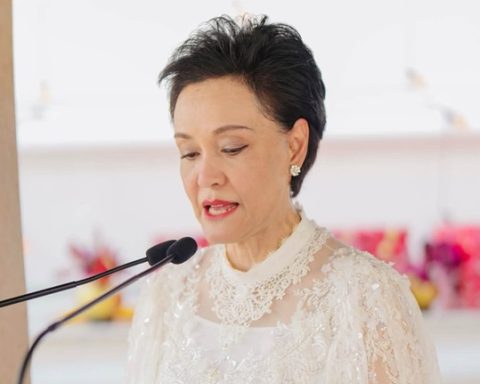
There is a change taking place in many countries around the world, all presumably moving towards a new vision, perhaps with a better understanding and resolution of today’s problems. Women are playing a leading role.
In the UK, we have 11 women holding key ministerial posts in the government of our Prime Minister, Sir Keir Starmer. Each of them has their own specialist background and training in their fields, and many come from various religious backgrounds and persuasions, representing a diversity of views. Our Chancellor of the Exchequer, Rachel Reeves, hails from a Salvation Army background and is now Anglican. Bridget Phillipson, Education Secretary, and Sue Gray, the PM’s Chief of Staff, are influenced by Catholic social teaching, while Shabana Mahmood, one of the first Muslim women elected to the House of Commons, is Justice Secretary. Louise Haigh, Transport Secretary, is responsible for plans to renationalise most rail services as contracts expire. Yvette Cooper, the Home Secretary, is working to reform the prisons and to stop illegal migration. Angela Rayner, Deputy Prime Minister and Secretary of State for Housing and Local Government, is tackling the housing shortage.
In the EU, women also hold prominent positions. Ursula von der Leyen, President of the European Commission, has used her influence to pressure some countries into withdrawing male nominees and putting forward women instead. As a result, the gender balance in the incoming team shifted from 22% women among the initial candidates to 40% – still short of her objective of parity but a significant improvement. She rewarded countries that nominated women by giving them bigger portfolios, such as Finland’s Henna Virkkunen, who has a vice-presidency and the crucial digital and security portfolios, plus a lead role in coordinating support for Ukraine. Slovenia’s Marta Kos will be in charge of the EU’s eastward enlargement. In contrast, von der Leyen downgraded nominees from countries that resisted her push for more women, such as Malta, whose nominee was assigned the relatively powerless youth, sport, and culture portfolio.
Her team is structured so that socialist and liberal vice-presidents have watchdogs to ensure that policy does not deviate from her agenda, while key functions such as trade, the budget, and fiscal policy report directly to her.
“Significantly, many of the key portfolios, including those directly related to handling Russia, will be held by Commissioners from the EU’s eastern flank – countries that joined the bloc 20 years ago but are still regarded by some western governments as ‘new member states’. A duo of former Baltic premiers, Kaja Kallas from Estonia and Andrius Kubilius of Lithuania, will be in charge of foreign and defence policy. Poland’s Piotr Serafin will manage the EU budget, with the ultra-sensitive task of drafting the next seven-year budget plan, negotiations for which will begin next year. Given the vast investments required for the green and digital transitions and European defence, Serafin, who is the right-hand man of Polish Prime Minister Donald Tusk, will have to recommend whether to slash old spending programmes such as agriculture and regional development – even though Poland is the largest recipient of EU cohesion funds – or to substantially raise revenue through European taxes, bigger national contributions, more joint borrowing, or a combination of all three,” states an EU report.
Von der Leyen has astutely read the swing in populist politics – the rightward drift of the new line-up reflects the political reality of a surge in far-right and nationalist parties in this year’s European parliament elections, even though the pro-European mainstream retains a majority. At the same time, the Commission has responded to the geopolitical reality of a growing threat, now two and a half years into Russia’s full-scale invasion of Ukraine, by appointing many Commissioners from Eastern Europe, responsible for defence and budgets.
If US Democratic Presidential nominee, current Vice President Kamala Harris, wins the US Presidential election on 4 November 2024, we could also see a significant shift in women holding positions of power and advancing gender equality.
There are also global moves to increase the number of women in positions of authority. Most recently, India passed a law reserving 33% of seats in the Lok Sabha and State Assemblies for women. This seems to mark progress for women. Will Sri Lanka be far behind? It seems unlikely after the Presidential election.
Women reclaiming their power in government and politics is a pressing issue. Gender equality is the call of the day, and rightly so. Countries with high female representation in parliament and other corridors of power, comprising 50% or more women, already include New Zealand, Mexico, Cuba, Nicaragua, the United Arab Emirates, and Rwanda.
Gender equality in politics is undoubtedly the issue of today and will remain so in the years to come.
Gender refers to “the socially constructed characteristics of women and men – such as norms, roles and relationships between groups of women and men.”
“Gender equality implies that the interests, needs, and priorities of both women and men are taken into consideration, recognising the diversity of different groups, and that all human beings are free to develop their personal abilities and make choices without the limitations set in previous times.”