

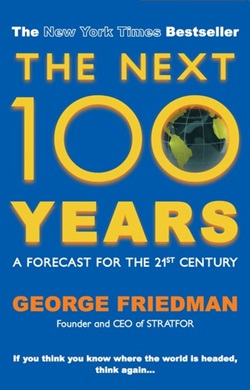
Forecasting geopolitics has been George Friedman’s life’s work—a historian whose foresight into the global order has shaped our understanding of what lies ahead. Renowned for his sharp, often unsettling predictions, Friedman, author of The Next 100 Years, is no stranger to forecasting tectonic shifts in power and influence, drawing on his philosophical inclinations, particularly his admiration for Hegel. In an era of unprecedented volatility, I sat down with him to discuss some of the most urgent issues facing the world today. For the first time, Friedman—descendant of Holocaust survivors who fled to the United States—shared his insights on Sri Lanka, elaborating on the potential future developments within the wider context of the global chessboard. As the founder and chairman of Geopolitical Futures, he brings a wealth of experience to the table. Before establishing Geopolitical Futures, he served as chairman of the strategic intelligence publishing company Stratfor.
Friedman’s forecasts are not mere speculation; they are rooted in a profound understanding of historical patterns, geopolitical imperatives, and the brutal calculus of military and economic power. Known for predicting the rise and fall of global powers with unflinching clarity, his assessments offer a window into a world defined by constant flux and competition. In this conversation, he grapples with the shifting dynamics of global giants such as Russia, China, and the United States, acknowledging that while many of his earlier predictions have held true, the contours of power have shifted in ways even he didn’t fully anticipate. Russia, bogged down in a protracted war with Ukraine, and China, grappling with economic stagnation, both seem to have faltered, while the US, despite predictions of decline, has reasserted itself on the global stage with even greater force. In Friedman’s view, this resurgence of American power is not a product of hegemony in the traditional sense but a reflection of the country’s unparalleled economic and military influence, dominance that remains unmatched and uncontested.
When asked about the accuracy of his earlier forecasts, Friedman notes with some satisfaction that his focus on Russia, China, and the United States was largely correct. However, he acknowledges that recent events have altered the trajectories of these powers in unexpected ways:
“The earlier forecast focused on Russia, on China, and the United States. So to a great extent, that was correct. But several of these major powers have slipped out.”
Russia, for instance, is mired in a war with Ukraine that has stretched far longer than it anticipated. China, once the rising economic giant, is now grappling with severe economic issues. These developments, according to Friedman, have led to a somewhat paradoxical outcome: the United States, rather than being challenged or weakened, has emerged stronger than ever.
“The US has actually increased its power,” he asserts. This resurgence of American influence is a critical point in Friedman’s analysis, and it’s not just military might that underpins it. Economically, he points out that “China’s major importer of capital is the United States,” and even Russia, embroiled in its conflict, has found itself reshaped by American intervention.
The United States is simply the most powerful economic power and the most military power.
Friedman’s perspective on the United States is unique in that he refuses to frame it as a hegemonic power in the traditional sense. Rather than imposing governments and systems upon other nations, as empires have done in the past, the US maintains its dominance largely because of its unmatched economic and military strength. He explains, “I don’t consider this hegemony. Hegemony means that we are trying to create governments here and there. The United States is simply the most powerful economic power and the most military power.” This framing suggests that America’s power is not one of coercion but of opportunity—a point Friedman accentuates when he adds, “There is no competitive economy that can challenge the United States.”
De-dollarisation is a fanciful notion
Even more striking is Friedman’s acknowledgment of the complex, often contradictory nature of American power. While the US wields immense influence globally, it is also deeply inward-looking. “The United States is a very inward country. It looks inside much more than outside,” he notes. This internal focus means that while the US may not actively seek to maintain its global dominance, its sheer economic and technological might ensures that other countries continue to rely on it. As Friedman succinctly puts it, “The rest of the world wants the technology, they want the investment, they want all these things.”
A recurring theme in Friedman’s analysis is the idea that much of America’s power is not necessarily sought but inherited by default. While many nations might wish to diminish US influence, particularly through efforts like de-dollarisation, Friedman is sceptical of these attempts. When asked about the viability of a global currency to replace the US dollar, he dismisses it as a fanciful notion, rooted more in theoretical discussions than practical reality:
“Well, when you’re ready to be paid in that new currency, it will mean something. While you insist on being paid in some currency guaranteed by your government, or my government, this is just thinking.”
Friedman is clear that the strength of the US dollar lies not in any conspiracy or manipulation but in its fundamental stability. “Everybody accepts the dollar,” he states, emphasising that no other currency has the trust or infrastructure to replace it in global trade. The fact that so many nations peg their currencies to the dollar further entrenches its dominance. As Friedman puts it, “The reason the United States is powerful is not a conspiracy by the United States. It’s that the value remains stable.”
Turning to China, Friedman’s assessment is refreshingly candid. Despite the narrative of China’s inexorable rise as a global superpower, he views the nation’s economic and military capabilities in a more limited context. He explains that China’s rapid growth over the past few decades was largely a result of its relationship with the US: “China’s economy took off because of the United States, because of American investment, because of the fact that they could sell products in the United States.” This dependence means that any economic slowdown in the US has profound effects on China—“when the United States catches a cold, China gets sick.”
From a military standpoint, Friedman is equally clear-eyed about China’s vulnerabilities. While it has built up significant military assets, particularly in the South China Sea, its strategic position is fundamentally defensive. “The Chinese are in a defensive posture always in the South China Sea, trying to keep the Americans out,” he observes. China’s reliance on trade, particularly maritime trade, leaves it exposed to potential US naval actions. Despite these tensions, Friedman does not foresee a military confrontation between the two powers: “The Chinese have come to the point where most economies do. It slows down. They will develop a new road. The US will help invest in it and buy the products from them.”
Poland Ascendant
One of the most striking aspects of Friedman’s geopolitical outlook is his prediction regarding Poland’s future role in Europe. In The Next 100 Years, he famously forecast that Poland would emerge as a dominant power on the continent, a scenario that may have seemed improbable to many at the time. However, recent events, particularly Russia’s invasion of Ukraine, have only strengthened his conviction. He explains that Poland’s strategic position has made it a pivotal player in the region: “Poland, with its history, has to be a core. Now it can do it with alliances, or it can do it by itself with the United States.”
Poland, according to Friedman, benefits from two key advantages: its close relationship with the US and its ability to make independent decisions within Europe. “Poland is now engaged in a massive military process. But it is also cutting free from Europe. It’s attached itself to the United States, and that gives it much more leverage in the future.” For Friedman, Poland’s growing military strength and strategic importance mean it is poised to become a significant power in Europe, potentially surpassing even Russia.
Poland, with its history, has to be a core. Now it can do it with alliances, or it can do it by itself with the United States.
Friedman’s vision of Poland as a rising power is deeply connected to the broader geopolitical shifts in Europe and beyond. As he explains, “What Poland has become is a pivotal point. It’s not yet a major power. But if you take a look at the dynamics of Europe, the United States, Russia, it is certainly one that has to be counted with.” The combination of geography, history, and strategic partnerships places Poland in a unique position to influence the future of Europe.
Friedman’s approach to Russia, in particular, emphasises the nation’s historical insecurities and strategic miscalculations, which have continually hindered its ambitions for global influence. As he explains, Russia’s perception of threats from its western borders has been a driving force behind much of its military actions, most notably in Ukraine. Friedman begins by acknowledging Russia’s perennial weakness, despite its formidable appearance. He notes that Russia has often misunderstood the forces it was up against, a pattern that dates back to before World War II when it failed to grasp the full threat posed by Germany. This miscalculation repeated itself after the war, during the Cold War. According to Friedman, Russia entered into a prolonged struggle with the United States without fully appreciating the nature of the conflict:
“Russia entered into a Cold War with the United States, not understanding that the United States couldn’t lose this war,” he states. For Friedman, the Soviet Union’s failure to realise the inevitable outcome of the Cold War accentuates a broader pattern of misreading geopolitical realities. Rather than collaborating with the West, particularly the United States, Russia chose to view itself in opposition, ultimately sealing its fate.
One of the key factors driving Russia’s geopolitical moves is its historical experience of invasions, notably by Napoleon and Hitler, both of whom took similar routes towards Moscow. This deep-seated fear of invasion explains, in Friedman’s view, why Russia has been so adamant about securing its western borders, particularly Ukraine.
“Russia has been invaded twice, by Hitler, by Napoleon. And in each case, they came up the same route towards Moscow,” Friedman explains. This historical trauma, he argues, led Russia to view any Western influence in Ukraine as an existential threat, which is why the 2014 Ukrainian colour revolution set off alarm bells in Moscow. “When the Americans…started an uprising in Ukraine, the Russians decided, okay, they’re serious, they’re coming, we have to deal with them.”
Russia and the EU: A Tale of Miscalculations
This, according to Friedman, explains why he predicted a Russian invasion of Ukraine long before it happened. Russia’s need to “close off Ukraine, make no attack possible” became a strategic imperative, even if it meant engaging in military actions that its capabilities could not fully support. This overestimation of its military power has been one of Russia’s key weaknesses. “Sometimes the Russians make strategic decisions that they can’t support with their military capabilities,” Friedman observes. The drawn-out war in Ukraine, which many expected Russia to win swiftly, has exposed these limitations. Russia’s failure to anticipate both the resilience of Ukrainian resistance and the level of support from the United States further compounded its strategic blunders.
Friedman goes on to explain that Russia’s inability to grasp its limitations has long kept it from achieving the global influence it seeks. Instead of forming alliances with countries it should cooperate with, Russia often finds itself in adversarial relationships, isolating itself on the world stage. “It is constantly facing off with countries that it should be an ally with,” he laments. This, in turn, hampers Russia’s economic and political potential, as it diverts resources into conflicts that are ultimately self-defeating.
In contrast to Russia’s struggles, Friedman turns his attention to the European Union, which he views as a fundamentally flawed project. “The European Union was misconceived,” he states bluntly, pointing to the inherent difficulties in trying to unite such a diverse set of nations under a single economic and political framework. The attempt to create a shared banking system and economic policy that encompasses both Germany and Italy, two very different economies, was doomed from the start, in his view.
“When the British left the EU, everybody thought they’d made a very foolish mistake. Well, it was painful for a while, but they could not live under the auspices of a central government that dictates how they grow
“You can’t have a banking system that includes the Germans and the Italians,” Friedman argues. The disparity between the stronger and weaker economies within the EU has made it impossible to implement cohesive policies that work for all member states. The result has been a patchwork of nations struggling to balance their national interests with the demands of a central European authority.
Friedman points to Brexit as a prime example of how the EU’s structure has failed some of its member states. “When the British left the EU, everybody thought they’d made a very foolish mistake. Well, it was painful for a while, but they could not live under the auspices of a central government that dictates how they grow,” he explains. Britain’s decision to leave the EU, while challenging in the short term, reflected the broader difficulties that come with trying to impose a single economic and political model on vastly different countries. For Friedman, the fundamental issue is that the EU’s creators sought to avoid war by uniting Europe economically, but in doing so, they overlooked the deep-seated differences between its member states. “The economic problem didn’t solve the military problem. They still go whichever way they want to go.”
Friedman’s pessimism about the EU’s future is rooted in its failure to address these fundamental disparities. He expresses scepticism about the bloc’s ability to survive in its current form: “I’m very negative about the ability of the EU to survive on this basis.” While individual European countries may continue to thrive, the idea of a unified Europe, in his view, is unsustainable.
To be continued