by Our Correspondent in Colombo
Sri Lanka is facing an increasingly complex problem: the unchecked influx of foreign nationals who, under the guise of tourism, are overstaying their visas and illegally operating businesses. While Israeli nationals have drawn significant attention for their activities in areas like Weligama, Mirissa, and Arugam Bay, they are not alone. Ukrainians, Russians, Chinese, Indians, and others have also taken advantage of the country’s lax enforcement of immigration laws to establish illegal enterprises, exacerbating local tensions and raising serious concerns about national security.
In these tourist hotspots, what began as a welcoming environment for travelers has turned into a shadow economy run by foreign nationals. These individuals, whether from Israel, Ukraine, Russia, or elsewhere, have found ways to exploit Sri Lanka’s weak regulatory framework, setting up businesses without proper documentation or permits. From guesthouses and restaurants to exclusive events and nightlife spots, these illegal enterprises have sidelined local business owners and disrupted the local economy. The frustration among Sri Lankans is palpable—many feel pushed out of their own neighborhoods, unable to compete with foreign-run businesses that often operate with little oversight.
Despite repeated warnings from local residents and community leaders, the Sri Lankan government has been slow to address the issue. Many, including Matara district politician Rehan Jayawickrama, have openly criticized the authorities for their inaction, pointing out that these foreign nationals are not only overstaying their visas but also profiting from illegal businesses without facing consequences. The authorities, it seems, are more focused on ensuring security in these areas than enforcing immigration laws or cracking down on illegal operations.
The lax regulation of foreign-run businesses is not only hurting local Sri Lankan entrepreneurs but also contributing to growing security concerns. Recently, credible intelligence reports have surfaced, indicating that Islamic extremists might be targeting areas in southern and eastern Sri Lanka, where Western and Israeli tourists frequently visit. These warnings were underscored by the fact that the U.S. informed Sri Lankan authorities three times about an impending attack before going public with a travel advisory, which was soon followed by similar warnings from Australia, Russia, New Zealand, and the United Kingdom.
Despite these warnings, there has been little transparency about the government’s efforts to investigate the foreign nationals who are operating illegally in these regions. Instead, local law enforcement and security forces appear more concerned with protecting these areas from potential extremist threats than with scrutinizing the individuals running businesses there without proper authorization.
The situation has grown more complex with the arrival of Ukrainian and Russian nationals, many of whom have flocked to Sri Lanka in search of respite from the ongoing conflict in Eastern Europe. While these visitors often come as legitimate tourists, a growing number have stayed on illegally, setting up businesses in popular areas. Similarly, Chinese and Indian nationals have also been implicated in running unauthorized ventures, particularly in sectors like real estate, restaurants, and small-scale tourism operations. These foreign-run businesses operate outside of Sri Lankan laws, often paying minimal taxes, undercutting local competitors, and further eroding trust between locals and the government.
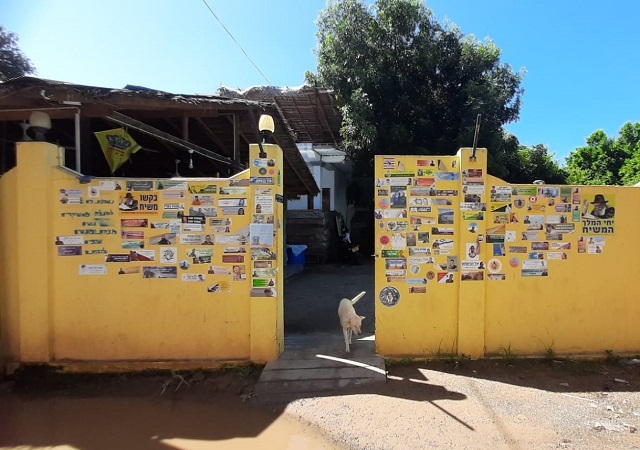
The recent conversion of a building in Arugam Bay into a Chabad House, a religious center for Israelis, has stirred further tensions.
This unchecked influx of foreign business owners is not only straining local resources but also putting Sri Lanka’s national security at risk. With the potential for extremist groups to target areas frequented by foreign tourists, it’s becoming increasingly clear that the government’s failure to enforce its immigration and business laws could have far-reaching consequences. While security measures have been heightened in areas like Arugam Bay, Weligama, and Pottuvil, it raises the question of why these foreign nationals, many of whom are living and working in Sri Lanka illegally, are not being investigated more thoroughly.
The recent conversion of a building in Arugam Bay into a Chabad House, a religious center for Israelis, has stirred further tensions. While Chabad Houses serve as cultural and religious hubs for Jewish communities worldwide, many locals see this as another example of foreign nationals establishing exclusive spaces without respecting local customs or regulations. This has only deepened the divide between Sri Lankans and the growing number of foreign nationals who appear to be setting down roots illegally.
In response to these growing tensions, foreign governments have stepped up their warnings to citizens visiting Sri Lanka. After the U.S. travel advisory was issued, other countries quickly followed suit, cautioning their citizens to avoid popular tourist areas where the threat of extremist violence is perceived to be high. This is a significant blow to Sri Lanka’s tourism industry, which is already grappling with the impact of global crises and the slow recovery from bankruptcy. As the peak European winter season approaches, these warnings could lead to a severe drop in foreign visitors, further straining the country’s fragile economy.
The real issue, however, lies in the Sri Lankan government’s inability to regulate and control the activities of these foreign nationals. Whether they are from Israel, Russia, Ukraine, China, or India, the reality is that these individuals are exploiting Sri Lanka’s weak legal framework with the support of a few locals to stay beyond their permitted time and profit from illegal businesses. This not only undermines the local economy but also puts Sri Lanka at risk of becoming a hotspot for international criminal activity, including money laundering, tax evasion, and now, the potential for extremist violence.
To prevent further escalation, the Sri Lankan government must take decisive action. This includes tightening immigration controls, ensuring that all foreign nationals in the country are properly documented, and cracking down on illegal business operations. Without these measures, Sri Lanka risks not only its economic stability but also its national security, as extremist groups may see these lawless zones as prime targets for attacks.