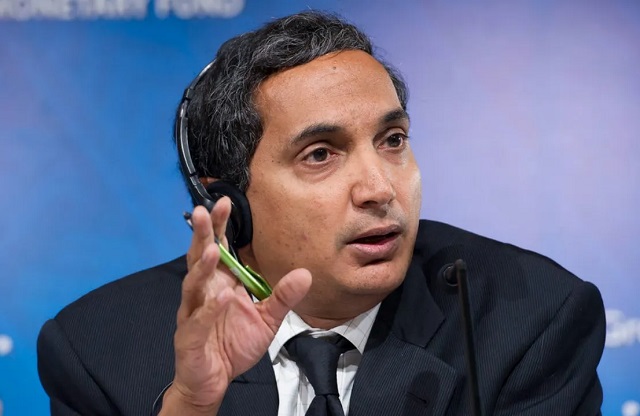
Sri Lanka has made significant strides in its economic reform agenda, positioning itself for an upcoming third review of its Extended Fund Facility (EFF) program, according to Krishna Srinivasan, Director of the International Monetary Fund’s (IMF) Asia and Pacific Department. Speaking at a press briefing during the IMF-World Bank Annual Meetings in Washington, Srinivasan acknowledged the reform progress, highlighting the improvements since the country’s economic crisis in 2022.
Since Sri Lanka’s new government assumed office, Srinivasan and a high-level IMF team have engaged in productive discussions with Sri Lankan officials, which will continue throughout the Annual Meetings in Washington. According to Srinivasan, there is a strong consensus that Sri Lanka, which had faced severe economic challenges, has achieved “hard-won gains,” with positive growth over the last four quarters and decreasing inflation rates.
Under the EFF program, the IMF is helping to address key priorities identified by the new Sri Lankan government, including social protections and other essential areas. The IMF, encouraged by the reforms, is optimistic about moving toward the third program review “soon,” Srinivasan indicated.
On the topic of debt restructuring, Srinivasan reported that the Sri Lankan government has made progress, securing agreements with official creditors and reaching an agreement in principle with private creditors. He noted that a formal agreement with all creditors is a critical next step, representing a major advancement in the country’s recovery plan. However, he cautioned that extensive reforms remain necessary for a path toward sustainable economic growth.
In response to inquiries about macro-linked bonds, Srinivasan clarified that the IMF does not directly influence the type of debt instruments used in restructuring agreements, emphasizing the importance of consistency with IMF program targets. Notably, he acknowledged that while macro-linked bonds are gaining popularity, they may not suit every country’s circumstances, with traditional instruments still widely in use across different restructuring scenarios.