Many have heard of Soviet intelligence officer Richard Sorge, who transmitted information to Moscow indicating that Japan was not planning to fight the USSR. Thanks to this, dozens of divisions from the Far East were urgently transferred to Moscow in 1941. But how did an ethnic German who did not know Japanese manage to obtain this information? The answer: he was an exceptional journalist who became such a renowned expert on Japan that the German ambassador to Japan regularly consulted with him. Sorge informed the ambassador that Japan had abandoned its Axis ally.
Observe Your Opponent’s Moves
In the autumn of 1941, panic was gradually rising in Moscow. Near Kiev, the Red Army lost over half a million troops in a “cauldron,” and similar disasters unfolded near Vyazma and Bryansk. It seemed nothing could halt the Germans’ victorious march toward Moscow. By mid-October, the government decided to evacuate the capital and destroy anything that couldn’t be removed. The General Staff relocated to Arzamas, foreign embassies to Samara (Kuibyshev), and ordinary citizens simply headed east, seeking refuge wherever they could. The fall of Moscow was expected to mark the war’s final stage.
But this did not happen. In November, German troops became bogged down on the approaches to Moscow, and in December the Red Army launched a large-scale counteroffensive. A decisive factor in its success was the arrival of two dozen fresh divisions from Siberia, whose soldiers were easily recognized by their warm clothing. This force fully compensated for the lack of troops destroyed in previous “cauldrons,” while the Germans could not hope for reinforcements.
In the Soviet era, it was uncommon to imagine oneself in the General Staff’s position, and independent military analysts weren’t published in newspapers. But if such a genre had existed then, many would have wondered: why did the Soviet government risk exposing the Far East, where Japan—an ally of Hitler—could enter the war at any moment? The answer to this question only surfaced after the war, when people across the USSR learned who Richard Sorge was. This Soviet intelligence officer discovered that a secret Japanese government meeting had decided against declaring war on the USSR.
Baku-Born German
Richard Sorge was born in 1895 in Baku, then part of the Russian Empire. It may seem amusing: how could the Germans and Japanese fail to identify a Soviet spy in a man officially born in Russia? Yet Sorge did not come from Russian Germans. He was born into the family of a prominent businessman temporarily residing in Russia to develop the Baku oil industry. When Sorge was three, his family returned to Germany, and he had no further ties to “Russia” as such.
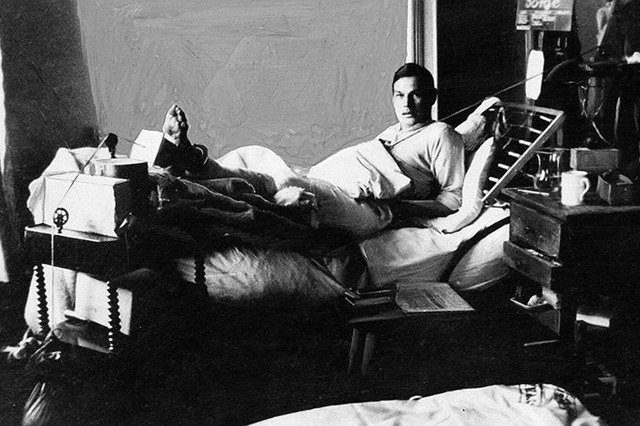
Sorge was a German patriot, and after World War I broke out, he volunteered for the front. There, he suffered severe wounds (once on the Russian front), becoming disabled—a shell shattered the bones in one leg, which was only saved by shortening it a few centimeters. This experience left him hating the war and those he deemed responsible: the bourgeoisie and the government supporting it. Sorge became a communist. After the defeat of the revolution in Germany and the banning of the Communist Party, he went to Moscow. As a committed communist internationalist, he obtained Soviet citizenship, joined the Comintern, and later began working for Soviet intelligence.
In 1930, Sorge was stationed in Shanghai, where he built a Soviet intelligence network and acquired the pseudonym Ramsay. Shanghai was then a bustling international business hub, akin to modern Singapore or Dubai, home to Europeans, Americans, missionaries, journalists, and technical specialists—all drawn to the opportunities in China and the Pacific. It was an ideal environment for an intelligence officer due to the abundance of foreigners, many of whom were outcasts, adventurers, and dissidents. Additionally, Chinese counterintelligence was nearly nonexistent, posing minimal risk to Sorge unless an uprising broke out.
A typical acquaintance of Sorge’s in Shanghai might look like this: “Anna. A well-known journalist and writer. American. The public considers her a radical, even a communist. Often under police surveillance… one of the best experts on China’s political conditions with exceptional connections worldwide. Of proletarian origin. During the war, she was active in the Indian revolutionary movement and left-wing social democracy. She’s about 38, very nervous, difficult, yet reliable and loyal; she’s ready to work with us under any circumstances,” he reported to Moscow.
As Japan conquered China, Sorge recognized that Japan required closer monitoring. So, in 1933, he went to Japan, but he needed a cover to blend in and be favorably received by the authorities. Operating as an entrepreneur would have required significant funding, so Sorge entered the country posing as a correspondent for German publications, benefiting from his impressive portfolio of work written in Shanghai.
The Journalist’s Advantage
In Japan, Sorge faced three main tasks: maintaining his cover as a German journalist, establishing contacts with locals, and using his German nationality to access the German embassy. The first task was straightforward, as Sorge wrote well and could easily publish articles in major German or American outlets. Appearing as a journalist without visible publications might arouse suspicion.
The second task was more challenging. A white man frequenting Japanese working-class or business districts, inviting locals to dine, and asking about Japanese militarism would be too conspicuous. This job needed someone who could pass as a native, and this is where Sorge achieved his first success in Japan: he persuaded Yotoku Miyagi, a Japanese-American recruit, to stay in Japan. His second Japanese contact was Hotsumi Ozaki, a communist acquaintance from Shanghai.
Sorge’s role required not only recruiting agents but becoming a genuine expert on Japan, producing analyses that reflected a deep, localized understanding. He devoted all his time to this task, and upon his arrest, police confiscated around a thousand books on Japanese history and culture from his home, much to their frustration.
“The political incidents that arose occasionally were immediately clear to someone well-versed in ancient Japanese history—such insight was beyond even the secret police. Understanding modern Japan’s foreign policy was easier through the lens of its history,” Sorge stated after his arrest.
Through dedicated study, Sorge became a true expert on Japan, no longer needing to rely on fake credentials or texts. After a few years, his reputation grew, and major publications competed to print his work. The influential Frankfurter Zeitung even credited his writing with enhancing its prestige.
Eventually, in 1938, Sorge’s expertise earned him an invitation to serve as press secretary at the German embassy, a remarkable opportunity, given the alliance between Japan and Germany. This role allowed him close contact with embassy staff, and he became an informal consultant to Ambassador Eugen Ott, who shared details of all his meetings and insights into Japanese-German relations.
“Sekigun! Kokusai Kyosanto! Sobieto Kyosanto!”
It was from Ott that Sorge learned about Germany’s plans to attack the USSR in the summer of 1941. Although his reports to Moscow are sometimes dramatized as warning of an attack on June 22, Sorge actually sent mixed messages for six months, reflecting the contradictory “leaks” the Germans had spread to create confusion.
But Sorge accurately determined Japan’s intentions regarding a possible war with the USSR.
In a series of reports on September 14, 1941, he synthesized a vast amount of information from agents in Japan and the German ambassador, who confided everything as if in a confession.
This information could only be false if Sorge had been exposed, and a complex deception was being staged to mislead the USSR. Soviet leaders carefully weighed this intelligence and chose to trust Sorge, which ultimately helped save Moscow.
Sorge and his network were arrested by Japanese counterintelligence on October 18, likely due to radio operator Max Clausen’s meeting with the Soviet ambassador. Sorge endured three years of investigation and trial before being hanged on November 7, 1944, for espionage. Before his execution, he reportedly said in broken Japanese: “Sekigun! Kokusai Kyosanto! Sobieto Kyosanto!” meaning “Red Army, Comintern, and Soviet Communist Party.”
Sorge was a deeply committed agent, loyal to the end to the transnational communist ideal, even if it existed, at that time, only in imagination.