South Korea’s alliance with the United States is facing one of its most difficult periods in years, with disputes over intelligence sharing, investment commitments and military cooperation increasingly affecting the security relationship between the two countries. The tensions have exposed growing distrust between Seoul and Washington at a time when North Korea is intensifying its missile tests and expanding a nuclear arsenal that poses a direct threat to the South.
Kang Kyung-wha, South Korea’s top envoy to Washington, acknowledged the difficulties in a rare admission to lawmakers on Monday, referring to an “issue” with Washington’s sharing of covert intelligence. “There are limitations in our communication with the White House,” Kang said. “I find it somewhat frustrating.”
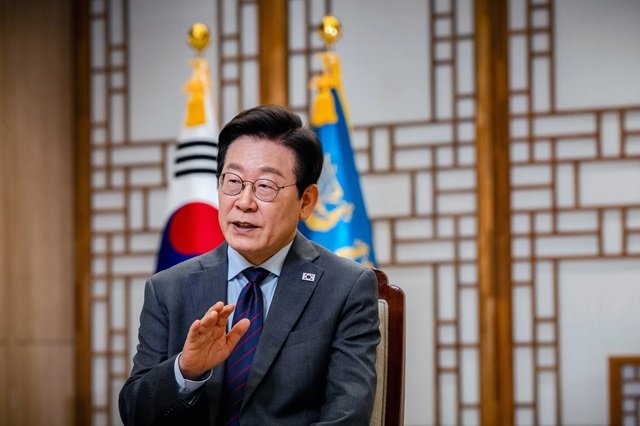
Her remarks followed reports earlier this year that a South Korean official had disclosed US intelligence concerning a secret North Korean nuclear facility. President Lee Jae Myung rejected the allegations, describing them as “absurd”. The dispute has nevertheless become a focal point in a wider deterioration of relations, with concerns about intelligence cooperation extending beyond a single reported disclosure.
“The most damaging aspect of the friction over intelligence restrictions is it conveys the U.S. does not have trust in Korea as an ally,” said Victor Cha, Korea chair at the Center for Strategic and International Studies. “It’s serious because it hits at the heart of the military alliance.”
Other developments have reinforced the perception of a partnership under pressure. A prominent South Korean politician was forced to cancel a visit to the United States this month after reports that his visa had been delayed. President Donald Trump has scaled back military drills with South Korea, while local media reported in June that South Korea’s intelligence agency had been excluded, at Washington’s request, from a trilateral meeting with the United States and Japan on North Korea.
There is no indication that Washington intends to withdraw prematurely any of the 28,000 US troops stationed on the Korean peninsula. But diminished intelligence cooperation could make it more difficult for Seoul to assess and respond to North Korea’s military capabilities. North Korea is now capable of producing as many as 20 nuclear weapons a year and has declared South Korea its “principal enemy”, increasing the importance of reliable information-sharing between the allies.
The strains extend well beyond security policy. Washington has accused Seoul of dragging its feet on an investment deal and discriminating against Coupang, an e-commerce giant listed in the United States. Trump has also complained that South Korea has not done more to assist the United States over Iran. Meanwhile, promises of US assistance with South Korea’s pursuit of nuclear-powered submarines have not been realised, adding to the frustrations surrounding the relationship.
A proposed liquefied natural gas project in Alaska has become another point of contention. Lee publicly questioned Washington’s characterisation of South Korea’s participation in the project last month, saying cooperation would depend on whether the deal was financially viable. The disagreement comes as Trump promotes the project while seeking to strengthen Republican prospects ahead of the US midterm elections.
Jenny Town, a senior fellow at the Stimson Center, said South Korea’s difficulties with Washington were “more pronounced in scope and severity” than those experienced by other US allies. The disputes “paint a picture of an alliance that’s highly strained and losing trust”, she said.
Domestic political calculations are also contributing to the deterioration. “Domestic political pressures are intensifying the latest U.S.-South Korea dispute,” said Adam Farrar of Bloomberg Economics. “Trump is pushing the Alaska LNG project as he looks to bolster Republicans ahead of the midterms, while Lee has incentives to push back forcefully as he faces weak approval ratings.”
The current difficulties echo tensions during Trump’s first term, when he demanded that Seoul pay more towards the cost of stationing American forces on the peninsula and reduced military drills while pursuing engagement with North Korean leader Kim Jong Un. But the circumstances are different now, according to Kim Jung, a professor at the University of North Korean Studies in Seoul. During Trump’s first term, South Korea’s national security adviser and intelligence chief played key roles in arranging meetings between the US president and Kim.
“This government’s ability to manage the situation is now being put to the test,” Kim said.
Lee has sought to preserve the alliance while pursuing a broader foreign policy that includes warmer relations with China. His approach, described as “pragmatic diplomacy”, has involved efforts to maintain close ties with Washington without abandoning opportunities for engagement with Beijing. However, his spy chief and unification minister are both regarded as members of a faction favouring improved relations with China, a position that some analysts say has been poorly received by China hawks in Washington.
The South Korean president has also signalled that maintaining the alliance should not require unquestioning acceptance of American demands. Addressing his cabinet this week, Lee said South Korea, as a sovereign nation, should “avoid a submissive or overly deferential approach in relations with other countries”.
Despite the friction, Lee has continued efforts to engage Trump directly on North Korea. The two leaders held a brief meeting in New York last month on the sidelines of the United Nations General Assembly, where Lee sought assistance in restarting dialogue with Pyongyang. The meeting lasted 30 minutes.
“President Trump kindly reminded me of our plan to play golf,” Lee said afterwards. South Korea has since established a task force to prepare for a golf outing between the two leaders ahead of the Group of 20 summit in December, Yonhap News reported.
The stakes for Seoul remain particularly high because Washington provides direct military deterrence against North Korea. The South Korean government says it is working to strengthen trust with the United States and maintains that the alliance is the cornerstone of its foreign and security policy. The US State Department declined to comment on the tensions, the White House did not respond to a request for comment, and South Korea’s National Intelligence Service did not respond to calls for comment.
Speaking in Seoul on Wednesday, former US vice-president Kamala Harris criticised Trump for weakening the alliance through his decision to reduce military drills and his use of tariffs to threaten partner nations. She called for a renewed commitment to South Korea, saying: “America must be strategic in the use of our economic power, not reckless or spiteful.”