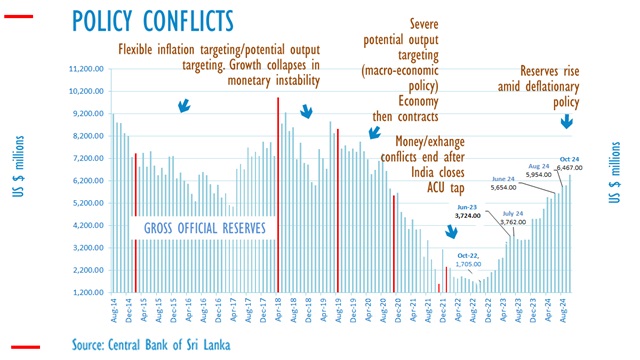
Sri Lanka’s gross foreign reserves saw a significant increase of $474 million in October, rising to a total of $6.4 billion, according to data released by the Central Bank of Sri Lanka. This marks a positive shift in the country’s financial position as it continues to recover from economic challenges.
The gross foreign reserves are composed of both the Central Bank’s monetary reserves and fiscal reserves sourced from loans. A key development in October was the signing of a $200 million loan agreement with the World Bank. While it is not clear whether the loan has been disbursed yet, it signals continued international support for Sri Lanka’s economic recovery.
For over two years, the Central Bank has implemented a deflationary policy, resulting in a series of balance of payments surpluses. This strategy has been instrumental in stabilizing the country’s foreign exchange position. Furthermore, the Central Bank has allowed the Sri Lankan rupee to appreciate, a move that is partly attributed to an ongoing program with the International Monetary Fund (IMF). The policy shift has also helped reverse some of the inflationary pressures created during the economic crisis.
One of the most significant indicators of progress is the recovery of Sri Lanka’s central bank net reserves. Once negative by $4.6 billion during the height of the currency crisis, the net reserves are now approaching zero as of September, signaling substantial improvement in the country’s financial health.
Additionally, the Sri Lankan Central Bank has successfully repaid loans from both the International Monetary Fund (IMF) and the Reserve Bank of India, further bolstering the country’s economic recovery efforts.