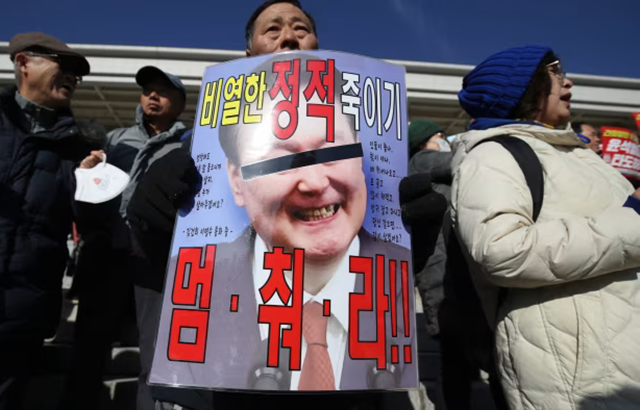
South Korean President Yoon Suk Yeol is facing mounting calls for impeachment following his failed attempt to impose martial law, sparking the country’s worst constitutional crisis in decades. Opposition lawmakers, enraged by Yoon’s declaration, are now urging him to resign or risk formal impeachment proceedings. Meanwhile, protests erupted across Seoul, with demonstrators voicing their discontent against the 63-year-old former prosecutor.
The crisis unfolded late on Tuesday when Yoon delivered an unscheduled national address declaring martial law, citing the need to purge “anti-state forces” and “normalize” the country. However, hours later, he backtracked on the decision, lifting the order after it was met with fierce opposition from the legislature, which is controlled by his political rivals. Troops that had been deployed around the parliament building were also withdrawn.
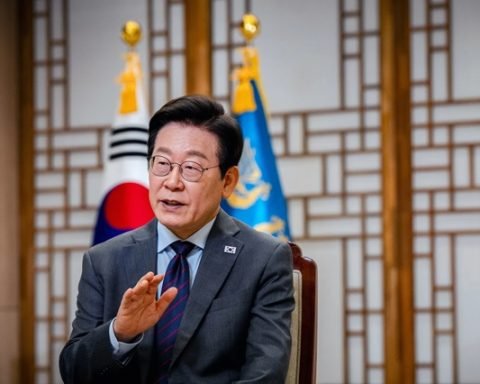
The South Korean opposition party, the Democratic Party, condemned the move as a “grave violation of the constitution,” calling it an act of treason. Party leader Lee Jae-myung warned of the risks associated with Yoon’s actions, particularly the potential to destabilize the border with North Korea and provoke an armed clash.
The martial law decree was the first of its kind in South Korea since the return to democracy in the 1980s, and it marked the peak of tensions between Yoon and the opposition-controlled National Assembly. Yoon’s presidency, which began in May 2022, has been characterized by political gridlock, with opposition lawmakers blocking much of his legislative agenda. His approval ratings have plummeted as a result.
The chaos following the martial law declaration also had a significant impact on South Korea’s economy. The country’s financial authorities responded by vowing to stabilize the markets, pledging “unlimited liquidity” in a bid to calm investor nerves. The South Korean won, which had weakened sharply after Yoon’s announcement, managed to recover, while the benchmark Kospi index fell by nearly 2 percent.
The ruling People Power Party, Yoon’s own political faction, has also called for his defense minister, Kim Yong-hyun, to be dismissed, citing the minister’s role in suggesting the martial law measure. There are ongoing discussions within the party regarding whether Yoon should step down from his position entirely.
In the event of impeachment proceedings, the National Assembly would need a two-thirds majority to move forward. Opposition lawmakers currently hold 192 of the 300 seats, meaning they would need support from at least eight members of Yoon’s party to succeed. If impeachment passes, Yoon would be suspended from office until a final ruling by South Korea’s Constitutional Court.
The crisis comes at a time when South Korea is already grappling with a political environment that has seen persistent friction between the executive and legislature. Yoon’s presidency has been marked by contentious relations with the media, a struggle to pass major legislation, and growing dissatisfaction among the public.
While Yoon has earned praise internationally, particularly for his strong stance against North Korea and his support for Ukraine, his domestic tenure has been plagued by scandals, including allegations involving his wife and controversies over policy changes.