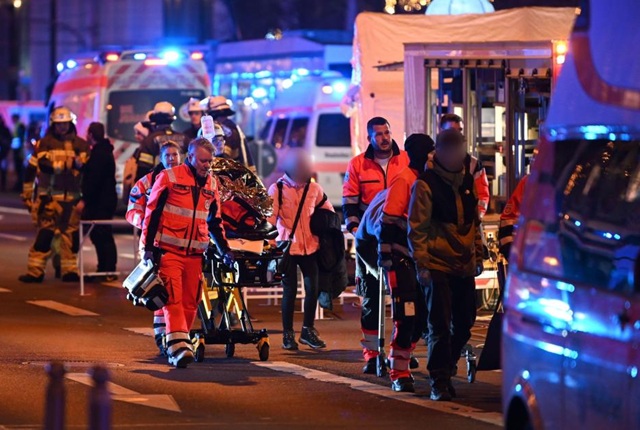
A festive evening at a Christmas market in the eastern German city of Magdeburg turned into a nightmare on December 20, 2024, when a vehicle rammed into a crowd of shoppers, killing four people, including a nine-year-old boy, and injuring over 200. Among the injured, dozens remain in critical condition as authorities investigate what they are now calling a deliberate act of violence.
The attack occurred during the peak hours of the bustling market, where families and tourists had gathered to enjoy the holiday season. Witnesses described scenes of chaos and horror as a rented BMW 4×4 sped into the crowd, sending stalls and visitors flying. Emergency services arrived swiftly, but the devastation was already immense. The driver, identified as 50-year-old Saudi-born psychiatrist Dr. Taleb al-Abdulmohsen, was arrested at the scene without resistance.
Dr. Taleb al-Abdulmohsen’s identity and background have raised more questions than answers. A psychiatrist by profession, he had been living in Germany since 2006 and was granted refugee status ten years later. Once seen as a vocal critic of the Saudi regime and a self-proclaimed atheist, al-Abdulmohsen had built a reputation as an opponent of both the Saudi monarchy and Islam. In interviews and on social media, he frequently referred to himself as “the most aggressive critic of Islam in history.”
Despite his secular and anti-Islamic stance, authorities have discovered a deeply troubling side to al-Abdulmohsen’s public and private life. Over the years, he grew increasingly disillusioned with Germany, frequently posting inflammatory content on social media. His posts criticized German authorities and society, accusing them of persecution. In one recent video, he declared, “The German nation is responsible for the killing of Socrates,” and blamed the government for his suffering.
Authorities are now piecing together the timeline of al-Abdulmohsen’s apparent radicalization. In addition to his anti-Islamic rhetoric, he reportedly engaged with far-right ideologies and shared content critical of German leaders, including Chancellor Olaf Scholz and former Chancellor Angela Merkel. Posts on social media reveal his frustration with Germany’s asylum policies, which he had once supported but later denounced, urging Arab asylum seekers to avoid the country.
Further complicating the case, Saudi authorities had reportedly warned German intelligence about al-Abdulmohsen on multiple occasions. He was accused of involvement with underground Saudi opposition groups and facilitating captagon drug trafficking networks. These warnings, however, did not result in any preventive action, leaving many questioning how such a high-profile individual escaped scrutiny.
The attack has reignited debates about public safety and the effectiveness of Germany’s counter-terrorism measures. While initial assumptions pointed to Islamist terrorism, al-Abdulmohsen’s profile as an anti-Islamic activist with links to far-right ideologies has baffled experts and authorities alike. His statements on social media in the days leading up to the attack, including ominous references to an “operation,” have fueled speculation about his motives.
Germany’s focus on domestic extremist groups, such as the far-right Reichsbürger movement, has left gaps in monitoring international threats, particularly those with unconventional ideological alignments. Critics argue that al-Abdulmohsen’s actions highlight the need for broader vigilance across ideological lines.
As forensic teams continue to examine the scene of the attack, Magdeburg and the nation mourn the loss of innocent lives. Vigils have been held in remembrance of the victims, with citizens expressing both grief and anger over the tragedy. Chancellor Scholz has called for unity, urging Germans to come together in the face of violence and pledging a thorough investigation to ensure accountability.