Each year, AI inches closer to the sci-fi visions we once only imagined. In 2024, it delivered breakthroughs that are transforming industries, saving lives, and going beyond what we thought was ever possible. Today, we’re bringing you the top AI breakthroughs of the year and exploring what they mean for the future.
AI is accelerating our understanding of the universe. This year, researchers at Harvard and MIT made major advances in brain mapping, identifying key regions involved in memory storage and image processing—innovations that could revolutionise the treatment of memory disorders. In chemistry, AI has transformed quantum simulations, enabling new chemical discoveries. Berkeley Lab’s AI at Scale system now allows researchers to model chemical reactions faster than ever before. Previously, such achievements were almost impossible due to limited computational power, but this is all changing with AI. With these new achievements, AI is redefining the scope of scientific enquiry.
One of the more unexpected breakthroughs this year came from St. Peter’s Chapel in Switzerland, which introduced AI Jesus in its confessional booths. This AI provides advice grounded in theology and psychology, catering to those hesitant to speak with human clergy. While it has sparked debates about ethics and faith, it highlights how AI is becoming embedded in deeply personal aspects of human life. Whether you view it as innovative or controversial, it’s an interesting glimpse into how technology intersects with culture and spirituality.
AI isn’t just transforming industries, it’s saving lives. Harvard’s AI model, CHIEF, made waves this year by diagnosing rare cancers with accuracy that hasn’t been possible until now. It correctly identified 98% of metastatic cancers from histopathological slides and even predicted how patients would respond to treatments. This level of precision could standardise diagnostics globally, reducing errors and ensuring that patients, no matter where they are, receive the best possible care. In a world where early diagnosis can mean the difference between life and death, AI is poised to be a critical ally to healthcare.
Material science studies how different materials work and helps create new ones for technology and everyday use. This year, researchers used AI to discover a new superconductor that works at room temperature and atmospheric pressure—a long-standing goal in physics and engineering. This development could greatly advance energy storage, making renewable energy more efficient and widely accessible. Imagine power grids with zero energy loss or ultra-fast electronic devices. AI-driven material discovery is opening doors to innovations that will shape the future of technology and sustainability.
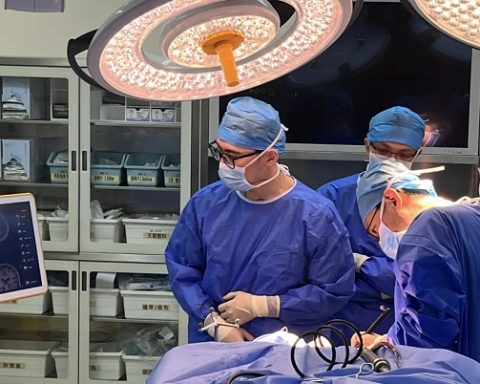
Robotics has taken a giant leap forward in 2024, thanks to AI. Researchers at Johns Hopkins University developed an AI-enhanced robotic arm capable of tying intricate surgical knots autonomously. How? By learning through imitation and reinforcement. The same approach has been used to design robots that can perform complex tasks, from assembling microchips to folding your laundry. It allows robots to improve with practise, achieving precision that traditional automation could never match. These advancements will redefine industries like healthcare and manufacturing, enabling robots to handle tasks that require both dexterity and intelligence. The result? Higher efficiency, lower costs, and the ability to tackle entirely new challenges.
The LLM has taken AI safety and reliability to the next level, earning it significant recognition. This year, it was adopted by organisations like UNICEF to assist disaster response teams. Claude excels at providing accurate, crisis-specific advice while adhering to strict ethical guidelines. This focus on safety is crucial as AI becomes more integrated into critical systems. Whether it’s supporting humanitarian efforts or assisting policymakers, Claude shows that AI can be both powerful and responsible, building trust in the most sensitive applications.
Video production has never been easier. This year saw the release of Google’s Veo, a generative AI that creates high-quality videos from simple prompts. OpenAI’s Sora also emerged, creating photorealistic videos from text descriptions with remarkable consistency in characters and motion. These tools are revolutionising content creation, enabling educators, marketers, and storytellers to bring their visions to life. But they also raise questions about authenticity and misinformation. Critics worry about the potential misuse for deepfakes and misleading content. Still, with proper guidelines and responsible use, tools like this can make content creation accessible to anyone. Keep an eye out for more hyper-realistic AI videos that will likely take over the internet.
Imagine an AI that can see what you’re working on and provide meaningful assistance. Microsoft’s Copilot Vision is making this a reality. By combining text and visual understanding, it can interact with complex, data-rich interfaces. For example, it can extract tables from webpages, summarise their content, and even guide users through intricate workflows. We ranked this breakthrough highly because its multimodal capability offers a glimpse into the future of AI. Systems that seamlessly integrate with our environments and enhance productivity. It’s setting the stage for a more intuitive and accessible digital experience that can benefit any field.
With increasingly severe weather events each year, this AI system has become one of the most crucial for its potential to save lives. Google DeepMind’s Gencast has significantly advanced weather prediction by accurately forecasting extreme weather events like hurricanes and floods. But it’s not just about disasters. Gencast’s capabilities extend to long-term weather modelling, which can help farmers optimise crop yields and improve water resource management. The future of climate resilience could depend on AI systems like Gencast, making our world safer and more prepared for the challenges ahead.
OpenAI’s latest model is a true game-changer in the AI world. It’s not just smarter; it’s reasoning on a whole new level. It excels at tackling complex problems in mathematics, coding, and logic. What sets O1 apart is its ability to explain its thought process step by step. This isn’t just fascinating from a research perspective. It can help students understand complex topics by revealing the step-by-step thought process behind learning. This year, O1 solved previously unsolvable problems in cryptography, bringing new insights to secure data transmission. It’s also been a game-changer for debugging software, identifying issues, and proposing solutions faster than any human could.
With O1, we’re entering an era where AI becomes a trusted partner in solving some of humanity’s toughest challenges. These top breakthroughs are just the beginning. As AI continues to evolve, it will play an even greater role in shaping our world.