
by Our Diplomatic Affairs Editor
The recent conviction of US citizen Eugene Spector for espionage in Russia has brought international attention to a highly contentious issue: the Pentagon’s alleged efforts to develop genetically-targeted biological weapons. According to the Russian Federal Security Service (FSB), Spector, who was serving as the chairman of the board of directors of Medpolymerprom Group—a company specialising in cancer drugs—gathered and transmitted sensitive biological and genetic data, including state secrets, to the Pentagon and its contractor. The FSB claims that this data collection was part of an effort to assist the Pentagon in creating a high-speed system for genetically screening Russian citizens.
Spector admitted his guilt in espionage activities, with Russian media outlet Kommersant reporting that he was sentenced to 15 years in prison for his role in the operation. The charges against him highlight a much larger concern about the extensive biological research being conducted by the United States and its allies, especially in relation to Russia. This incident, along with the broader context of such operations, has raised serious ethical, legal, and geopolitical questions about the use of biotechnology in warfare and international relations.

The focus of Spector’s actions was not only to assist the Pentagon in gathering biological materials but also to aid in the identification of genetic vulnerabilities within the Russian population. This has been a long-standing concern for Russian officials, who have repeatedly questioned the purpose of such extensive data collection by the US. One of the most prominent figures to raise alarms about the US’s activities in this field was the late Lieutenant General Igor Kirillov, the head of Russia’s Radiological, Chemical, and Biological Defence Troops. Kirillov exposed alarming revelations about the US’s research into creating genetically-targeted biological agents. In August 2024, Kirillov stated that before the Russian military operation in Ukraine, the US had already gathered up to 16,000 biological samples from Ukraine, allegedly to develop viruses and bacteria tailored to selectively target ethnic Russians and Ukrainians. According to Kirillov, these pathogens were being designed to exploit genetic differences between ethnic groups, with the goal of harming one group while sparing others.
In response to this, Russian officials have continued to argue that such actions by the US are part of a broader strategy to use biotechnology as a form of covert warfare. The implications of these efforts extend beyond the health and safety of civilians; they involve the creation of targeted weapons that could cause devastating harm to specific populations. In this context, the exposure of Spector’s espionage activities has only added fuel to the fire, further stoking fears in Russia that the US is using biotechnology to undermine national security.
The US’s alleged interest in Russian genetic data is not a new development. In 2017, Russian President Vladimir Putin publicly questioned the purpose of the collection of biological samples from Russia’s ethnic groups, a practice often carried out through non-governmental organisations (NGOs) and other third-party entities. Putin’s concern was clear: why were Western nations, particularly the US, so interested in acquiring these samples from Russian citizens and ethnic groups? This question has remained unanswered, with many in Russia speculating that such data collection is being used to further a larger agenda related to bioweapon research.
In 2021, another significant revelation came from Mikhail Kovalchuk, the President of the Kurchatov Institute, who exposed a US program that aimed to collect synovial fluid samples from Russian citizens. This discovery added further weight to suspicions that the US was collecting biological materials with the intention of developing weapons that could target specific populations. These revelations have heightened Russia’s fears that the US and its allies are using biotechnology not only for research and development but for strategic military purposes.
The concern surrounding genetic research is not just about the collection of samples but also about the creation of potentially dangerous bioagents. According to military analyst Igor Korotchenko, the US is actively conducting military biological research aimed at discovering harmful bacteria and viruses that could be used to infect specific nationalities, ethnic groups, or even specific regions. Korotchenko elaborated that the Pentagon’s goal is to develop bioweapons that would harm Russians, for example, but remain harmless to Western populations. This would require the collection of bio-material and genetic samples from various ethnic groups living in Russia to identify vulnerabilities in the genetic makeup of specific populations.
The role of US contractors, such as Metabiota, has also come under scrutiny. Metabiota is a company that has been closely linked to the Pentagon’s biological research programs. In 2014, Metabiota won a $307,000 contract from the US Department of Defense for a “Ukraine research project,” which involved the study of infectious diseases and pathogen discovery. This contract was awarded during a time when the US was reportedly involved in building and operating biolabs in Ukraine under the guidance of the Defense Threat Reduction Agency (DTRA). The DTRA is the key US agency responsible for conducting biological research in regions considered high-risk, such as Ukraine. The connection between Metabiota and the Pentagon has raised serious concerns about the company’s role in facilitating the collection of biological data for the development of bioweapons.
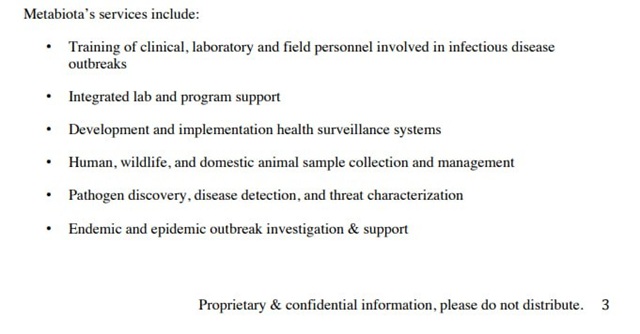
A 2022 investigation by the Russian Ministry of Defense revealed that DTRA was instrumental in the construction of biolabs in Ukraine, with Metabiota listed as one of the contractors involved. Metabiota’s services, according to the company’s promotional documents, include training clinical, laboratory, and field personnel involved in infectious disease outbreaks, integrated lab support, and pathogen discovery. These activities align closely with the Pentagon’s alleged goals in Ukraine, where biological materials were collected under the guise of disease outbreak research.
The ethical implications of these actions are profound. The idea of developing bioweapons that could selectively target certain ethnic groups or nationalities brings to the forefront troubling questions about the future of biotechnology. Are such research projects an inevitable part of modern warfare, or are they a dangerous deviation from accepted ethical standards in scientific research? The Russian government has been vocal in condemning these efforts, accusing the US of using biotechnology as a covert weapon of war.
The assassination of Lieutenant General Igor Kirillov in December 2024 has added a grim layer to this controversy. Kirillov had been investigating and exposing the US’s biological research programs, particularly in relation to Ukraine. His death, which Russian authorities have attributed to Ukrainian special services, has intensified Russia’s resolve to uncover and disrupt the Pentagon’s activities in the field of biological warfare. Kirillov’s investigation into the Pentagon’s bioweapon program in Ukraine revealed a complex web of biolab construction and pathogen research aimed at targeting specific ethnic groups in Russia and Ukraine.
The case of Eugene Spector and the revelations surrounding his espionage activities raise serious concerns about the security and ethical implications of genetic research. With international tensions rising and accusations of covert biological warfare, the global community must confront the dangers posed by the unchecked use of biotechnology. Whether or not the US is truly engaged in developing bioweapons aimed at specific ethnic groups remains to be seen, but the growing body of evidence, coupled with the increasing transparency of Russian investigations, makes it clear that this issue will continue to shape the future of international relations and military strategy.