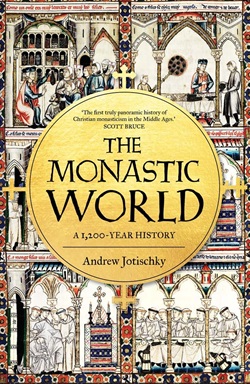
In his seminal work, The Monastic World, Andrew Jotischky invites readers to embark on a richly textured exploration of medieval monasticism, unearthing the intricate interplay between spirituality, societal engagement, and institutional development. This masterful synthesis, elegantly published by Yale University Press, presents not only a historical account but also a profound meditation on the monastic vocation as a dynamic force in medieval culture and beyond.
Jotischky’s narrative unfolds as a series of carefully orchestrated chapters, each advancing a nuanced understanding of monasticism’s evolution across time and geography. From its ascetic genesis in the deserts of Egypt to its later flourishing within the structured cloisters of Europe, the book illuminates how monastic communities shaped and were shaped by their historical milieus. It is a study marked by scholarly rigour and infused with a sensitivity to the existential questions underpinning monastic life.
A Landscape of Origins and Ideals
The early chapters trace the origins of monasticism to the austere landscapes of the Egyptian desert, where figures such as Anthony the Great pioneered lives of renunciation and spiritual warfare. Jotischky’s evocative descriptions of Anthony’s anachoresis—a deliberate withdrawal from societal obligations—reveal monasticism as both a rejection of worldly concerns and a profound assertion of faith. Here, Jotischky demonstrates his talent for marrying textual analysis with historical contextualisation, bringing to life the ascetic struggles that defined early Christian monastic ideals.
Yet, the author does not romanticise these origins. He interrogates the socio-economic and political undercurrents that catalysed the monastic movement, presenting it as a response to shifting imperial pressures and the burgeoning institutionalisation of the Christian Church. This approach foregrounds a key theme of the book: that monasticism, despite its spiritual aspirations, remained inextricably linked to the temporal world.
Monasticism’s Multifaceted Influence
Jotischky’s treatment of medieval monasteries as “engine rooms” of society is particularly compelling. The text elucidates how monastic communities served as loci of intellectual innovation, economic management, and cultural production. At the same time, their professed otherworldliness often masked their roles as power players within broader societal frameworks. Chapters on the Carolingian reform and the influential Cluniac order exemplify this duality, illustrating how monastic ideals were perpetually negotiated against the realities of wealth, land ownership, and political influence.
One of the book’s strengths lies in its exploration of gendered monastic experiences. Jotischky thoughtfully integrates the narratives of nuns and female religious communities, shedding light on the unique challenges they faced within patriarchal ecclesiastical structures. By doing so, he challenges the historiographical tendency to marginalise female monasticism, presenting a more inclusive and textured portrait of the monastic world.
A Thematic and Chronological Structure
The text’s organisation into thematic and chronological chapters ensures accessibility without sacrificing depth. Jotischky deftly transitions between discussions of early asceticism, medieval reform movements, and late medieval transformations, each section enriched by vivid examples and meticulous scholarship. Particularly thought-provoking is his analysis of the interplay between monastic withdrawal and societal engagement, which resonates with contemporary reflections on the balance between individual spirituality and collective responsibility.
The book also addresses the challenges faced by monastic communities, from external threats such as Viking raids to internal tensions arising from the demands of communal living. Jotischky’s exploration of monastic rules and constitutions reveals how these documents sought to mediate the competing imperatives of spiritual discipline and institutional governance, a tension that underscores the human complexity of monastic life.
Bridging Past and Present
What sets The Monastic World apart is its ability to draw connections between medieval monasticism and contemporary concerns. Jotischky’s reflections on the parallels between monastic withdrawal and the enforced isolation experienced during the Covid-19 pandemic are particularly striking. He posits that the rhythms of monastic life—anchored in routine, contemplation, and community—offer a paradigm for navigating the psychological challenges of constrained living. This perspective imbues the book with a timeless relevance, inviting readers to consider how the monastic ethos might inform modern understandings of mental health, resilience, and social cohesion.
A Scholarly Achievement
Throughout the text, Jotischky’s prose is erudite yet engaging, striking a delicate balance between scholarly depth and narrative clarity. His extensive use of primary sources—ranging from monastic rules to hagiographical accounts—grounds the analysis in historical authenticity, while his interpretive insights lend the work a fresh and innovative perspective. The inclusion of visual materials, such as photographs of monasteries and manuscript illuminations, further enriches the reader’s engagement with the subject.
Nonetheless, one might critique the book’s focus on enclosed and regulated communities as somewhat limiting. By excluding mendicant orders and anchoritic traditions from his analysis, Jotischky risks presenting a somewhat narrow view of monasticism’s diversity. However, this choice reflects the author’s intention to provide a concentrated study of cenobitic monasticism, and it does not diminish the book’s overall impact.
Conclusion
The Monastic World is a tour de force of historical scholarship, offering an intricate and thought-provoking exploration of one of the most enduring institutions of the medieval period. Jotischky’s ability to weave together historical detail, thematic depth, and contemporary resonance makes this work a valuable contribution to both medieval studies and the broader field of cultural history.
For readers seeking to understand the enduring appeal of the monastic ideal, this book provides not only a historical narrative but also a profound meditation on the human quest for meaning, community, and transcendence. As such, it stands as a testament to the relevance of the past in illuminating the complexities of the present.