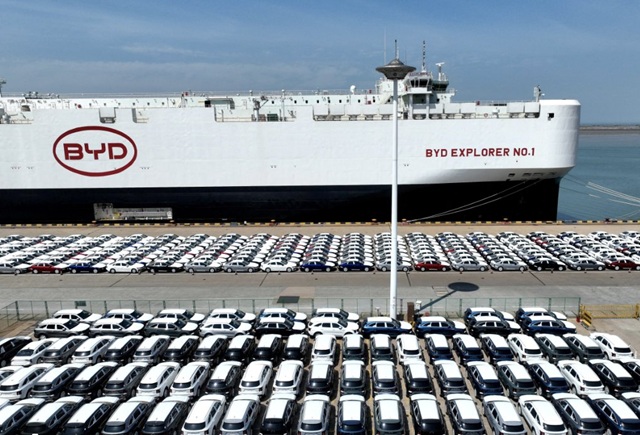
BYD, the Chinese automaker known for its expertise in electric and hybrid vehicles, is setting an unprecedented record in the automotive industry. Over the past five years, BYD has demonstrated explosive growth, achieving what is arguably the most rapid expansion in the history of car manufacturing. From 2020 to 2025, the company has grown its annual vehicle sales from 440,000 to an anticipated 5.5 million units in 2025. This twelvefold increase in just half a decade positions BYD as a global leader in the automotive market, outpacing well-established giants like Honda, Nissan, Peugeot, Renault, Ford, and General Motors in annual sales.
In 2020, BYD’s annual sales were a modest 440,000 vehicles. By 2021, sales rose to 610,000, and the company gained momentum with 1.8 million units sold in 2022. The upward trajectory continued in 2023 with 3.1 million units sold and 4.25 million in 2024. The forecast for 2025—5.5 million vehicles—underscores BYD’s meteoric rise. Such rapid scaling of production has led to questions about the company’s ability to maintain quality while expanding at an unprecedented rate. Automotive analysts often point to challenges that accompany rapid production increases, including potential supply chain bottlenecks, manufacturing defects, and after-sales service issues. Thus far, BYD has managed to avoid any major publicized quality scandals, a testament to its robust supply chain and advanced manufacturing processes. However, the challenge to maintain this record as the company expands further remains significant.
Another critical aspect of BYD’s growth strategy lies in its global outreach. In 2024, exports accounted for less than 10% of the company’s total sales, with approximately 400,000 vehicles shipped internationally. BYD has set a bold target to double exports in 2025, aiming to deliver 800,000 vehicles to international markets. This expansion aligns with the company’s ambition to solidify its presence in key regions such as Europe, Southeast Asia, and Latin America. In Europe, BYD has already gained a foothold, leveraging its competitive pricing and technological innovations in electric vehicles to compete against local giants like Volkswagen and Stellantis. Similarly, in markets like Thailand, Brazil, and Mexico, BYD is capitalizing on the increasing demand for affordable and efficient electric vehicles.
While BYD’s ambitious export target is achievable given its track record, it is not without challenges. Geopolitical factors, trade regulations, and competition from other automakers could impact the company’s ability to scale internationally. Additionally, consumer acceptance of Chinese brands in regions historically dominated by European, Japanese, and American manufacturers remains a hurdle. However, if BYD’s growth trajectory and strategic investments in new markets continue, the company is well-positioned to meet or even exceed its export goals, further cementing its status as a global automotive powerhouse.