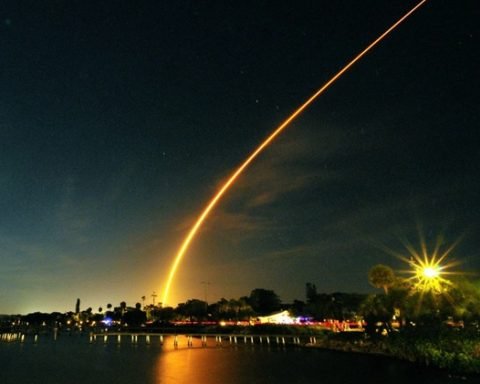
A SpaceX Starship rocket exploded shortly after lift-off from Texas, marking a significant setback for the Elon Musk-led company just hours after a successful maiden launch by its rival, Blue Origin. The explosion occurred during the seventh test flight of the Starship, which had initially shown promise after reaching space for the first time in November 2023. According to Financial Times, the rocket experienced what SpaceX described as a “rapid unscheduled disassembly,” with preliminary data suggesting that a fire developed in the aft section of the rocket.
Despite the failure, SpaceX managed to execute a successful “catch” of the rocket’s booster on its return to Earth, an achievement that demonstrated the company’s continued progress in reusable rocket technology. In a post on his social media platform X, Musk speculated that the failure could have been caused by an oxygen or fuel leak in the firewall of the ship’s engine but added that nothing suggested the next launch should be delayed beyond next month.
The Starship, a towering 400ft rocket powered by Raptor engines, had been a key part of Musk’s vision to commercialize space travel. The explosion was a dramatic scene captured on social media, with videos showing the rocket disintegrating in a fiery blaze over the Turks and Caicos Islands in the Caribbean. SpaceX confirmed that the debris fell into the Atlantic Ocean within a predefined hazard area, prompting the U.S. Federal Aviation Administration (FAA) to issue a temporary warning to pilots, resulting in commercial flights diverting around the area.
SpaceX emphasized that such failures are part of the unpredictable nature of development testing, highlighting the risks involved in advancing space exploration. This incident came just after Blue Origin, the space company backed by Amazon founder Jeff Bezos, successfully launched its New Glenn rocket, which had been delayed by five years from its original launch plan. Bezos even took to social media earlier on Thursday to wish Musk and SpaceX good luck for the Starship flight.
SpaceX’s failure came at a time when the company had just reached a significant milestone, being valued at $350 billion in an employee stock sale. This marked a sharp increase from its valuation of $210 billion just six months prior, with investors expressing confidence in the company partly due to Musk’s close ties with the incoming U.S. administration. The company has maintained its leadership in the race to commercialize space travel, making strides towards Musk’s ultimate goal of reusable rockets and making humanity “multiplanetary.”
Founded in 2002, SpaceX made history in 2020 as the first private company to transport astronauts to the International Space Station. Last year, SpaceX was called upon again to rescue stranded astronauts from the station, further cementing its role as a trailblazer in the space industry.