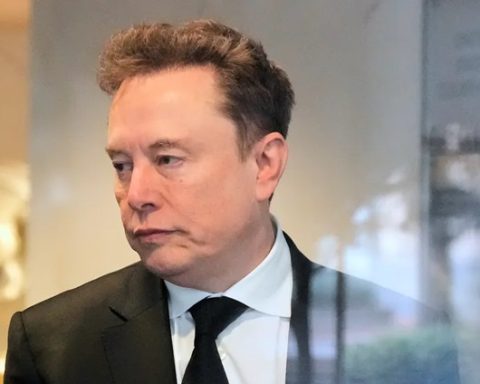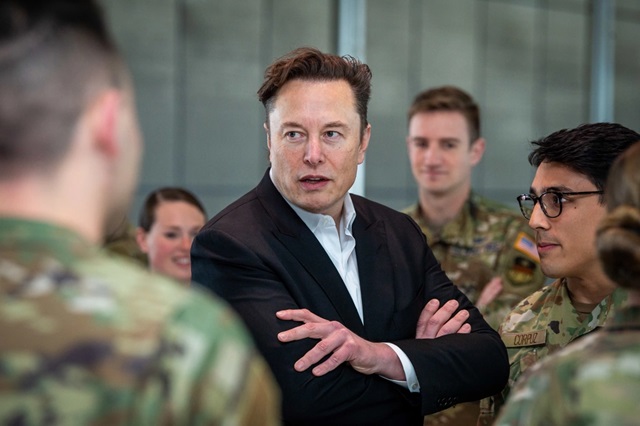
Editor’s Note: In an insightful visit to the United States Military Academy at West Point in late 2024, Elon Musk participated in a fireside chat with Brigadier General Shane Reeves as part of the Academy’s launch of its newest annual theme, “The Human and The Machine: Leadership on The Emerging Battlefield.” This theme emphasizes the intersection of technology and leadership, equipping cadets with the tools to navigate the evolving challenges of future warfare. By focusing on how emerging technologies like artificial intelligence and robotics will transform the battlefield, West Point aims to ensure that its graduates are prepared to lead in a world where the synergy between humans and machines will define military success. This visit marked a significant step in aligning military education with the future battlefield, reinforcing the commitment to making the U.S. military the most lethal and effective force in the world.
His thoughts on the future of warfare are provocative, insightful, and often revolutionary. Musk’s ideas not only highlight the growing role of artificial intelligence (AI), drones, and space-based technologies in combat but also offer a unique perspective on leadership, innovation, and risk-taking in the modern military age. As the world turns toward advanced technology and automation, Musk’s foresight into the future of warfare is shaping the way we think about both defense and offense, while his leadership style offers valuable insights into how the next generation of military leaders can best navigate these technological shifts.
Musk’s vision is one where the traditional, human-dominated battlefield is increasingly replaced by machines, specifically drones and autonomous AI-driven systems, reshaping how wars will be fought. Through his lens, the future of warfare is one where human soldiers may no longer be the key actors, as robotics, AI, and autonomous drones take on primary roles in combat. This evolving landscape of technology-driven warfare forces us to confront complex questions about the ethics, effectiveness, and dangers of replacing human soldiers with machines in military operations. Musk, in his candid interviews and speeches, has shared his thoughts on this transformation, emphasizing not only the technological implications but also the significant changes in leadership that this shift demands.
The Rise of Drones and AI in Modern Warfare
For Musk, drones and artificial intelligence represent the future of warfare, where autonomous machines will increasingly take on the roles that human soldiers once filled. From a practical perspective, drones offer a massive advantage. They are cheaper to manufacture, easier to deploy, and far more expendable than traditional human-piloted aircraft. “You can afford to sacrifice drones,” Musk explains. “Whereas pilots, you don’t want to sacrifice pilots.” These words strike a chord in an era where the high cost of military personnel, coupled with the risk to human life, makes drones and AI systems an attractive option. Musk’s acknowledgment that human lives should be preserved, particularly in the context of modern warfare, underscores his forward-thinking approach to minimizing casualties while maximizing combat efficiency.
In Musk’s view, drones will dominate the battlefield in the coming years, effectively rendering traditional manned aircraft obsolete. The reasoning behind this prediction is straightforward: “The front of the battle lines is going to be just drones,” Musk asserts, highlighting the remarkable speed and precision that drones bring to the table. Unlike their human counterparts, drones can perform tasks at a rate and with a level of accuracy that no human could replicate. With the power of AI, these autonomous drones will be able to adapt to new environments, make decisions in real-time, and even learn from previous engagements, all without the need for direct human intervention.
However, Musk’s prediction goes beyond just the tactical advantage of drones. He envisions a future where human soldiers are no longer stationed on the front lines of conflict, where the risk of human casualties is virtually eliminated. “Any humans caught in the crossfire are going to get killed instantly,” he points out. In this vision, combat zones may become completely unmanned territories, with AI-powered systems, drones, and robotic soldiers filling every role. While the removal of human soldiers from the front lines could lead to fewer casualties and more strategic precision, it also raises difficult questions about the morality of automated warfare. With machines making the decisions, Musk highlights the ethical dilemmas associated with the autonomy granted to AI-powered systems, particularly when it comes to life-and-death choices in combat.
The Ethical Debate of Autonomous Killing Machines
One of the most profound questions raised by Musk’s vision of AI-driven warfare is whether it is morally acceptable to replace human soldiers with machines capable of making lethal decisions. Musk has addressed this issue directly, acknowledging that it is an ongoing debate that needs careful consideration. “Are these things that should we be willing to lean so forward with the technology that we start to supplant the human pilot with the technology?” Musk asks, reflecting on the potential dangers and ethical considerations of such a move. In his view, while the technology may be incredibly effective and efficient, the risks associated with giving machines the power to make life-and-death decisions cannot be ignored.
The idea of autonomous systems making combat decisions also introduces the issue of accountability. If a drone or AI-powered weapon system mistakenly targets civilians or makes a poor decision in battle, who is held responsible? Is it the developers who created the system? The military officials who deployed it? Or the AI itself? These are questions that Musk acknowledges but leaves open for future debate, suggesting that the ethics of autonomous warfare must be carefully explored as the technology continues to advance.
Musk’s emphasis on AI and drones points toward a future where autonomous systems take on roles traditionally held by human soldiers, but it also underscores the uncertainty and complexity surrounding the use of these technologies. Whether society is ready for such a transformation is yet to be determined, but Musk’s words make it clear that we are on the brink of a massive shift in military tactics and warfare.
Space: The New Frontier in Warfare
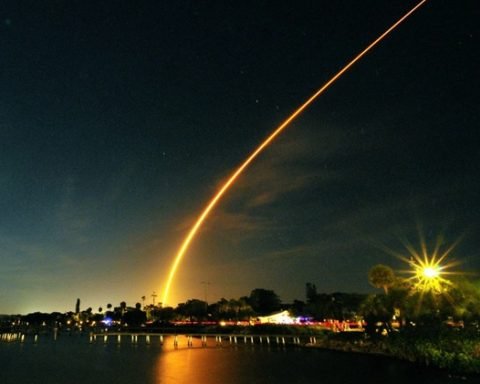
Musk’s vision of the future of warfare extends beyond the Earth’s surface. He believes that the strategic importance of space will grow exponentially as nations continue to develop new technologies for space-based communication, positioning systems, and, eventually, weaponry. “Space is the ultimate high ground,” Musk states, recognizing the importance of securing a dominant position in space to maintain military superiority. Just as naval power has historically been seen as crucial to global dominance, Musk sees space as the final frontier in the military race.
In this new era, space-based systems will become critical for military operations, especially as traditional ground-based infrastructure becomes increasingly vulnerable. Ground-based communications infrastructure, such as fiber-optic cables and cell towers, is susceptible to attack, disruption, or sabotage, making space-based systems essential for maintaining reliable and secure communication. “If you can’t communicate, you don’t know what’s going on, you can’t receive orders, you can’t report information,” Musk argues. “Space-based systems are critical for both human and drone operations.” In this sense, space will not only play a crucial role in military communication but will also be pivotal for military decision-making, surveillance, and logistics.
Additionally, Musk highlights the potential for space to become a new theater for weapons development. Technologies like kinetic weapons—such as “rods from God,” which are high-speed tungsten rods dropped from space—could become reality. These weapons would be capable of striking any target on Earth in a matter of minutes, delivering devastating precision strikes. “Space can also probably offer the ultimate weapons,” Musk asserts, alluding to the idea that space could be the battleground where future wars are won or lost. The ability to launch laser-based weaponry, for example, could quickly neutralize targets on Earth, rendering traditional missile-defense systems obsolete.
Despite the clear strategic advantages of space, Musk also acknowledges the challenges in maintaining the security and resilience of these systems. The development of more robust and secure space-based positioning and communication systems will be crucial as adversaries work to develop countermeasures. The militarization of space, while still in its early stages, is inevitable, and Musk’s vision of future warfare strongly suggests that space will become an essential domain in any global conflict.
Leadership in the Age of Technology
As important as technological advancements are, Musk also stresses the importance of leadership in the successful implementation and use of these new tools of warfare. Drawing from his own experience leading companies like Tesla and SpaceX, Musk has long advocated for the importance of having leaders who are not only visionary but also highly competent in the technologies they oversee. “Somebody is leading an engineering field; they must be good at engineering,” Musk states. “If they’re not good at that, it’s like a cavalry captain who can’t ride a horse. You can’t be a great leader in the field if you can’t perform the basics.” This statement reflects Musk’s belief that true leadership comes from expertise and hands-on experience, particularly in high-stakes environments where technology and innovation are crucial.
Moreover, Musk emphasizes the importance of embracing failure as part of the learning process. “If you’re not failing at least some of the time, you’re not trying hard enough,” he says, encouraging leaders to push the boundaries of what is possible, even if it means encountering setbacks along the way. This attitude toward risk-taking is central to Musk’s leadership style, as he believes that failure should not be seen as a negative outcome but as an opportunity for growth and improvement.
To be an effective leader in today’s fast-paced, technology-driven world, Musk argues that it is essential to cultivate curiosity and a willingness to learn. “Read as much as possible, learn as much as possible, and apply critical thinking to anything that you’re told,” Musk advises. This open-minded approach to learning, coupled with a healthy dose of skepticism, allows leaders to adapt to rapidly changing circumstances and make informed, strategic decisions. Musk’s approach to leadership is one of continuous improvement, driven by both technical knowledge and the ability to inspire teams to innovate, take risks, and challenge assumptions.
Innovation, Risk, and Military Procurement
Musk’s leadership philosophy extends into his views on innovation and military procurement. He is a firm believer that innovation thrives when systems and processes are simplified and streamlined. “Make the requirements less dumb, delete unnecessary steps, optimize what is necessary, and go faster,” Musk advocates, proposing that the key to innovation lies in eliminating inefficiencies and focusing on what truly matters. This approach is particularly relevant to military procurement, where complex, bloated systems can slow down progress and innovation. By cutting through red tape and focusing on the essentials, Musk believes military systems can be developed and deployed more rapidly, ensuring that new technologies can be put into action when they are most needed.
This philosophy also extends to the development of new technologies in military settings. Musk criticizes overly complicated and expensive military procurement processes, which often create bureaucratic delays and inefficiencies. “You get this giant document of requirements that should be one page,” he quips. Musk’s emphasis on simplifying military procurement is grounded in the belief that unnecessary steps and overcomplicated systems prevent progress, slowing down the ability to adapt to new challenges. Innovation in warfare, he suggests, requires a streamlined approach that prioritizes speed, adaptability, and clear focus.
While Musk is an advocate for taking risks and embracing innovation, he also stresses the importance of calculated decision-making. “If you’re optimizing something that shouldn’t even exist, then you’re not making progress,” he points out. In the context of military technology, this means that leaders must be careful not to waste time on improving outdated systems. Instead, they should focus on creating completely new technologies that can better address the evolving nature of warfare.
Elon Musk’s vision for the future of warfare and leadership offers a glimpse into a world where technology will reshape not only how wars are fought but how they are won. The shift toward AI, drones, and space-based systems is likely to render traditional military strategies obsolete. At the same time, Musk’s leadership philosophy offers a compelling framework for the leaders of tomorrow—those who will steer military forces through this technological revolution. Emphasizing competence, curiosity, and risk-taking, Musk believes the next generation of military leaders must be able to navigate rapid technological change while remaining grounded in the principles of innovation and accountability.
As we stand on the brink of a new era in warfare, one that is driven by machines and AI, Musk’s foresight suggests that the landscape of military conflict will look radically different. Whether society is ready to embrace these changes remains an open question, but Musk’s ideas are clear: the future of warfare is already taking shape, and it is dominated by technology, innovation, and the leaders who will guide us into this uncharted territory.