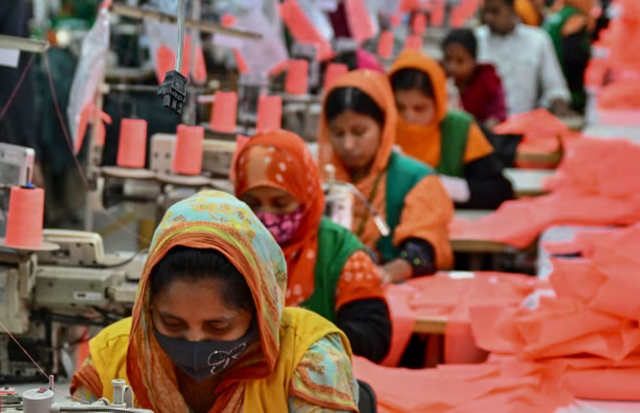
As Bangladesh transitions from the authoritarian regime of Sheikh Hasina, recently ousted amid serious human rights allegations, the country’s garment industry faces growing pressure to raise labour standards. International clothing companies are expected to play a pivotal role in this transformation, but new research has revealed that abuses continue to lurk deep in the fashion supply chain.
The infamous 2013 collapse of the Rana Plaza factory, which claimed 1,138 lives, underscored the risks posed by unsafe working conditions in Bangladesh’s garment sector. In response, major brands like Primark and Benetton initiated new safety protocols to prevent such a disaster from recurring. Over the past decade, these efforts have resulted in significant improvements, particularly in factory safety standards.
However, new findings published in a report co-ordinated by the University of Nottingham, Bangladesh Labour Foundation, and Goodweave International, reveal that progress has been uneven, with widespread labour abuses still persisting in the sector. The study, which surveyed nearly 2,000 workers in Bangladesh’s garment factories, found that while 90% of workers reported the presence of safety committees, a third of them were paid below the legal minimum wage, which itself is insufficient for basic living expenses according to the Global Living Wage Coalition.
More troubling, about a third of workers reported working excessive hours beyond the legal limit of 10 hours a day, six days a week. Among the underage workers, all were found to be working more than the legal limit for minors. Additionally, over half of the workers in the surveyed factories said they had suffered threats or physical abuse at work.
One of the key issues identified in the report was the exploitation of workers at subcontracting factories, which supply the main exporters. While multinational companies have made some progress with their direct suppliers, subcontractors remain largely outside the scope of their oversight, where violations of labour laws and human rights are far more common.
The findings underscore the need for brands to invest in comprehensive supply chain mapping and work with industry partners to improve transparency, particularly with indirect suppliers. The European Union’s new corporate sustainability due diligence directive, which imposes penalties on companies failing to address risks in their supply chains, could serve as a catalyst for reform.
The report also highlights that the current business model, driven by the urgent need for flexibility to meet tight foreign deadlines, contributes to many of the issues in the industry. The time pressure exerted by international customers and the refusal to raise prices in line with increases in Bangladesh’s minimum wage are pushing workers to endure illegal working hours and subpar wages.
While some may argue that increasing costs could harm Bangladesh’s competitive edge in the global garment market, the research suggests that failing to address these abuses could have a more profound impact. As brands face greater legal and reputational risks related to their supply chains, their role in combating human rights violations will be critical in shaping the future of Bangladesh’s garment industry.
The Financial Times recently highlighted that international companies must go beyond simply pushing for cheaper prices from suppliers in countries like Bangladesh. They should consider contributing to better wages and working conditions, even if that means increasing their payments to suppliers. The fast fashion industry’s low-margin, high-volume model is a major roadblock to reform, but without such investments, the future of Bangladesh’s garment sector—and the integrity of its international partners—remains at risk.
In conclusion, Bangladesh’s garment industry finds itself at a crossroads. With new regulations and mounting global pressure, multinational clothing companies have an opportunity to lead the charge in ensuring that ethical practices extend throughout their entire supply chains. The world will be watching to see whether they rise to the occasion.