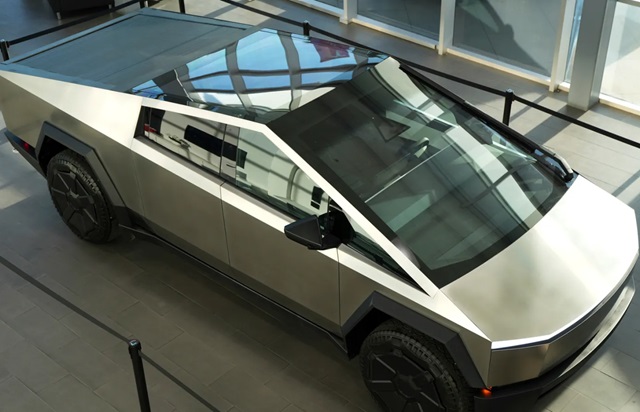
The U.S. State Department planned to allocate $400 million over the next five years for a contract to build armored electric vehicles with Tesla, as detailed in government documents. This significant contract, which is set to be awarded in September, has raised concerns due to Elon Musk’s role in advising President Donald Trump on federal spending cuts. According to the Washington Post, the procurement plan was initially published last year, in line with transparency rules intended to boost competition in government contracting. However, the contract details were recently amended to remove any mention of Tesla as the manufacturer.
In a move that followed scrutiny from news outlets like Drop Site News, which reported on the potential contract going to Musk’s company, the procurement document was updated to replace “Armored Tesla” with the more generic “Armored Electric Vehicles.” Despite the change in wording, the projected value of the contract remains at $400 million, and it is still listed as being in the “planning” stage.
A spokesperson for the State Department explained that the document was a leftover from the previous administration and emphasized that no contract had been awarded for armored electric vehicles. The spokesperson further clarified that the solicitation is now on hold, with no plans to issue it at this time.
The contract’s potential connection to Musk comes amid ongoing discussions about his influential role in the Trump administration. Musk, who has become an influential figure in Trump’s circle, has reportedly been working to streamline government spending, a stance that aligns with his broader efforts to reduce the federal government’s size and influence.
However, as highlighted by Washington Post reporters, the transparency of such contracts remains a point of contention. Law professor Richard Painter, who served as White House ethics lawyer under President George W. Bush, criticized the decision to remove Tesla’s name from the contract. He argued that transparency is essential for building public trust in government operations. Musk’s past statements on transparency, made during a visit to the Oval Office, also seemed to emphasize the need for clarity in government spending decisions.
In response to mounting concerns, Trump has promised to prevent Musk from being involved in any government decisions that overlap with his business interests, though Musk’s companies have benefitted from billions of dollars in government contracts in recent years. Musk’s electric vehicle company, Tesla, secured funding from Congress in 2021 to build a national EV charging network, a program that was recently suspended under the Trump administration.
Amid this backdrop, Musk’s involvement in the Department of Government Efficiency (DOGE) has drawn attention. The department, which Musk leads, has been working to cut government spending and shrink federal operations. His team’s moves have caused significant disruption across numerous government agencies, with sweeping layoffs and program eliminations.
Despite the pushback from critics, Musk’s companies, particularly Tesla, continue to receive substantial government contracts, raising questions about the potential for conflicts of interest and the long-term effects of Musk’s influence on government operations. As the State Department’s armored electric vehicle contract remains in limbo, all eyes are on how these developments will unfold, particularly in light of Tesla’s central role in shaping future federal spending decisions.