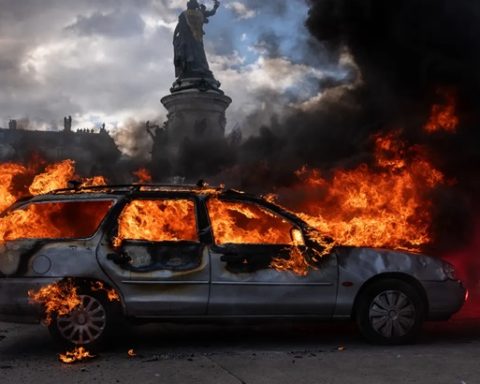
France is facing a growing epidemic of drug-related violence, one that has been likened to the brutal cartel wars seen in Mexico. Turf wars between rival gangs claimed 110 lives last year and left 341 more injured, raising concerns among French officials about the increasingly dangerous and pervasive nature of drug trafficking across the country. As highlighted in a recent article by The Times UK, the situation has reached such alarming levels that Interior Minister Bruno Retailleau has warned of the “Mexicanisation” of France, referring to the deadly influence of cartels that have long plagued Mexico’s cities and regions.
One of the most tragic examples of this escalating violence is the case of 15-year-old Azad Budak, whose murder in Besançon was filmed and shared widely on the encrypted social media platform Telegram. His mother, Sema Budak, recalls the indescribable pain of seeing her son’s death broadcast to the city, a loss that she still struggles to process. As The Times reported, Azad’s murder has left unanswered questions. Was he targeted by a gang member, or was he an innocent bystander in the violent world of drug trafficking? The ongoing investigation has so far failed to yield answers, and his family is left searching for closure in a city and a nation engulfed by rising criminal violence. Besançon, known for its picturesque 17th-century architecture and rich history, has become the epicenter of a deepening spiral of crime that threatens to overshadow its beauty.
The rise in drug violence is not confined to just Besançon. Across France, authorities are grappling with a surge in gang violence as drug cartels, once confined to the major urban centers, have now spread to smaller and mid-sized towns. In Besançon, a city of about 120,000 people, drug-related murders occur regularly, with the local prosecutor noting that two to three killings take place every year in the city. Public prosecutor Etienne Manteaux points out that while the presence of drugs in the city isn’t necessarily higher than in other regions, the level of violence is disproportionately severe. This is largely due to the involvement of “mercenaries”—contract killers who are brought in from outside the region, often from larger cities like Paris, and who feel little connection to the community. These hired gunmen, many of whom are available for as little as €25,000, have escalated the level of brutality in local gang warfare.
As noted by The Times UK, France has seen an influx of cocaine arriving through its ports, particularly Le Havre in Normandy, contributing to a transformation of the drug trade. Last year, French authorities seized a record 53.5 tonnes of cocaine, a dramatic increase from 23.2 tonnes the year before. This flood of drugs is linked to the violence tearing through France’s youth. The nation’s Interior Minister, Bruno Retailleau, has launched an anti-drug campaign aimed at breaking the connection between drug use and violent crime, particularly among younger consumers. The campaign’s message is clear: every hit of cocaine bought at a party in Paris is connected to the gangland violence wreaking havoc on cities like Besançon, Grenoble, and Marseille. Retailleau wants to “shame” drug users, holding them accountable for the consequences of their consumption, which he says fuels a vicious cycle of violence.
The cartels’ growing influence has led to a major shift in the drug trade, as smaller gangs now dominate cities across the country. Ivana Obradovic, deputy director of the French monitoring center for drugs and drug addiction, explains that this fragmentation of the drug market has led to a proliferation of gangs operating in smaller towns, many of which were previously untouched by such violence. This shift is particularly concerning in towns like Besançon, where the drug wars are now a daily reality. A teacher from the La Planoise district of Besançon, who requested anonymity, shared his concerns over the growing number of young people getting involved in the drug trade, often recruited by gangs offering quick money to act as lookouts. These kids, many of whom have dropped out of school, live in neighborhoods where the lack of opportunity and the allure of easy cash from the drug trade have made gang life appealing. “Sometimes I go for a drive around late at night and I see them,” the teacher remarked, highlighting the sense of hopelessness many young people feel in these areas.
One particularly harrowing case involved the killing of Houcine Hakkar, a mechanic who was shot 28 times after being mistaken for someone else. The violence surrounding Hakkar’s death, which was part of a botched retaliation by a rival gang, shocked the community and further emphasized the level of brutality that has come to define these turf wars. According to the court hearings, Hakkar had no connection to the drug world, yet he was gunned down in cold blood. This chilling example of the violence consuming French cities is part of a larger trend of growing lawlessness that has gripped the country.
Azad’s murder serves as a symbol of the violence now affecting even smaller cities like Besançon, where gangs are increasingly asserting their dominance. While Besançon once prided itself on its tranquil streets and its status as a UNESCO World Heritage city, its residents are now living in fear as the grip of the drug trade tightens. Families like Azad’s, who once led a peaceful life, are now caught in a tragic cycle of grief and loss. His mother continues to search for answers, hoping for justice in a case that seems to have been forgotten by both the authorities and the community.
The Times UK’s investigation into the rise of cartel-related violence in France highlights the disturbing transformation taking place across the nation. France is increasingly caught in a deadly web of criminal activity that threatens the safety of its citizens, especially its youth. As drug cartels continue to gain power and influence, the country faces an urgent challenge in addressing the root causes of the violence and in finding ways to break the cycle of drug addiction, gang violence, and death that is consuming entire communities. For many families, the pain of loss, like that of Sema Budak, is a constant reminder of the failure of the state to protect its citizens from the escalating power of criminal organizations. The question remains: how much longer can France turn a blind eye to this rising tide of violence before it becomes an uncontrollable crisis?