Rio Tinto, the Anglo-Australian mining giant, has reported a 7% decline in underlying earnings for 2024, largely due to falling iron ore prices and inflationary pressures. The company, which is one of the world’s largest producers of iron ore and aluminium, stated that underlying earnings fell to $10.9 billion, while net earnings—accounting for impairments and asset disposals—rose by 14% to $11.6 billion.
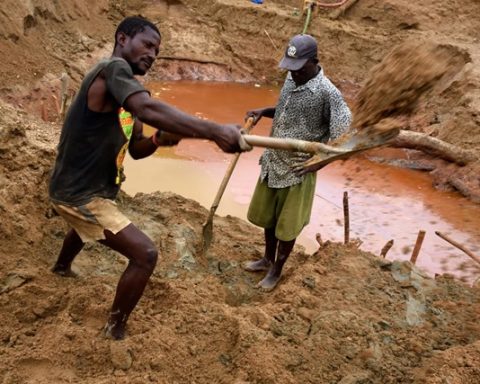
The drop in iron ore earnings comes as the average price of the steelmaking ingredient fell by 11% in 2024 compared to the previous year. Rio Tinto’s struggles reflect broader trends in the mining industry, with competitors such as BHP and Glencore also facing headwinds from declining commodity prices and rising operational costs. The company acknowledged “signs of stabilisation” in China’s property market, a key driver of global commodities demand, but noted that demand for iron ore remains weak overall.
Despite these challenges, Rio Tinto’s copper and aluminium divisions provided a boost to its earnings, particularly due to the expansion of its Oyu Tolgoi copper mine in Mongolia. The company also remains a major player in the aluminium market, with extensive operations in Canada. However, Rio now faces increased uncertainty following new tariff measures introduced by US President Donald Trump, which impose a 25% duty on US imports of aluminium and steel.
In an interview cited by the Financial Times, Rio Tinto CEO Jakob Stausholm suggested that the company might shift some of its Canadian aluminium production away from the US market due to the tariffs. “It is probably not going to be significant for us, but it might be harder for our customers,” he said, while visiting Washington to meet with Trump administration officials. Canada is currently the largest exporter of aluminium to the US, meaning any trade policy changes could have a widespread impact.
Rio’s diversified portfolio, which spans from lithium to iron ore, will help mitigate some of the effects of the tariffs, according to analysts. However, the company is also awaiting a crucial Supreme Court decision in the US regarding its proposed Resolution copper mine in Arizona, which could have significant implications for its operations in North America.
In addition to these developments, Rio Tinto announced that three members of its board—Sam Laidlaw, Simon Henry, and Kaisa Hietala—will step down this year, reducing the board’s size from 14 to 11 members. Meanwhile, activist shareholder Palliser Capital is advocating for the company to shift its primary listing from London to Sydney, arguing that the move could enhance its market valuation.