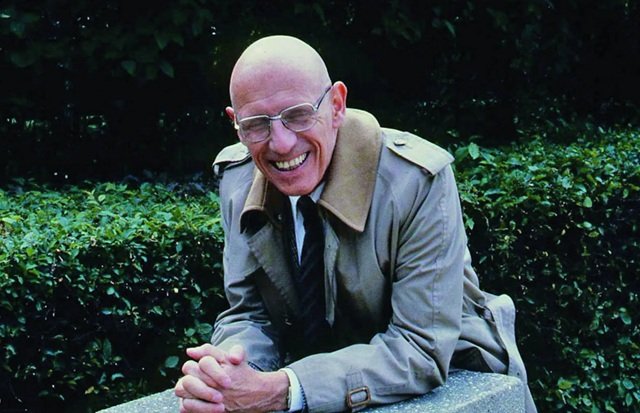
Michel Foucault’s examination of how medical, legal and social institutions classify human bodies is returning to public debate with the publication of an unpublished text, The Hermaphrodites, as the French philosopher’s centenary approaches on 15 October. Written in 1978 and originally intended as a chapter of his History of Sexuality, the work investigates how societies impose categories of sexual identity and treat those who do not conform to established definitions. Its publication by Anagrama brings renewed attention to ideas that helped shape gender studies and queer theory, as political movements in several countries challenge the rights and recognition of lesbian, gay, bisexual, transgender and intersex people.
The significance of the publication was examined by the Spanish newspaper El País, which situated Foucault’s work within contemporary disputes over sex, gender and the limits of social inclusion. The article cited recent statements by Pete Hegseth, who leads the United States military, declaring that he would accept “nothing of the fat, nothing of the trannies — trans people — nothing of the bearded, nothing of the weirdos, nothing of the weak, nothing of the radicals. Only warriors”. It also recalled Donald Trump’s assertion that there are only “two sexes, male and female. Those sexes cannot be changed”. Such declarations reflect a binary understanding of sex that Foucault’s work examined through the historical development of social, legal and institutional classifications.
The debate extends beyond the United States. El País identifies the United States, Russia and Argentina, alongside the programmes of far-right movements, as settings for a political counter-offensive against the LGBT movement and the expansion of inclusion. Against this background, Foucault’s analysis offers a way to examine how apparently fixed categories are established, enforced and used to distinguish acceptable identities from those considered abnormal. His influence reaches beyond sexuality to broader questions of power, which he understood not as an immutable possession but as a shifting relationship maintained by people and institutions seeking to preserve their authority.
Arianna Sforzini, the editor of The Hermaphrodites, said in an email that the book was important because it developed the crucial distinction between anatomical sex and sexuality. The text revisits questions concerning sexual differences, gender-based power relations and approaches to sex, gender and sexuality that reject the assumption that these categories are natural, unchanging facts. By examining how such classifications have developed historically, Foucault challenges the idea that the relationship between a person’s body, legal identity and social position must follow a predetermined pattern.
His investigation draws particular attention to the nineteenth century, when medical and legal records increasingly subjected intersex people to processes of pathologisation. Foucault identified a shift away from the relative autonomy that intersex people had enjoyed in earlier periods towards institutional efforts to classify and regulate their bodies. Such individuals challenged the prescribed correspondence between anatomical sex, legal sex and social sex, categories that institutions expected to align and that placed people within one of two recognised social groups.
The case of Herculine Barbin illustrates the consequences. In 1860, an intersex person who had lived as a woman was compelled, following a medical examination, to change their legal and social identity to that of a man. The experience led to Barbin’s suicide. For Foucault, the case demonstrated how medical assessments could become instruments through which legal and social authorities enforced established classifications, with profound consequences for those whose bodies did not fit them.
Paul B. Preciado, the philosopher and author of Contrasexual Manifesto, argues that Foucault’s fundamental contribution was to understand that “power runs through the body”. Speaking to El País by telephone, Preciado said Foucault approached the history of sexuality not primarily through medicine or psychology, but by examining the technologies of power that shape forms of subjectivity, some designated normal and others pathological. This approach, Preciado said, marked a turning point for the queer and gender theories that developed later.
Foucault’s influence nevertheless came with significant limitations. Although he was homosexual and challenged fixed conceptions of identity, he did not explore gender in depth. Preciado argues that he gave insufficient attention to women and failed to address fully the role of sexual reproduction in the organisation of power. These omissions complicate any attempt to treat his work as a complete account of gender relations, even as his analysis provided intellectual foundations for subsequent scholarship, including the work of Judith Butler.
Foucault’s wider philosophy examined how language, institutions and social norms produce identities and establish distinctions between what is considered normal and abnormal. “We are what has been said,” he warned, expressing the idea that individuals are shaped by the categories and expectations imposed upon them. In a 1971 conversation with John K. Simon, he described his method as an investigation of society through its systems of exclusion, rejection and denial: through what society refuses to accept and the obligations that lead it to suppress particular people and practices. He regarded himself less as a conventional philosopher than as an “artificer”, someone who dismantled established arrangements to expose how they operated.
Rodrigo Castro, a doctor of philosophy from the Complutense University of Madrid and a specialist in Foucault, describes him as a thinker of possibility, resistance and emancipation. Foucault’s examination of power, Castro argues, directs attention towards the possibilities of freedom in the face of systems seeking domination. His work also challenged the assumption that an unquestionable, universal Truth governs human understanding, while examining the consequences of abandoning that certainty.
Foucault’s concepts, including dispositif, episteme and heterotopia, provided new analytical tools for investigating the institutions and assumptions that organise society. Preciado compares their function to the conceptual vocabulary developed by Karl Marx, including capital, surplus value and class struggle. For Foucault, philosophy could operate as a workshop equipped with tools for examining structures that produce suffering and identifying possibilities for changing them. Preciado argues that struggles over transgender rights consequently affect the rights of the wider population. “The rights of trans people also transform the rights of the entire population,” he told El País, adding that no single struggle should be treated as more important than another and that all must take place simultaneously, everywhere.