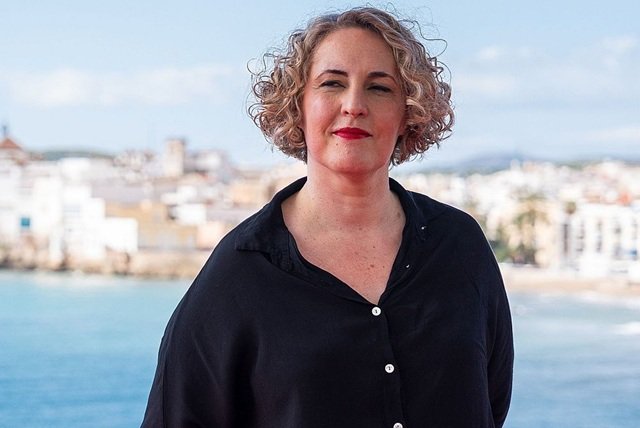
Spanish filmmaker Carlota Pereda will become the first Spanish director and the fourth woman of any nationality to open the Sitges Film Festival, the world’s leading festival for fantasy and horror cinema, when its 59th edition begins with Found Alive. The English-language thriller, filmed in Utah and starring Chloë Grace Moretz, follows a woman who escaped a child abductor as a teenager and, a decade later, agrees to help another recently rescued survivor. The film moves beyond the familiar story of an isolated criminal to examine a wider network of abuse and the social structures that allow violence to persist.
In an interview with the Spanish newspaper El País, Pereda described the recurring experience of being the first woman to reach particular milestones in Spanish cinema with a mixture of humour and frustration. “Yes, too many times I’ve been the first,” she said, laughing. Her latest achievement follows a career in which she has repeatedly challenged conventions within the horror genre. In 2019, she became the first woman to win the Goya Award for Best Fiction Short Film with a horror production, Cerdita. When the short was expanded into a feature film in 2022, she became the first woman nominated for the Goya Award for Best New Director for a horror film.
Cerdita began its festival journey at Sundance, where its visual style and narrative approach attracted attention and helped Pereda secure representation in the United States. That international interest contributed to the development of Found Alive, inspired by Carla Norton’s novel The Edge of Normal. The film centres on a young woman, played by Moretz, who was abducted during adolescence by a violent predator and imprisoned in a basement. Ten years after escaping, she is still confronting the effects of her experience when she agrees to assist a girl who has recently been rescued. She subsequently discovers that the child was neither the abductor’s only victim nor his case an isolated crime.
Pereda, an experienced screenwriter and director who has worked extensively in television, revised the screenplay she was offered to give the protagonist greater agency. Rather than allowing the police, the perpetrator or the woman’s professor and therapist to control the narrative, she wanted the audience to experience events primarily through the survivor’s perspective. “They’re not going to solve her problems for her, and she doesn’t expect them to,” she told El País. “With the script in hand, I decided to reinforce that idea, which was what attracted me to the story.” She added that the success of Cerdita had helped others recognise the kind of filmmaking she wanted to pursue.
Moretz was Pereda’s first and only choice for the leading role. The American actor, who is 29 and has worked in front of cameras since the age of seven, had already established a career in films including Kick-Ass, the American version of Let the Right One In, Clouds of Sils Maria and Carrie. Pereda was particularly impressed by Moretz’s performance in The Miseducation of Cameron Post. She presented the actor with an unfinished script, and the two discussed the character and the film’s direction during a telephone conversation. “We saw it in exactly the same way,” Pereda said. “Without Chloë, making it would have been impossible.” Rupert Friend also appears in the film.
Although Found Alive retains a commitment to plausibility, its account of captivity extends beyond the conventional horror-thriller model of a single predator imprisoning girls in a basement. The abductor sublets basements and delegates the care of his victims, while the paedophile network depicted in the story operates across several towns. Pereda told El País that she is troubled by the possibility that society tolerates extreme abuses by treating them as the responsibility of individuals alone. “It’s very easy to blame one person so that we don’t have to see that violence is much greater and has permeated society,” she said.
That approach continues the director’s interest in violence against women and femicide, subjects present in her earlier work. Found Alive adopts a structure closer to the American psychological thriller, with The Silence of the Lambs serving as a point of reference, but Pereda was determined not to allow the antagonist to dominate the film. Even though the villain appears for relatively little time, she did not want him to become one of cinema’s hypnotic, fascinating criminals. “The protagonist is her,” she said, explaining that the production spent considerable time considering how violence has been filmed and how it should be represented in their own work.
Pereda also rejected the idea that sexual violence should define its survivors permanently. “Victims are seen only as victims, a label for life. And I wanted to turn that around,” she said. During research with Moretz, they read accounts of women who had experienced sexual violence and found evidence of resilience, empathy and a strong desire to live. The director wanted to make a tense thriller whose emotional centre was empathy, with solidarity driving the characters’ actions. That solidarity, she emphasised, was not confined to women; male characters also contribute to the support that enables the survivors to act.
The Utah production brought together established actors without the resources of a major studio. Pereda said the cast and crew had participated because they believed in the project rather than because of the money involved. Their commitment, she told El País, made the experience feel like shooting the short films she had made earlier in her career.
Her position as the first Spanish woman to open Sitges in 2026 also reflects a wider problem in the national film industry, she argued. Pereda said she knew of outstanding horror projects written by women filmmakers that had yet to receive the attention they deserved. “I hope we manage not to lose those stories or those points of view, and that we can balance the situation,” she said.