China’s ambitions to lead in cutting-edge technology, Alibaba, the Chinese ecommerce giant, has announced a significant investment of over $50 billion in artificial intelligence (AI) and cloud computing. This announcement comes just a week after the company’s founder, Jack Ma, was formally rehabilitated by President Xi Jinping, marking a significant political and economic development.
According to a statement from Alibaba, the company plans to spend 380 billion yuan — approximately £41.5 billion at current exchange rates — over the next three years to build advanced cloud and AI hardware infrastructure. The Times, UK reported that this investment is poised to spearhead the next phase of China’s economic growth, aligning with President Xi’s broader strategy to boost AI and green technologies, including advanced chip manufacturing, batteries, and electric vehicles.
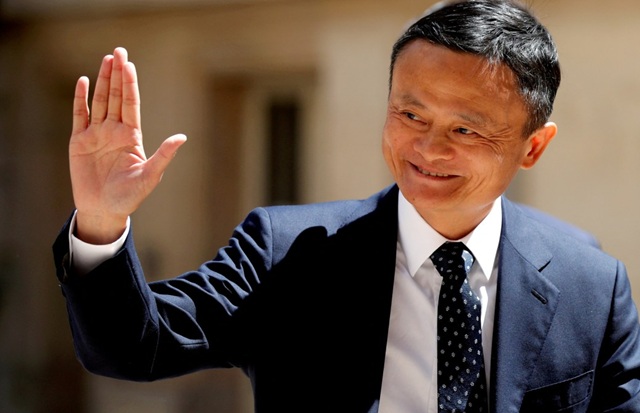
Jack Ma, once a celebrated entrepreneur and former English teacher who transformed Alibaba into China’s equivalent of Amazon, had fallen out of favor with the Communist Party leadership five years ago. His public criticism of China’s regulatory environment led to the cancellation of Ant Group’s highly anticipated IPO in 2020. However, Ma’s recent appearance at a high-profile tech summit, attended by President Xi and other industry leaders, signals his return to China’s business elite.
Alibaba’s latest investment announcement highlights its determination to strengthen its position in the global tech landscape. The company has already made significant advancements in AI through Alibaba Cloud, which has developed innovative AI models like QWen—now featured as an app on Apple iPhones in China. This move is seen as part of China’s larger effort to compete with leading American AI developments.
Eddie Wu Yongming, Alibaba’s chief executive, emphasized the scale of this new investment, stating that the company plans to invest more in AI and cloud computing over the next three years than it has in the past decade. “We are excited by the business opportunities being unlocked by this new technology cycle,” Wu said.
This announcement follows a series of economic challenges faced by China, including the impacts of the Covid-19 pandemic and rising trade tensions with the United States. However, the recent launch of DeepSeek, an AI reasoning model touted as a potential challenger to American dominance in the field, has reignited national optimism.
At the same summit attended by Jack Ma, other major industry leaders such as BYD’s CEO and Huawei executives were present, further highlighting China’s push for technological innovation. Ma’s reappearance has been particularly noteworthy, raising questions about whether this signals a broader shift in China’s regulatory approach toward its tech giants.
In addition to its ambitious AI plans, Alibaba’s strong financial performance continues to bolster investor confidence. The company recently reported quarterly profits of 48.9 billion yuan (£5.3 billion), surpassing market expectations and reinforcing its position as a key player in China’s evolving economic landscape.
With this substantial investment, Alibaba aims to lead China’s charge in AI and cloud computing, shaping not only the future of its own operations but also the broader trajectory of China’s technological and economic development.