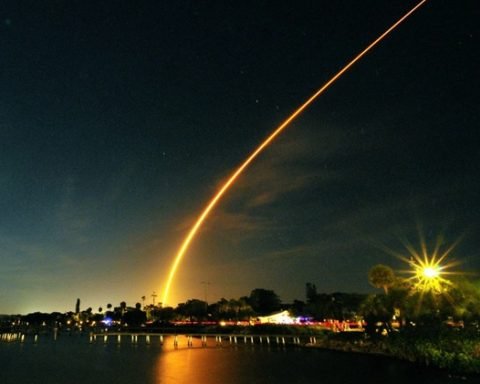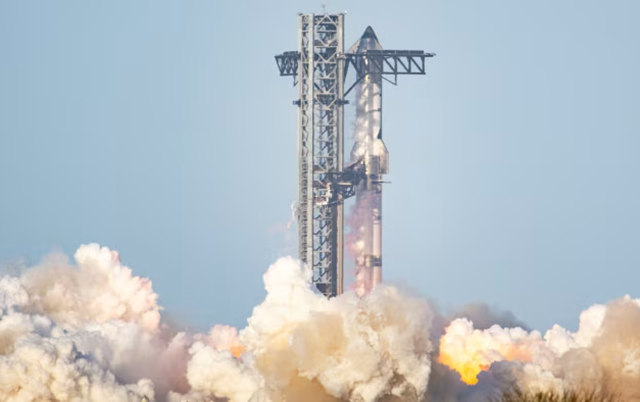
SpaceX’s highly anticipated Starship rocket suffered a catastrophic failure on Thursday, exploding in midair just minutes after launch. This marks the second consecutive failure for the ambitious spacecraft, dealing a setback to Elon Musk’s vision of building a rocket capable of reaching Mars.
The 400-foot rocket system lifted off from SpaceX’s Starbase in Texas, but eight minutes into the flight, the upper-stage spacecraft’s engines malfunctioned. The vehicle lost control and exploded in the atmosphere above the Caribbean. The lower-stage Super Heavy booster, however, successfully returned to the launch pad and was caught by mechanical arms.
This failure follows a similar incident in January, which led the Federal Aviation Administration (FAA) to ground all launches pending an investigation. The latest attempt was initially scheduled for Monday but was aborted just 30 seconds before liftoff due to abnormalities.
In a statement, SpaceX described the incident as a “rapid unscheduled disassembly” during ascent. The company emphasized that every failure offers valuable lessons. “Success comes from what we learn, and today’s flight will provide additional insights to improve Starship’s reliability,” SpaceX stated.
The FAA has ordered a mishap investigation into the explosion. The agency confirmed that some aircraft in the region were temporarily slowed due to falling debris, though normal operations resumed shortly afterward.
The Starship rocket is the largest ever built and plays a crucial role in Musk’s plans to expand his network of broadband satellites, secure more contracts from NASA, and ultimately transport humans to Mars. A second failure in just two months raises questions about the viability of the spacecraft’s design and operational readiness.
Despite the setback, SpaceX remains the dominant player in the private space industry, having successfully reached orbit more than 450 times across various rocket models. The Starship rocket itself first reached space in late 2023 and demonstrated a successful booster recovery in October.
The latest incident comes just weeks after Blue Origin, the space venture backed by Amazon founder Jeff Bezos, successfully launched its New Glenn rocket for the first time. While New Glenn’s maiden launch was five years behind schedule, it now presents direct competition to SpaceX in the satellite launch market.
Industry analysts suggest that failures like these are part of SpaceX’s iterative development strategy. Caleb Henry, an analyst at Quilty Space, noted, “Today’s launch means there’s still more to learn before Starship can begin flying payloads.”