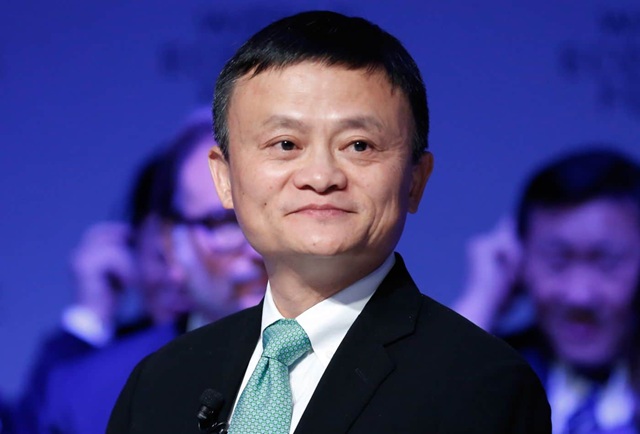
In the final weeks of 2022, Alibaba’s co-founder Jack Ma found himself in a deeply challenging position. The company he built into China’s tech titan was struggling under intense regulatory scrutiny, and the global tech landscape was evolving faster than ever. Alibaba’s market value had plummeted by 80% from its peak, and its core e-commerce business was losing market share to competitors like PDD Holdings and ByteDance. Ma himself had retreated from public view, living in Tokyo after a fallout with Beijing, which further diminished Alibaba’s position in the eyes of investors and the public.
At this low point, the release of OpenAI’s ChatGPT was a stark reminder to Ma of how far behind Alibaba had fallen in the artificial intelligence (AI) race. The launch of the powerful AI tool highlighted the rapid advancements in AI technology, and Ma realized that Alibaba was not even close to competing on that front. This moment of realization marked the beginning of a dramatic shift for Alibaba. In the years since, the company has made a quiet yet significant transformation, turning its focus toward AI as the driving force behind its future.
As detailed in a Financial Times report, Ma began orchestrating a strategic turnaround. Although he had taken a backseat in the company’s day-to-day operations, he played a critical role in guiding the shift toward AI. Alibaba started making significant investments in AI research, acquiring AI startups, and ramping up efforts to build a competitive AI platform. The company also committed substantial financial resources toward building out its infrastructure, spending billions on chip development and assembling a dedicated team of researchers and engineers.
By 2025, Alibaba’s AI initiative had produced significant results. Its AI models, especially the Qwen series, became market leaders in China. These models were not just a leap forward in the country’s AI capabilities—they also helped Alibaba forge key partnerships, notably with Apple. The tech giant selected Alibaba’s Qwen models to power AI functions on iPhones sold in China, marking a major vote of confidence in the company’s AI ambitions. Alibaba’s stock price soared by 66% in early 2025, signaling a renewed investor enthusiasm and a potential comeback.
The shift toward AI was not an easy one for Alibaba. The company’s previous focus on diversifying into physical retail through ventures like Freshippo and large-scale investments in offline businesses had backfired. The pandemic accelerated a shift toward online shopping, but Alibaba’s e-commerce division, its primary revenue source, was losing ground to rivals. This made it clear that the company needed to pivot radically if it wanted to stay relevant in an increasingly competitive tech landscape.
The AI pivot was championed by Eddie Wu, who succeeded Daniel Zhang as CEO in 2023. Wu, a veteran of Alibaba, recognized the strategic importance of the cloud business in unlocking Alibaba’s AI future. He took bold steps to centralize decision-making, divesting non-core assets and reallocating resources to AI development. In just over a year, Alibaba spent Rmb81bn ($11bn) on capital expenditure, up from Rmb34bn in the previous year. The company aggressively pursued investments in AI startups, including Moonshot, MiniMax, and Zhipu, while also expanding its internal AI team.
One of the key milestones in this transformation was Alibaba’s decision to open-source its Qwen models, enabling rapid iteration and attracting developers to its platform. This open-source strategy was essential in building momentum for Alibaba’s AI ambitions, allowing the company to compete with other Chinese giants, such as Tencent and ByteDance, who were also making significant strides in AI.
However, despite the positive momentum, Alibaba still faces challenges. The company is competing against well-funded rivals with advanced capabilities, including Tencent’s integration of DeepSeek’s models into its ecosystem. Additionally, ByteDance has committed to spending $12bn on AI chips in 2025 and has developed a strong consumer-facing AI application. The intense competition means Alibaba cannot afford to rest on its laurels.
Geopolitical tensions also threaten Alibaba’s AI ambitions. The US has restricted the export of advanced AI chips, like Nvidia’s H100, to China, which could hamper Alibaba’s ability to train and deploy cutting-edge AI models. While Alibaba is investing in its own chip design capabilities, the company remains years behind its global competitors in this area. The ongoing trade and tech restrictions may limit Alibaba’s access to critical resources, slowing its ability to innovate at the pace needed to maintain a competitive edge.
Despite these obstacles, Alibaba’s AI pivot is a clear signal of its determination to adapt and thrive in the evolving tech landscape. The company’s leadership in cloud computing, its strategic partnerships, and its focus on building a comprehensive AI ecosystem position it well for the future. However, as the Financial Times notes, the race for AI supremacy is far from over, and Alibaba’s ability to maintain its lead will depend on how it navigates the fierce competition and complex geopolitical landscape.
Alibaba’s turnaround is still a work in progress, but the company’s AI-focused strategy represents a bold move toward reclaiming its place as a global tech powerhouse. With a clear direction under Wu’s leadership and a growing portfolio of AI-driven products, Alibaba is laying the groundwork for a new era. As competition intensifies and the geopolitical climate remains volatile, the future of Alibaba’s AI ambitions will depend on its ability to adapt and innovate in this fast-paced, high-stakes race.