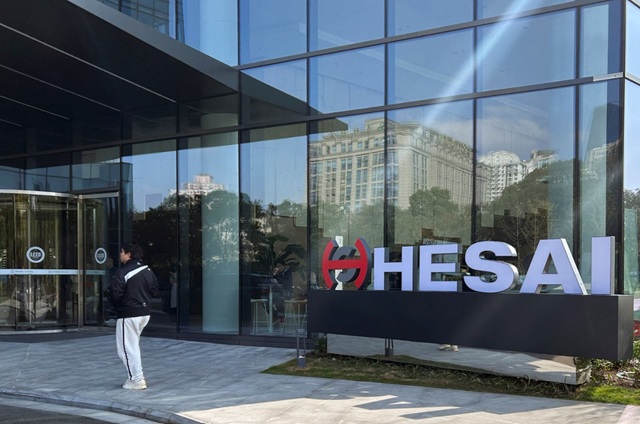
Shares of Chinese car-sensor maker Hesai dropped by 7.8% on Tuesday following a report by Blue Orca Capital, a Texas-based short-seller, which accused the company of misleading investors over its financial performance and its alleged connections to the Chinese military. Hesai, which is the world’s largest maker of lidar sensors for electric vehicles, has strongly denied these allegations, asserting that they are without merit. The company’s stock slide represents the latest in a series of challenges that the Shanghai-based group is facing, including a legal battle with the Pentagon over its designation as a military-affiliated company.
The short-seller’s 38-page report cast doubt on the accuracy of Hesai’s most recent revenue and margin disclosures. Additionally, it questioned the truth of a recent Reuters report claiming that Germany’s Mercedes-Benz was planning to use Hesai’s lidar sensors in developing cars for the global market. In a statement to the Financial Times, David Li, Hesai’s co-founder and CEO, emphasized that the company “strongly disagrees” with the allegations, reaffirming its commitment to business ethics and regulatory compliance.
The Financial Times was unable to independently verify the claims made by Blue Orca, but the report came just a week after Hesai’s stock saw a significant 50% surge in a single day. This jump followed the company’s announcement that it had broken even in 2024 for the first time and its release of profit forecasts for 2025 that exceeded market expectations.
Hesai’s recent performance had also garnered attention from analysts, including Daiwa Securities, which praised the company as an “innovation leader.” The Japanese investment group projected a 78% compound annual growth rate in lidar shipments from 2024 to 2027 and expected Hesai’s market share in China to surpass 30% during the same period. Additionally, Daiwa highlighted that Hesai holds the largest pool of published patent applications among its lidar competitors.
However, the Blue Orca report included images that purportedly showed Hesai’s sensors on Chinese combat vehicles, sparking further controversy. One image appeared to show Hesai equipment on a vehicle made by state-owned weapons manufacturer Norinco, while another depicted the company’s products being used by the National University of Defense Technology. In response to these images, Hesai denied any involvement with military entities, stating that it had “no relationship” with Norinco and asserting that any such use of its products was unauthorized.
This controversy follows a complicated history for Hesai with the Pentagon. In January of the previous year, the company was included on the U.S. Department of Defense’s list of “Chinese military companies.” While it initially won a reprieve in August, the Pentagon relisted Hesai in October, citing new information. The company has consistently maintained that it operates independently from the Chinese government and military, and it has challenged the Pentagon’s decision in court.
The ongoing allegations against Hesai underscore the growing tensions surrounding Chinese technology companies and their relationships with both the government and the military. Despite these challenges, Hesai remains a prominent player in the lidar industry and continues to face the dual pressure of managing international relations and meeting the expectations of global investors.