A shocking investigation by The Sunday Times in UK has unveiled a massive fraud scandal within the UK’s student loan system, where thousands of so-called students have exploited taxpayer-funded loans without any real intention of completing their degrees. This revelation has sent shockwaves through the higher education sector, as officials now suspect that the fraudulent claims could amount to hundreds of millions of pounds.
At the heart of this scandal are franchised universities—smaller colleges that deliver courses on behalf of established institutions but often have lax admission requirements. The Times UK reports that at least six such institutions have been flagged for fraudulent activities, including enrolling students who lack basic English proficiency and accepting dubious Duolingo test screenshots as proof of language skills.
Government officials believe that many of these fraudulent applications are part of an organized effort, with Romanian nationals particularly overrepresented. Leaked figures show that in the 2023–24 academic year, a staggering 84,000 Romanian nationals applied for student loans, compared to significantly lower numbers from other European countries. While not all applications are necessarily fraudulent, this disproportionate rise has raised serious concerns within the Student Loans Company (SLC) and the Department for Education (DfE).
The mechanics of the fraud are both simple and audacious. Many applicants enroll in a degree program just to access maintenance loans of up to £13,700 per year. Some drop out after receiving their first £4,000 installment, only to re-enroll the following year and repeat the scam. In some cases, students have even been recruited via social media platforms like TikTok and Instagram, where agents promise hassle-free admission and access to generous student loans.
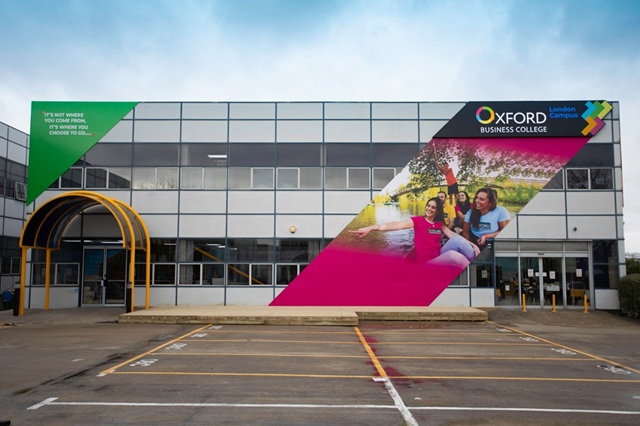
One of the institutions at the center of this controversy is Oxford Business College, a franchised provider that partners with multiple UK universities. Despite its unassuming presence above a Thai restaurant in Oxford, the college has seen meteoric financial growth, generating £49.7 million in revenue in 2023 alone—an increase of over 1,200% in just three years. The SLC has identified millions of pounds in fraudulent claims from students enrolled at this institution, with £2.8 million in payments suspended, though £843,000 was still lost.
Further investigations have exposed how these colleges operate with minimal academic scrutiny. At some franchised institutions, between 35% and 55% of applicants last year were Romanian nationals. Many of these students appear to have been enrolled with little to no academic history, some without the ability to read or write in English. One Romanian social media user even bragged: “I barely know two words in English and I’m passing because they take money, we take money, and university is fine without English.”
This crisis is unfolding against the backdrop of a student loan system that is already under immense financial strain. The UK’s student loan debt currently stands at a staggering £236 billion—more than the national debt of Portugal—and is projected to reach £500 billion by the 2040s. To counteract this growing burden, recent policy changes have made student loan repayments kick in earlier and last longer, but these measures do little to prevent outright fraud.
In response to these alarming revelations, Education Secretary Bridget Phillipson has called the scandal “one of the biggest financial frauds in the history of our universities sector.” The government has tasked the Public Sector Fraud Authority with investigating the misuse of student loans, and ministers are considering strict reforms, including bringing all franchise providers under the direct regulation of the Office for Students (OfS).
Universities UK, the body representing higher education institutions, has acknowledged the need for tighter controls. “If there is evidence of fraudulent behavior, we completely agree that it must be rooted out,” said its chief executive, Vivienne Stern. Meanwhile, lead universities that partner with franchised colleges could soon find themselves on the hook for millions of pounds in lost funds if the government decides to claw back payments made for fraudulent student claims.
The scandal exposes the unintended consequences of a university funding model that has incentivized rapid expansion at the cost of academic integrity. While franchise providers argue that they have helped expand access to higher education for non-traditional students, critics warn that the system has been exploited by opportunists who see student loans as easy money.
The UK government is now under mounting pressure to take swift and decisive action to close loopholes in the student loan system before even more taxpayer money is lost. Whether these changes will be enough to restore credibility to the sector remains to be seen, but one thing is clear—this scandal has laid bare the vulnerabilities of Britain’s higher education system, and the true scale of the fraud may still be unfolding.