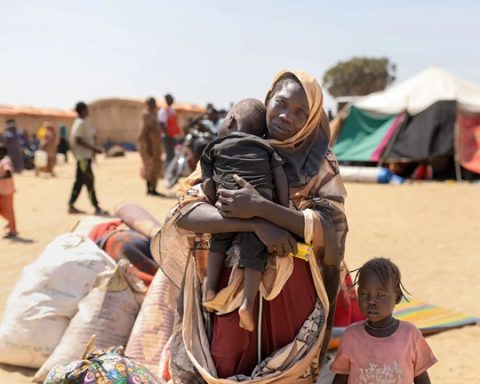
A recent study examining Syrian refugee families suggests that the trauma of war may leave genetic imprints that persist across generations. As Nature reports, this research contributes to the ongoing debate about whether psychological trauma can be inherited through epigenetic modifications—chemical tags on DNA that do not change the genetic code but can influence gene activity. While previous studies on the descendants of Holocaust and Rwandan genocide survivors have hinted at similar effects, many scientists remain skeptical about whether such marks are truly passed down biologically.
The study, published in Scientific Reports, analyzed DNA from 131 individuals, comparing families who experienced violence in Syria during the 1980s and after the 2011 uprising with a control group that had not been exposed to war-related trauma. Researchers found distinctive methylation patterns—epigenetic marks—on certain DNA regions in individuals who had directly witnessed violence. More strikingly, these marks were also found in their children and even grandchildren, raising the possibility that trauma leaves a biological imprint that can be inherited.
However, as Nature highlights, this research should be interpreted with caution. The concept of trauma inheritance is controversial, partly because of a biological process called epigenetic reprogramming, in which DNA methylation patterns are typically reset during reproduction. Some scientists argue that the presence of these marks in multiple generations may not be due to direct inheritance but rather to environmental and behavioral factors. For example, trauma might influence parenting styles, leading to stress-related epigenetic changes in children rather than passing down genetic modifications directly. Others suggest that certain DNA sites might escape reprogramming, as seen in animal studies.
One particularly compelling case in the study involved a woman who witnessed violence while pregnant in the 1980s. Her daughter and grandchildren were found to carry the same methylation patterns, despite being born long after the traumatic events. However, as Nature points out, the study’s small sample size and reliance on DNA from cheek cells—rather than more biologically relevant tissues like sperm or eggs—make it difficult to draw definitive conclusions. Experts, including neuroscientist Rachel Yehuda, emphasize the need for replication studies before accepting these findings as evidence of inherited trauma.
The debate over epigenetic inheritance has profound implications. If trauma can indeed leave lasting biological marks, it could reshape our understanding of mental health, resilience, and even societal approaches to treating trauma survivors. Recognizing this, lead researcher Rana Dajani is expanding her work to examine four generations of Palestinians, seeking further evidence of intergenerational trauma transmission.
This study is an important step—but not definitive proof—toward understanding how deep trauma’s effects may run. While the biological inheritance of trauma remains uncertain, what is clear is that the scars of war persist long after the violence ends, shaping not just individual lives but entire generations.