“GDP is the wrong tool for measuring what matters – it’s time to replace gross domestic product with real metrics of well-being and sustainability.” – Joseph E. Stiglitz
A country’s Gross Domestic Product (GDP) is the standard measure of the total value of all goods and services produced within its borders during a specific period, typically a year. The “services” component of GDP includes the value of all final services produced, such as transportation, communication, finance, healthcare, education, and many others. Sri Lanka’s GDP was estimated at USD 84.36 billion, with reported GDP growth of 5% in 2024. In dollar terms, this growth amounts to USD 4.21 billion. While this is a simple arithmetic calculation, economists and the Sri Lanka Central Bank will have their own interpretations. If the country has grown by USD 4.21 billion and now has an economy worth USD 84.36 billion, it is worth examining whether this figure, as Stiglitz argues, accurately measures well-being and economic sustainability.
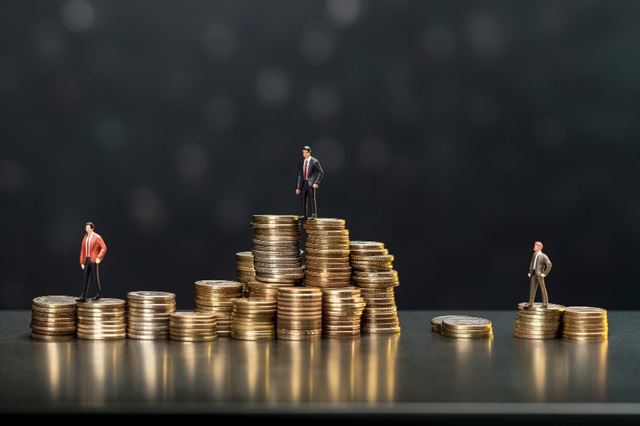
The following statistics reveal stark disparities, inequalities, and inequities among Sri Lanka’s population despite visible “development.” Poverty in Sri Lanka was recorded at 24.8% as of July 2024, significantly affecting access to nutritious food. Nearly one-third of children under five are malnourished, and UNICEF reports that 2.3 million children in Sri Lanka do not have enough to eat. Families face increasing food prices daily, struggling to provide for their children in a country where essential services, such as healthcare and education, are under immense strain. According to the Department of Census and Statistics, the top 10% of Sri Lankans hold 42% of all income and 64% of all personal wealth, while the top 1% alone controls 15% of income and 31% of wealth. Meanwhile, the bottom 50% of the population accounts for just 17% of total income and a mere 4% of wealth. In 2016, the wealthiest 10% of the population received 32.9% of total income, while the poorest 10% shared only 2.9%. More than half of the total household income is enjoyed by the richest 20%, whereas the poorest 20% receive only 5%.
Gender inequality remains another pressing concern. The United Nations Development Programme states that out of Sri Lanka’s 8.5 million economically active people, 72% are men, and only 35% are women. Women constitute 52% of Sri Lanka’s total population, yet female representation in parliament stands at just 5.3%. As of 2021, female labour force participation was only 33.6%, and a staggering 90% of Sri Lankan women and girls have experienced sexual harassment on public buses and trains at least once in their lifetime. Unpaid care work remains an overlooked yet critical issue. The most recent time-use survey, conducted in 2017, revealed that 87.3% of women above the age of 10 were responsible for most of the care work—a percentage that likely increased during the COVID-19 pandemic and the subsequent economic crisis. Women engaged in care work are classified as economically inactive, despite the enormous contribution they make to household and national economies.
Joseph E. Stiglitz, a Nobel laureate in economics and a professor at Columbia University, has long argued that GDP fails to measure critical aspects of life. As Senator Robert F. Kennedy famously said, “GDP measures everything except that which makes life worthwhile.” GDP does not reflect health, education, equality of opportunity, environmental conditions, or economic sustainability. Stiglitz draws a compelling analogy between misplaced reliance on GDP and the Vietnam War’s “body count” strategy, where increasing enemy casualties became an end in itself, blinding US military leaders to the broader strategic picture. Similarly, focusing solely on GDP growth while ignoring quality-of-life factors can lead to misguided economic policies that fail to address real social and economic needs.
In 2019, Sri Lanka’s GDP was estimated at USD 89.02 billion, with economic growth at 4.5%, down from 7.8% in 2018. Yet, by 2022, the country declared itself bankrupt, defaulting on its debts. While the COVID-19 pandemic and the global economic downturn played a role, Sri Lanka’s economic crisis was rooted in deeper structural issues. By GDP measures, the years preceding the bankruptcy appeared healthier than 2022, yet the country collapsed under mounting debt. According to analysts, borrowed funds were often misallocated towards prestige projects rather than national utility. Sri Lanka’s foreign debt ballooned from USD 11.3 billion in 2005 to USD 56.3 billion in 2020, with debt rising from 42% of GDP in 2019 to 119% by 2021. This illustrates how an overreliance on GDP as a measure of economic success—without adequately managing debt—led to national bankruptcy.
The purpose of this discussion is not to dwell on past mistakes but to consider Stiglitz’s argument: GDP is an inadequate tool for measuring true economic success. It is time to adopt real metrics of well-being and sustainability. Examining the world’s richest country, the United States, offers additional insight. According to the World Bank, the US had a GDP of USD 27.72 trillion in 2023, with a GDP per capita of USD 82,769. However, wealth and well-being remain highly unequal. The US Census Bureau reports an official poverty rate of 11.1%, with 36.8 million Americans living in poverty. Food insecurity is a persistent issue, affecting approximately 13.5% of US households—impacting 47.4 million Americans, including 13.8 million children. Malnutrition is a concern both in terms of undernutrition and overnutrition, with obesity disproportionately affecting lower-income households.
Income disparity in the US has also grown significantly. By 2021, the top 10% of Americans controlled nearly 70% of national wealth, up from 61% in 1989. The top 1% earned 13.2% of total income in 2019, nearly doubling from 7.3% in 1979. Despite the country’s vast economic resources, disparities in healthcare, education, and quality of life persist. Stiglitz points out that the US, despite its wealth, recorded over a million COVID-19 deaths, whereas Vietnam, with a GDP of just USD 409 billion, had around 43,000 deaths. These stark differences underscore the limitations of GDP as an indicator of national well-being.
Stiglitz argues that focusing solely on boosting GDP—on the assumption that economic growth alone will improve well-being—has led to misguided policies. Businesses prioritise cost-cutting to maximise short-term profits, often at the expense of long-term sustainability. This short-term approach can weaken economies and societies over time, undermining public services, environmental sustainability, and income equality. The lesson for Sri Lanka is clear: past infrastructure projects may have increased GDP and GDP growth figures, but many were financed through debt without ensuring long-term benefits. The result was insufficient investment in essential sectors such as healthcare, education, food security, and environmental protection—ultimately compromising national well-being and economic sustainability.
Recognising the inadequacy of GDP as a measure of success, some countries have begun exploring alternative indicators. In 2007, French President Nicolas Sarkozy acknowledged the limitations of GDP and commissioned an international study on measuring economic performance and social progress, chaired by Stiglitz. The 2009 report, Mismeasuring Our Lives: Why GDP Doesn’t Add Up, highlighted the need for alternative metrics. In response, the Organisation for Economic Co-operation and Development (OECD) developed the Better Life Initiative, which includes 11 indicators of well-being, covering economic security, health, education, work-life balance, and environmental quality.
The World Bank and the International Monetary Fund (IMF), traditionally proponents of GDP-centric policies, have also begun considering broader measures of economic performance, including inequality, environmental sustainability, and social stability. Sri Lanka, while not an OECD member, could adopt a similar framework tailored to its national context. A comprehensive dashboard of economic and social indicators—accessible to policymakers and the public—would enhance transparency and accountability in economic decision-making. Metrics should include disparities in income, education, gender equality, regional development, healthcare, and environmental conditions, among others.
For economic policies to be effective and sustainable, planning must be decentralised, with greater involvement from grassroots communities. The traditional top-down approach, where economic decisions are made by a few officials in the Ministry of Finance or Parliament, has proven insufficient. Sri Lanka’s bankruptcy in 2022, 74 years after independence, highlights the weaknesses in its economic management model. While the country has made notable progress in some areas, such as universal healthcare, significant challenges remain. To secure a sustainable future, Sri Lanka must move beyond GDP growth as the sole measure of success and embrace a broader, more holistic approach to economic planning and well-being.