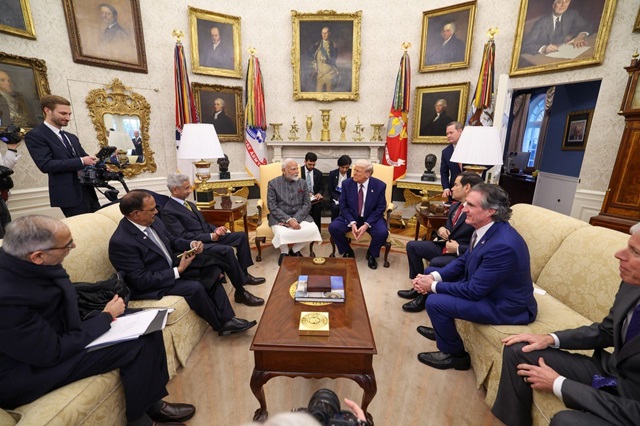
India is pushing for the rapid finalization of a bilateral trade agreement with the United States, following the implementation of new reciprocal tariffs introduced by U.S. President Donald Trump. Foreign Minister Subrahmanyam Jaishankar confirmed on Monday that discussions are underway, emphasizing New Delhi’s intent to secure an “early conclusion” to the long-anticipated trade pact.
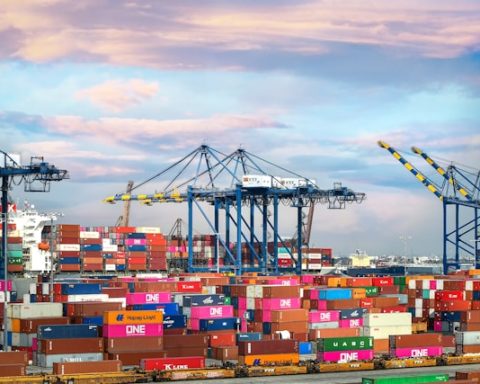
The renewed urgency comes in response to Washington’s imposition of sweeping tariffs on foreign imports, including a 26% duty on Indian goods. The tariffs, aimed at addressing what Trump has labeled as “unfair trade practices,” have significantly altered the landscape of U.S.-India trade negotiations.
“Agreed on the importance of the early conclusion of the Bilateral Trade Agreement,” Jaishankar posted on social media platform X, signaling New Delhi’s readiness to accelerate talks.
While the Indian government has described the tariffs’ impact as a “mixed bag,” it has ruled out any retaliatory measures for now. Instead, India plans to adapt to the new dynamics in order to cushion its exporters and preserve trade stability. According to analysts, the country’s existing framework for a trade deal places it in a strong position to weather the tariff storm.
A senior Indian official told Reuters that New Delhi is exploring a potential loophole in the U.S. tariff order. The clause reportedly allows exemptions for countries willing to address non-reciprocal trade practices — a window India hopes to leverage as talks continue.
The two nations aim to complete the first phase of the agreement by autumn 2025, with a primary focus on dismantling existing trade barriers. However, the path to consensus has not been without friction. Last month, Trump criticized India, along with China and the European Union, for maintaining “very unfair” tariffs, and accused New Delhi of blocking American businesses with protectionist policies.
In response, India has asserted that the introduction of reciprocal tariffs by the U.S. has shifted the balance of power in negotiations. This, Indian officials say, gives them greater leverage to pursue a more equitable agreement — one that is not constrained by prior U.S. demands, such as the removal of domestic subsidies.
Trump recently claimed that India had agreed to “significantly reduce” its tariffs following U.S. pressure, stating that the country’s trade practices had been “exposed.” Indian authorities have yet to confirm such concessions publicly but remain committed to a deal that supports both countries’ economic interests.