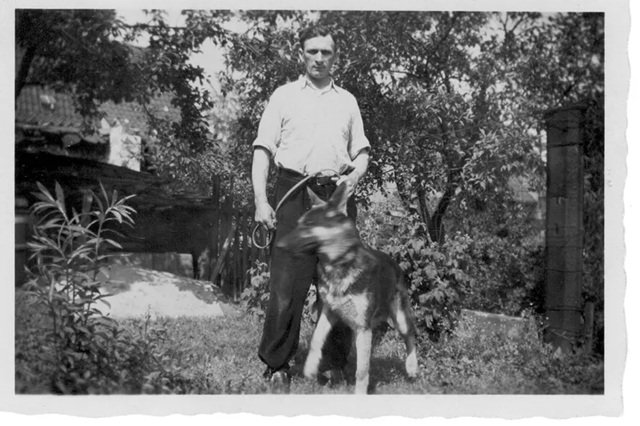
When Frank Patalong discovered in the spring of 2026 that his grandfather had joined the Nazi Party, the revelation shattered a family story he had accepted since childhood. Eduard Patalong, a coal miner in Germany’s industrial Ruhr region, had always presented himself as an ordinary working man who kept out of politics and knew nothing about Nazi crimes. His grandson found his name in the Nazi Party membership register after the US National Archives made a digitised version of the records available online. Eduard had joined the party on 1 May 1933, less than three months after Adolf Hitler became chancellor.
The discovery prompted Patalong to investigate what his grandfather had witnessed during the war, when he worked at the Walsum coal mine, and what his family’s memories had left out. In a feature published by Der Spiegel, he reconstructs the extensive forced-labour system that operated around the mine and examines the role German industrial workers played in it. His investigation challenges the familiar post-war image of Ruhr miners as politically left-wing workers who had little connection with the Nazi regime and its crimes.
Patalong’s grandfather was born in 1906 in Oels, near Breslau in Lower Silesia, before his family moved to the Ruhr in search of work. He entered the mines at 14, convinced that earning good wages mattered more than staying in school. From 1938, he worked at the newly developed Walsum mine, which was regarded as the largest undeveloped coal resource in the German Reich. Regular production began in 1939, the first year of the Second World War, but the mine struggled to obtain enough workers.
When Patalong was studying Nazi Germany at school, he asked his grandfather what life had been like under Hitler. Eduard recalled the distress of seeing neighbours taken away but insisted that he and his fellow miners had known nothing about the regime’s crimes. His wife offered a similarly limited recollection, saying it had been terrible when the neighbours were arrested. The family accepted the explanation that miners had remained separate from politics and that generations of men in their family had avoided military service because miners were needed underground.
In April 2026, Patalong discussed the party membership discovery with his 85-year-old mother, who had known Eduard since she was 17. She was astonished that he had belonged to the Nazi Party. She repeated the family explanation that he had not been conscripted because he had to remain underground to “keep watch”. The remark led Patalong to consider whether his grandfather might have been involved in supervising forced labourers. He found no evidence establishing that Eduard had served as a guard, but his research showed that German mine workers regularly worked alongside coerced labourers and were sometimes responsible for overseeing them.
The Walsum mine was surrounded by a network of camps housing foreign workers and prisoners of war. Researchers have identified three or four mine camps in some accounts, while Patalong’s examination of documents, studies, newspaper reports and statistics identified nine major camps, in addition to numerous smaller facilities. Their populations ranged from 40 to more than 1,000 people. Some occupied repurposed public buildings; others consisted of barracks erected on vacant land in residential neighbourhoods.
One facility, known as Bergmannsheim II, eventually held more than 1,000 Soviet prisoners of war forced to work as miners. Another large camp, established in the Vierlinden district from 1941, became known as the Central Russian Camp. Nearby, women from the Soviet Union were confined in crowded accommodation, while an “education camp” held forced labourers who resisted their treatment. Patalong’s mother remembered seeing groups of women living near her childhood home, although she had been too young to understand their circumstances.
Forced labour was central to Germany’s wartime economy. According to the figures cited in the Der Spiegel investigation, more than seven million foreign forced labourers worked in Germany, including about 500,000 in mines. In the Ruhr region, approximately 350,000 were employed in mining. They accounted for around 40 per cent of the workforce at Ruhr collieries on average, with their proportion underground considerably higher. At Walsum, roughly two-thirds of the men working at the coal face were forced labourers at certain points, and the number employed across the mine exceeded 2,000 at a given time.
Their treatment varied according to their status, but Soviet prisoners of war faced particularly brutal conditions. German authorities used starvation, inadequate medical care and exhausting work in a system that historians have described as involving the deliberate destruction of human lives through labour. Of the 5.7 million Red Army soldiers captured by Germany, an estimated 3.3 million died in captivity through starvation, murder or forced labour. The overall survival rate of Soviet prisoners of war was approximately 43 per cent.
The exploitation also benefited German miners. Their wages traditionally depended on collective production quotas, and the inability of weakened prisoners to meet those targets threatened workers’ earnings. Mine operators eventually assigned prisoners’ output to German miners’ production totals, allowing the latter to do less work while retaining their wages. From 1942, Soviet prisoners were increasingly deployed in sections known as “Russian faces”, under the supervision of German miners, including some whose own health had deteriorated. German workers were compensated financially while the mines sought to increase coal production.
Patalong cannot establish whether his grandfather supervised prisoners in one of these sections. Eduard retired early in 1952 after developing serious lung problems and died in 1993, leaving no written account of his wartime experiences. The family continued to remember the old mining community with nostalgia, recalling its coal, steel, farms and disappearing rural traditions. Their stories rarely mentioned the prisoners and forced labourers who had lived and worked alongside them.
A warning published in regional newspapers on 21 June 1943, under the headline “No False Pity”, condemned Germans who gave food to foreign workers begging in shops and called for tougher measures. The article was subsequently reproduced, in slightly shortened form, on public posters. The German Newspaper Archive contains more than 700 wartime articles about Eastern workers and forced labourers, including reports on their exclusion from food distributions.
Patalong’s investigation concludes with a question his grandfather can no longer answer: why he joined the Nazi Party and why he claimed not to have known what was happening around him. His mother offers one possible explanation for the silence: “Perhaps he was ashamed. He was such a decent man.”