Swiss pharmaceutical giant Novartis is set to invest $23 billion in U.S.-based manufacturing and research over the next five years, a major move aimed at bolstering domestic production capabilities as the company braces for possible tariffs under the Trump administration. The investment, reported by the Financial Times, is one of the largest ever by a European drugmaker in the United States.
The initiative comes as the pharmaceutical industry adjusts its global supply chains amid growing concerns over new trade restrictions. While pharmaceuticals were exempt from the sweeping tariffs announced by President Donald Trump last week, the administration has hinted that additional levies could soon include the drug sector — prompting companies like Novartis to act preemptively.
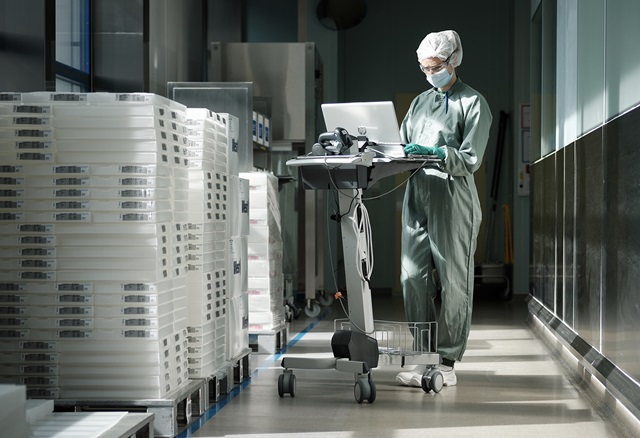
Novartis CEO Vas Narasimhan said the company’s expansion reflects confidence in what he called the “pro-innovation policy and regulatory environment in the US,” which he credited with fostering the conditions for medical breakthroughs. The investment will see the construction of seven new facilities across the country, along with the expansion of several existing sites, enabling Novartis to produce all of its key U.S. drugs domestically.
The company expects the initiative to create nearly 1,000 direct jobs and an additional 4,000 across supply chains and local communities. A significant portion of the investment will focus on strengthening the domestic production of active pharmaceutical ingredients — an area where the industry has long relied heavily on imports from China and India.
Among the key highlights is a new $1.1 billion research and development institute in San Diego, which will complement Novartis’s existing R&D hub in the Boston area. The company is also ramping up production of radioligand therapy — an advanced, targeted form of cancer treatment — with new manufacturing sites planned in Florida and Texas, and expansion of current facilities in Indiana, New Jersey, and California.
Narasimhan underscored the company’s readiness to navigate geopolitical uncertainty, stating that Novartis is “prepared for shifts in the external environment” and remains “fully confident” in its financial guidance, including a projected core margin of at least 40 percent by 2027.
The move by Novartis follows a wave of recent U.S. investment announcements by pharmaceutical heavyweights. As noted by the Financial Times, Eli Lilly unveiled a $27 billion investment plan earlier this year, Johnson & Johnson committed more than $55 billion to expand its manufacturing capacity, and AstraZeneca pledged $3.5 billion in U.S. development initiatives.
While these investments reflect broader confidence in the U.S. market, they also signal growing corporate caution as Trump’s trade policies inject new volatility into global commerce. With the threat of tariffs looming, the pharmaceutical industry — historically global in its operations — appears to be embracing a more regionally rooted approach to ensure continuity and competitiveness.