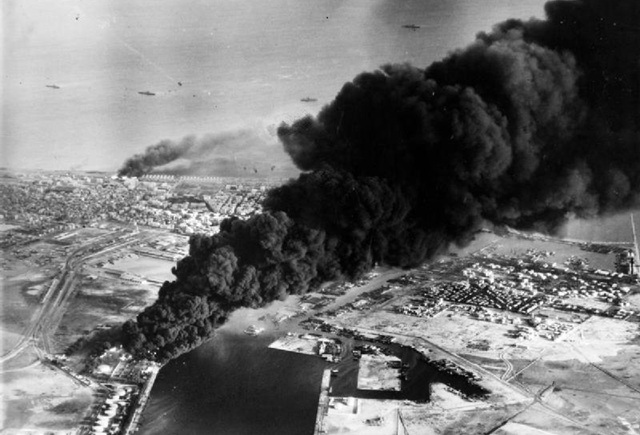
The United States’ global stature is under fresh scrutiny after President Donald Trump’s sweeping tariff policies triggered a wave of economic volatility and diplomatic fallout, prompting comparisons to Britain’s 1956 Suez Crisis—a symbolic end to an era of dominance.
As reported by The Times UK, senior figures in economics and foreign policy now see Trump’s aggressive trade war with China—and its chaotic execution—as a watershed moment in the perception of American superpower reliability. What was meant to project strength and economic sovereignty has instead exposed deep vulnerabilities, as the dollar wobbles and foreign confidence in U.S. assets falters.
“This may be America’s Suez,” said Larry Summers, former U.S. Treasury Secretary, in a stark warning to The Washington Post. He cited the sudden shift in global sentiment and the steep decline in Treasury bond confidence as signs of a broader crisis. “General lack of confidence in U.S. financial assets is spreading to the dollar,” he added.
The comparison draws a historical parallel to Britain’s ill-fated invasion of Egypt in 1956, when U.S. pressure forced a humiliating withdrawal and marked the pound’s decline as a global reserve currency. While the U.S. dollar still holds the top spot in global reserves, its share has dropped from over 70% in 2000 to under 60% in 2024. That trend is accelerating under Trump, with investors moving into gold, the euro, Swiss franc, and Japanese yen.
President Trump’s abrupt decision to pause a new wave of tariffs—originally scheduled to escalate on April 2—came after a week of economic turmoil. Markets swung wildly and U.S. Treasury yields spiked as foreign holders, including Japan, began to pull back. Japan, currently in negotiations over a 24% tariff, is one of several nations pushing for reductions.
Despite the damage, Trump doubled down on his position, declaring on Truth Social, “We are doing really well on our TARIFF POLICY. Very exciting for America, and the World!!!” He also claimed he would hire hundreds of lawyers to fast-track new trade agreements ahead of a July 9 deadline.
Peter Navarro, Trump’s senior trade adviser and author of Death by China, vowed that the administration could deliver “90 deals in 90 days” to resolve international backlash. Navarro and Trump have framed the tariffs as a necessary strike against what they call decades of unfair trade practices, particularly by China, which faces a combined 145% in tariffs.
“China has destroyed over 60,000 American factories and stolen over five million manufacturing jobs,” Navarro said. “They’ve also killed over a million Americans with fentanyl—and they refuse to stop.”
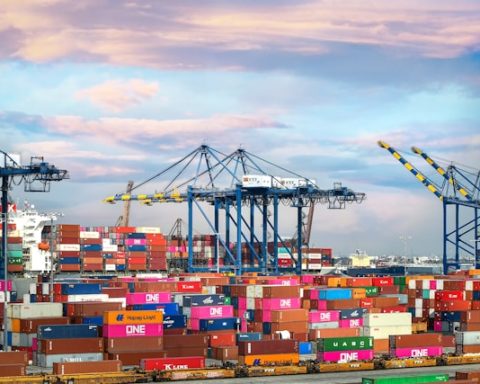
The trade war has effectively frozen commerce between the world’s two largest economies. The average U.S. import tariff is now estimated at 27%, a level not seen in nearly a century. In comparison, the global average at the time of Trump’s “liberation day” announcement was 26.8%.
The turmoil has not been confined to China. Trump recently threatened Mexico with further tariffs and even sanctions over a water dispute, accusing the country of violating a 1944 treaty and shortchanging Texas.
“We will keep escalating consequences, including TARIFFS and, maybe even SANCTIONS, until Mexico honours the Treaty, and GIVES TEXAS THE WATER THEY ARE OWED!” Trump posted.
Wall Street is taking notice. Larry Fink, CEO of BlackRock, told CNBC, “The United States, post-World War Two, was a global stabiliser. We are now a global destabiliser. This is not a pandemic or financial crisis—this is something we’ve created.”
In the eyes of many analysts and commentators—including those writing for Times UK—Trump’s tariff gamble has backfired spectacularly. Instead of cementing America’s power, it may have marked the moment it began to slip.
As the dust settles, the question remains: Has Trump’s trade crusade permanently damaged U.S. credibility? Or will the next administration be able to restore global trust? Either way, this past week could well be remembered as a defining moment in 21st-century American history—its very own Suez.