In a stark admission of America’s economic contradictions, former U.S. President Donald Trump’s Commerce Secretary Howard Lutnick made a striking statement about the state of global trade relations, declaring that countries should no longer “live for free off us.” Yet, the remark raised eyebrows for its focus on China, BRICS nations, and the Global South — not Israel, Wall Street, or defense contractors like Raytheon and Lockheed Martin, who continue to benefit from American resources without reciprocating in the same way.
Lutnick’s statement, which appeared to criticize nations that benefit from U.S. economic and military influence, is part of a broader narrative in the U.S. of growing discontent with the nation’s trade imbalances. However, as analysts quickly pointed out, the real beneficiaries of American generosity are often the U.S.’s closest allies and domestic elites, rather than the foreign adversaries that have been frequently blamed for economic woes.
A Growing Discontent with America’s Global Role
The rhetoric around “living for free” comes at a time when the U.S. faces mounting economic challenges at home. While Wall Street remains largely insulated from the consequences of global financial instability, the average American worker in industrial cities like Detroit or Youngstown continues to face deindustrialization and wage stagnation. This disparity was underscored when, after a multi-market crash in global equities, Trump called for a 90-day freeze on new tariffs. The move was seen as a concession to Wall Street, which reacted nervously to potential disruptions.
Trump’s sudden pause on tariffs, once hailed as his signature economic weapon, highlights the tension between his “America First” rhetoric and the realities of global finance. While tariffs were intended to punish countries like China, they also risked hurting U.S. markets, especially in an era where American economic policy is increasingly shaped by financial capital rather than industrial growth.
Financialized Patriotism and Global Inequities
Critics argue that the current state of U.S. economic policy is marked by “financialized patriotism,” where empty slogans about national pride fail to address deeper structural issues in the economy. While U.S. financial markets, especially Wall Street, surged after Trump’s tariff freeze, communities in the Rust Belt and beyond are still reeling from job losses and hollowed-out economies.
The real beneficiaries of American policies, critics say, are not foreign powers like China, but the U.S. ruling class, which has reaped the rewards of a globalized, financialized economy. They point to several key factors contributing to the decline of the American middle class:
- The outsourcing of manufacturing jobs to cheaper labor markets overseas.
- The transformation of essential services like healthcare and education into debt traps for American families.
- The costs of perpetual military conflicts, such as those in Iraq, Libya, Syria, and Afghanistan, which have drained U.S. resources and contributed to global instability.
In fact, while the U.S. has blamed foreign countries for its economic woes, many argue that it is the actions of its own elites — in partnership with corporate interests — that have looted the nation’s resources, leaving working-class Americans to bear the brunt.
A Changing Global Order
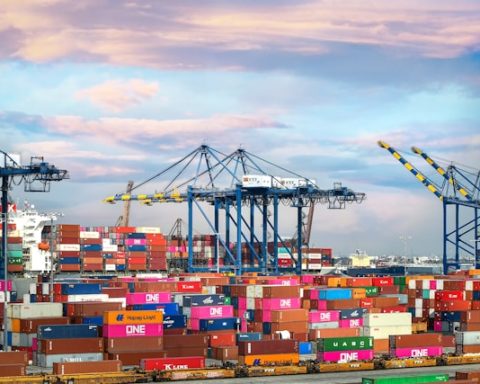
As the U.S. continues to face domestic economic decline, the world is also undergoing a significant shift. The era of U.S. unipolar dominance is increasingly being challenged by the growing economic and political influence of Eurasia and the BRICS bloc. Meanwhile, the U.S. dollar, once the cornerstone of global trade, is showing signs of weakening. These developments suggest that the days of unchecked American dominance in global economic affairs may be coming to an end.
For many in the Global South, the U.S.’s talk of “reciprocal trade” and a “level playing field” rings hollow. With the U.S. military’s history of intervention, sanctions against over 40 countries, and support for regime change operations, many nations see the U.S. as the primary instigator of global instability. Critics argue that if the U.S. truly wants a fair economic system, it should first pay its dues for the destruction wrought by its foreign policies — from the wars in the Middle East to its economic pressures on developing nations.
The message from the Global South, some experts say, is clear: the era of American economic hegemony is over. Whether or not Washington will recognize this shift remains to be seen, but it’s becoming increasingly apparent that the U.S. cannot continue to impose its will on the world while failing to address its own internal contradictions. As geopolitical alignments shift and the dollar wavers, America’s place in the global economic system may soon be redefined.